





Dive Into Data: 8 Catalysts to Connected Vehicle Data for Fleets
Wejo, Microsoft to Allow Fleets Access to Real-Time Data
The partnership will benefit fleet management independent software providers, system integrators, and fleet managers.
January 5, 2023

Wejo plans to expand its footprint in the industry through the adoption of the Microsoft Connected Fleets reference architecture.
Photo: Wejo
2 min to read
Wejo Group Limited announced an extended collaboration with Microsoft through the adoption of the Microsoft Connected Fleets reference architecture.
According to the company's news release, Wejo will be part of an ecosystem of Microsoft partners addressing the fleet management market - anticipated at $38 billion by 2024 - by helping fleet management independent software providers (ISVs), system integrators (SIs), and fleet managers go farther than limited data sets and basic dashboards to integrate fleet data into business processes and derive actionable insights.
Microsoft Connected Fleets reference architecture enables an ecosystem of partners and partner solutions for fleet management by using specialized analytics, value extraction from vehicle data, and streamlining integration with business systems.
“Our goal is to transform the growing connected vehicle, fleet, and mobility market with next-generation solutions that offer faster, better quality vehicle data with lower investment. Wejo brings deep experience and expanded data and fleet management insights to Microsoft Connected Fleets,” said Sanjay Ravi, general manager of automotive, mobility, and transportation industry at Microsoft. “Wejo helps to significantly increase solution velocity and lower data acquisition cost by eliminating the need to fit new hardware to vehicles for fleet management, helping drive efficiencies and more value for customers.”
The reference architecture enhances and will streamline access to Wejo’s connected vehicle data (CVD), according to the company. Wejo’s CVD is delivered in near real-time, directly from its OEM partners.
Benefits include:
Accessing Wejo’s CVD more efficiently.
Facilitating faster integrations with customer-specific requirements.
Enabling integration of fleet management functions with business applications for field services.
Simplifying the delivery of advanced analytics.
Accelerating time-to-insights.
Delivering fleet management capabilities without needing to retrofit hardware.
“With Microsoft Connected Fleets, Wejo will expand its footprint in the Connected Fleets space while embracing Microsoft’s scalability, reliability, and agility to drive application development and shape future business strategies,” said Richard Barlow, founder and CEO of Wejo. “We’re excited to be part of the Connected Fleets interconnected ecosystem of partner solutions and work with Microsoft on better delivering the data and insights necessary to fleet customers and partners to keep their drivers safe on the road while driving efficiencies across their fleets.”
More Telematics
Element Expands Waymo Partnership to Support Toronto Robotaxi Fleet
As Waymo prepares to enter the Canadian market, Element Fleet Management will oversee the fleet operations supporting its planned Toronto launch. The partnership highlights the maintenance, charging, and infrastructure requirements behind operating autonomous vehicles at scale.
Read More →
GM Launches OnStar Fleet Intelligence Platform With AI Assistant
The new platform brings vehicle data, order tracking, connected services and fleet analytics into one system, with an AI assistant that can answer fleet questions using natural-language prompts.
Read More →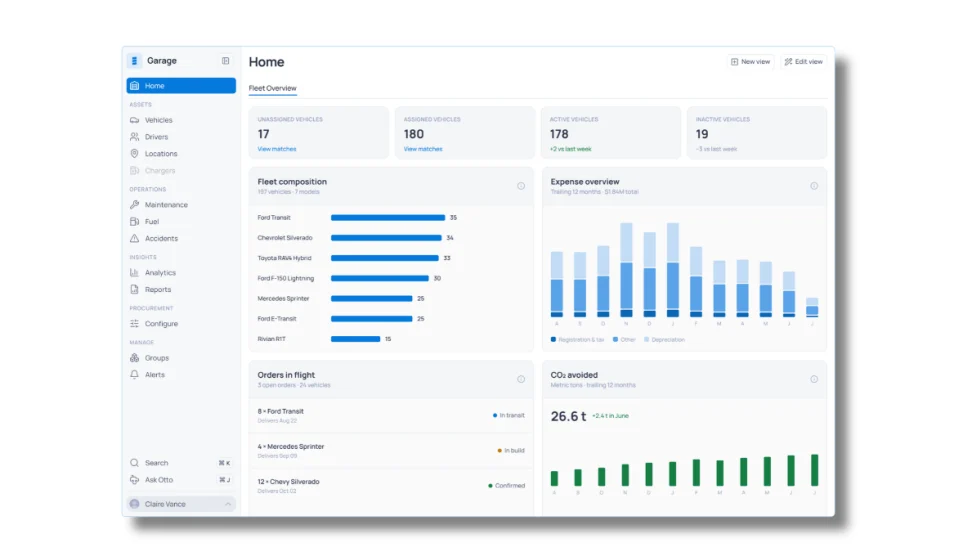
Inspiration Fleet Introduces Garage 2.0 Fleet Intelligence Platform
Fleet managers increasingly have access to data from vehicles, telematics, fuel, charging, and other systems, but those sources don't always communicate with one another. Inspiration Fleet's Garage 2.0 platform brings that information together while letting fleets keep working with different technology and service providers.
Read More →
Inside Inspiration Fleet’s New Platform for Connecting Fleet Data
Inspiration Fleet CTO Chris Getner explains how the new Garage 2.0 platform is designed to connect disparate fleet data and what that could mean for fleet managers in practice.
Read More →
Sponsored•October 1, 2026
Fleet Manager’s Ultimate Playbook: Navigating the New Standard in OEM Connectivity
Rising operating costs, driver safety concerns, and unplanned downtime are putting unprecedented pressure on modern fleets. Discover how fleet managers use embedded OEM connectivity and real-time vehicle data to cut TCO, prevent downtime, and protect drivers without aftermarket telematics hardware.
Read More →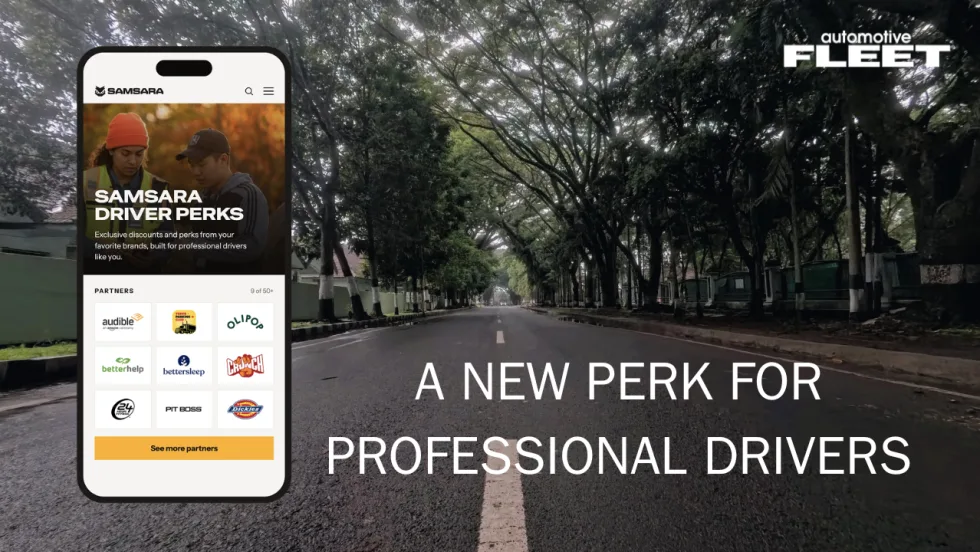
Samsara Driver Perks Adds New Benefit for Corporate Fleet Drivers
The rewards program gives eligible professional drivers access to discounts from more than 50 brands while giving fleets another way to support recruitment, retention, and the driver experience.
Read More →
Inside the Church of Jesus Christ of Latter-day Saints’ Two-Track Telematics Strategy
With 20,000 vehicles and two fundamentally different driver populations, the Church faced a fleet management problem that a single telematics program couldn't solve. How it responded offers a replicable framework for any fleet where one size doesn't fit every driver.
Read More →
How Conversational AI Can Make Fleet Tasks Easier for Drivers
While most generative AI tools help fleet managers interpret data at their desks, Connex2X is applying voice interaction to tasks behind the wheel.
Read More →
Why Fleets Are Creating Dedicated Fleet Analyst Positions
Are fleet analyst positions the new norm? Listen here to find out.
Read More →
Teletrac Navman Begins Next Chapter as Standalone Private Company
What's new with Teletrac Navman and its new owner?
Read More →