




Learn More: How to Extend the Life of Air Disc Brake Pads & Rotors
Troubleshooting, Diagnosing Advanced Safety Systems
Bendix has released a guide on how to avoid rabbit holes and minimize downtime in the maintenance bay.
by Bendix
September 23, 2021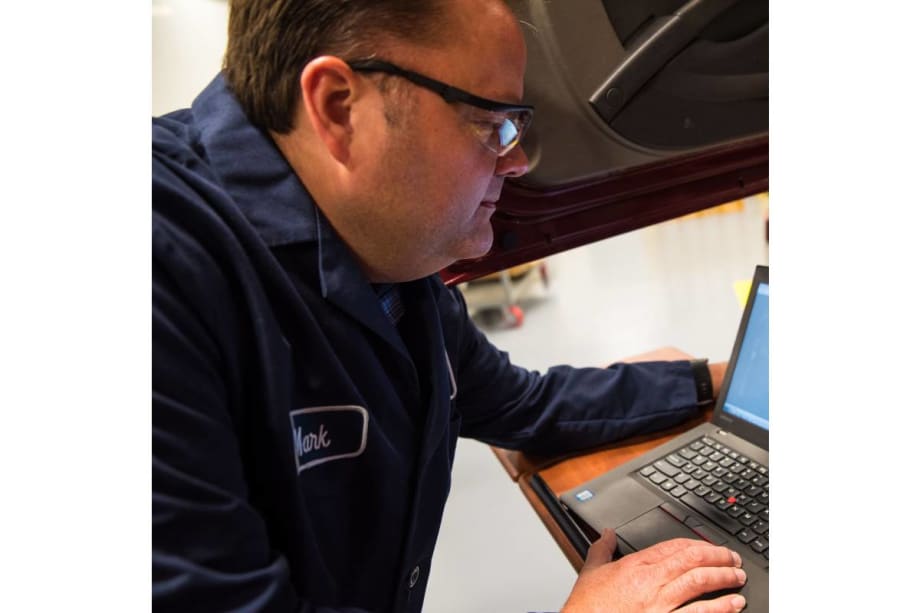
Bendix has released a guide on how to avoid rabbit holes and minimize downtime in the maintenance bay.
Photo: Bendix
5 min to read
A dashboard warning light can send a simple and clear message: Something on your truck needs to be checked. On today’s complex vehicles – and particularly when it comes to their increasingly interconnected safety systems – knowing exactly how and what to check can mean the difference between hours and days of costly downtime.
This article aims to provide guidance on troubleshooting and diagnosing advanced safety technologies, from the foundational elements of antilock braking to the components that enable collision mitigation and more.
Start Simple
“Sometimes the first response to an indicated electronics problem within collision mitigation systems may be to start removing and replacing components,” said TJ Thomas, Bendix director of marketing and customer solutions – Controls. “But there are plenty of times when a component isn’t the issue, so we recommend starting by running a diagnostic software tool that shows a system view of what’s on the vehicle that includes key vehicle components as well.” This assessment can give the technician a quick overview of what’s going on, especially when more than one component shows similar active diagnostic trouble codes (DTCs).
The technician can also look for frayed wires, corroded connectors, or blown fuses. Additionally, equipment like cameras and radars should be checked to make sure they’re unobstructed by things like road debris, snow, and ice.
In addition, some DTCs are “self-clearing,” Thomas said. “This means that simply by fixing the situation – removing the obstructing debris, for instance – the indicator lights and associated fault codes will be deactivated.” Service data sheets should call out these types of DTCs so the technician can be aware of what kinds of conditions generate them.
If this initial approach comes up empty and it looks like the problem is something a bit deeper, then having the right tools and the know-how to use them is the key to getting trucks back on the road and in good working order as quickly as possible.
It’s All Connected
More than ever, the various systems across a commercial vehicle are intertwined, with multiple electronic control units (ECUs) sharing necessary information over the J1939 network. For example, automated transmissions depend upon information from the engine to operate properly and at their highest efficiency.
“Seemingly everything on these trucks is talking to everything else,” said Brian Screeton, Bendix supervisor – Technical Service Training. “So, the best tip we can give for diagnosing faults in higher-level safety systems like adaptive cruise control is to make sure you’re looking at the entire truck first.”
“If a driver reports an adaptive cruise fault, then a technician might connect their diagnosing tool just to the radar, and there may not be an active fault there, but they wind up going down a rabbit hole and spending time trying to troubleshoot inactive faults, when really it turns out there’s an engine problem driving the whole thing. Faults in one system can be driven by a completely separate system component.”
A J1939 fault, for example, will impact several systems, so a technician should investigate that fault first, then re-run the diagnostic tool to see if the individual system faults are cleared up. Because of that possibility, Screeton emphasized that before making any changes to a vehicle, technicians should run a comprehensive DTC report as a benchmark, to know the vehicle’s full status before beginning work.
The Right Tools
Before assuming an advanced safety system active DTC means something is wrong with that system, technicians should make sure they’re using a tool that gives them visibility to any active DTCs being broadcast on the vehicle’s J1939 network. The Bendix ACom Pro is one such tool, but the important thing is having a diagnostic tool that shows DTCs of the full vehicle.
“A tool that shows you an active DTC on the engine retarder, for instance, tells you that you need to troubleshoot that issue first, because it may be the cause of your adaptive cruise control DTC,” Screeton said. “In fact, we recommend technicians always troubleshoot any active engine faults first because of the way they impact other system faults.”
When connected to a vehicle, the ACom Pro software automatically detects and gathers active and inactive DTCs from all Bendix electronic control units on the vehicle, as well as key vehicle ECUs, like the engine and transmission. This roll call shows what’s on the vehicle, eliminating the need for a technician to guess from a prepopulated list of components.
Addressing ADAS
Advanced driver assistance systems (ADAS) that offer capabilities like adaptive cruise control and automatic emergency braking are deeply integrated through their communications with systems like the brakes, engine, and transmission. They also include their own ECUs and sensors like camera and radar units – components that require an extra degree of caution.
“Physical components of stability and collision mitigation systems generally require maintenance only if changes have been made to certain parts of a vehicle. If you do a front-end alignment or work on the steering linkage, for example, then you’ll need to recalibrate the steering angle sensor according to the manufacturer’s guidelines,” Thomas said. “Before a technician adjusts a camera or radar, we stress that they address any J1939 faults or engine faults first. You don’t want to have to take time replacing or realigning a sensor if it’s not necessary.”
Additionally, modern diagnostic tools increasingly have the ability to make changes to systems, from calibration to reconfiguration. Bendix strongly recommends that any individual technician should confirm with maintenance or fleet management before making any performance changes to ensure the result will be consistent with what the fleet wants.
Staying Up to Date
“One other thing we get feedback on from fleets is the value of ongoing training,” Screeton said. “We have our brake school sessions where we talk about how these systems work and how our diagnostic tools work, and in addition, providing know-how. It really showcases the importance of regular check-ins with manufacturers and suppliers about the latest information on products and maintenance methods.”
Originally posted on Work Truck Online
Subscribe to Our Newsletter
More Maintenance

Sponsored•October 1, 2026
Fleet Manager’s Ultimate Playbook: Navigating the New Standard in OEM Connectivity
Rising operating costs, driver safety concerns, and unplanned downtime are putting unprecedented pressure on modern fleets. Discover how fleet managers use embedded OEM connectivity and real-time vehicle data to cut TCO, prevent downtime, and protect drivers without aftermarket telematics hardware.
Read More →
How Can Fleet Managers Tell Which Repairs Require Closer Review?
Fleetio’s Brianna Perry demonstrates how Service Advisor evaluates maintenance requests, identifies pricing anomalies, and provides the context fleet managers need to focus their attention on potential problems.
Read More →
Why Roadside Assistance Belongs in a Fleet Risk Strategy
Roadside assistance is more than a tow. See how the right partner can protect drivers, uncover fleet trends, and strengthen your risk strategy.
Read More →
Sponsored•August 7, 2026
Hidden in Plain Sight: Fleet Compliance Risks
Fleet compliance isn't just about having policies — it's about consistently enforcing them. This practical guide reveals six hidden compliance risks common in public sector and shared fleet operations and outlines proven strategies to improve visibility, accountability, and audit readiness
Read More →
How Maintenance Costs Compare Across 27 Fleet Vehicles
Vincentric’s three-year, 60,000-mile projections reveal wide differences for both scheduled and unscheduled maintenance among selected vehicle categories. Projected maintenance visits also play a factor.
Read More →
The EV Breakdown Nobody's Talking About: Why Most Electric Vehicle Roadside Calls Aren't Mechanical Failures
Here's why EV breakdowns are widely misunderstood.
Read More →
How Stellantis Plans to Get Ahead of Fleet Downtime
Keeping fleet vehicles on the road has become as important as buying them. Darren Bradshaw of Mopar North America explains how connected vehicle data, AI, and proactive service strategies are helping Stellantis reduce downtime and move closer to predictive maintenance.
Read More →
Merchants Fleet Expands Maintenance Network with Pep Boys
Merchants Fleet has expanded its relationship with Pep Boys, increasing the service provider's role within its national maintenance network. The move is intended to enhance maintenance coordination and support commercial fleets through Pep Boys' nationwide footprint.
Read More →
The Two Biggest Summer Downtime Threats for Fleets
A conversation with a maintenance expert reveals the two most common summer maintenance pains and how to prevent them.
Read More →
From Marine Corps Motor Pool to Managing 460 Fleet Vehicles
Cesar Ayala of O’Connell Landscape Maintenance shares how he transitioned from the Marine Corps to managing a 460-vehicle fleet—and the real-world challenges of maintenance, compliance, and driver management in California.
Read More →