





Save the Date: Fleet Safety Experience Sept. 21-23 - Safety - Automotive Fleet
Nearly 90% of Drivers Fiddle with Phones Behind the Wheel
The results are disturbing — many more drivers admitted to engaging in potentially distracting behavior while driving in 2020 than in past years.
May 18, 2021
The results are disturbing — many more drivers admitted to engaging in potentially distracting behavior while driving in 2020 than in past years.
Photo: State Farm
3 min to read
Nine out of 10 motorists (89%) said they engaged in at least one of 14 distracted driving behaviors that involved the use of their phone while behind the wheel, according to a new survey from State Farm.
The range of activities drivers perform on a cell phone while operating a vehicle runs the gamut. For example, 66% said they talk on a hands-free phone, up from 55% in State Farm’s 2015 survey. Some 59% say they program the navigation system while driving and 49% admit to talking on a hand-held phone as compared with 51% for each of those activities in 2015.
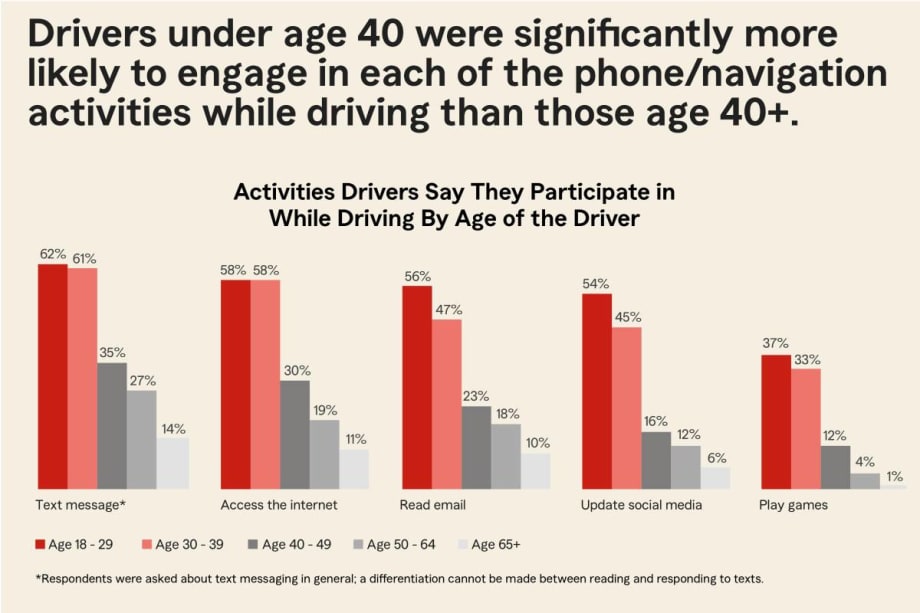
But it doesn't stop there. Drivers can’t seem to put their phones down and focus on the road. Rather, the latest survey found that 36% update their social media, 32% take photos, 30% record video and 28% play games while behind the wheel.
This is the ninth time State Farm has conducted the survey and the results are disturbing. Overall, many more drivers admitted to engaging in potentially distracting behavior while driving in 2020 than in past years.
The survey also found that certain groups of drivers were more likely to drive distracted. People under age 40 were much more likely than those age 40+ to say they engaged in each of the behaviors studied.
As for the gender breakdown, men were far more likely than women to participate in most of the distracted driving activities.
Noteworthy, survey respondents seem to be aware that engaging in the 14 activities studied causes distraction, which can be dangerous — yet they do so anyway.
For instance, 92% of drivers believed reading email while driving was distracting, yet one-third (32%) reported doing it anyway. In addition, nearly three out of five believed manually interacting with a phone while driving greatly increased the likelihood of an auto accident.
The findings also showed that two specific factors increased the likelihood of a driver fiddling with their phone.
Almost half (47%) of drivers surveyed said they had been involved in at least one auto accident as a driver where they had been determined to be at fault or where no fault was established. These individuals were significantly more likely to report participating in distracted behaviors while driving as compared to those who had not been in an accident.
Secondly, motorists who drive vehicles equipped with an advanced safety feature such as Automatic Emergency Braking, Adaptive Cruise Control, or Lane Keeping Assist, were more likely to report using their phones for various activities. Apparently, these drivers say they feel more comfortable taking their eyes off the road while safety features are active.
What will get drivers to ditch their phones and focus on the task at hand? The almighty dollar, for starters.
At least three-quarters of drivers said fines of $500 or more, or license suspensions of six months or longer, would deter them from using their phone while driving. Only 55% said laws, by themselves, were effective deterrents.
More Safety

The Safest Fleets Aren’t the Ones with the Most Technology
You’ve made the telematics investment. Here’s how to capture the other half of its value and build the safest fleet on the road.
Read More →
Sponsored•August 7, 2026
Hidden in Plain Sight: Fleet Compliance Risks
Fleet compliance isn't just about having policies — it's about consistently enforcing them. This practical guide reveals six hidden compliance risks common in public sector and shared fleet operations and outlines proven strategies to improve visibility, accountability, and audit readiness
Read More →
NETS Sets 2026 Fleet Safety Benchmark Conference for Indianapolis
The Sept. 15–17 program will feature fleet benchmarking data, case studies, emerging technologies, and implementation strategies while running alongside the NSC Safety Congress & Expo.
Read More →
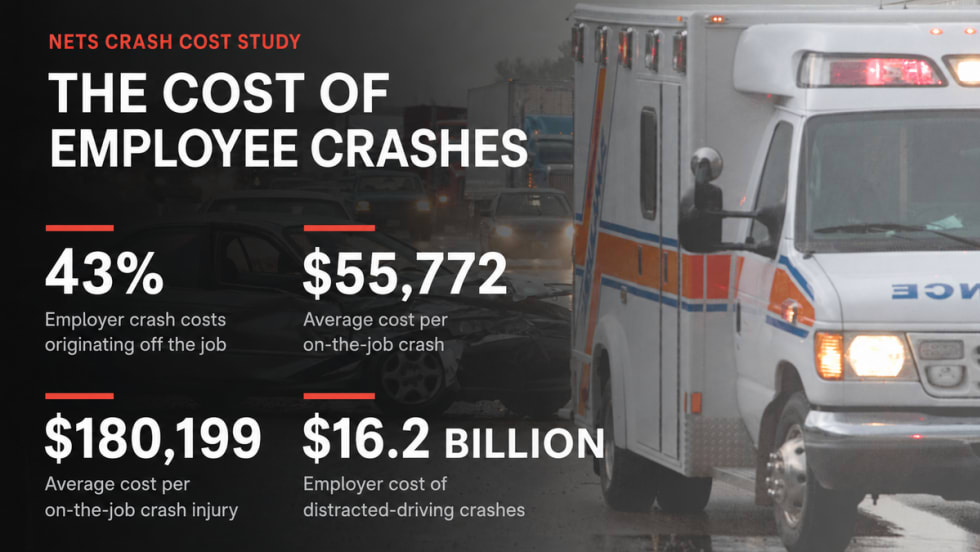
Off-the-Job Crashes Account for 43% of Employers’ $61.7 Billion Crash Burden
NETS quantifies costs dispersed across fleet, risk, HR, and other departments while providing new per-crash benchmarks for employers.
Read More →
Ram Recalls More Than 1.27 Million 1500 Pickups for Seat Belt Anchor Issue
The recall affects certain 2019-2026 Ram 1500 pickups that may have improperly attached second-row seat belt buckle anchors.
Read More →
Sponsored•July 17, 2026
How Better Visibility Cut Speeding Violations by 48%
Fleet leaders don't need more data, they need clearer visibility into what the data is saying. This case study explores how one utility replaced speeding-event counts with a single metric — miles driven in violation — to strengthen safety and significantly reduce speeding violations.
Read More →
Operation Safe Driver Week: Why the Industry's Oldest Safety Campaign Still Matters to Fleets
A look at how a 2007 enforcement initiative became one of the most consequential weeks on the fleet safety calendar, and what it means for your drivers in 2026.
Read More →
Nexar-Nauto Merger Aims to Give Fleets Better Safety Intelligence Through Larger Driving Dataset
Stefan Heck tells Automotive Fleet that combining more than 10 billion miles of driving history with Nexar's AI models will give fleets deeper insights into driver risk and roadway conditions than either company could provide independently.
Read More →
Sponsored•July 2, 2026
From Silos to Solutions: Relationship Management for Safer Fleets
From telematics adoption and driver accountability to policy consistency and risk mitigation, this episode breaks down what it really takes to build a safer fleet culture without slowing business down.
Read More →
IIHS Launches First Commercial Vehicle Safety Evaluations
The Insurance Institute for Highway Safety has begun evaluating heavy-duty pickups and cargo vans for driver protection. Which models earned top marks?
Read More →