




You Might Also Like: Top Trends in Fleet Finance
High-End Fleet Salaries Reach All-Time High
There was a jump in fleet managers who reported seeing a decrease in their salaries in 2020, though the majority continued to report annual salary increases.

Andy Lundin・Former Senior Editor
7 min to read
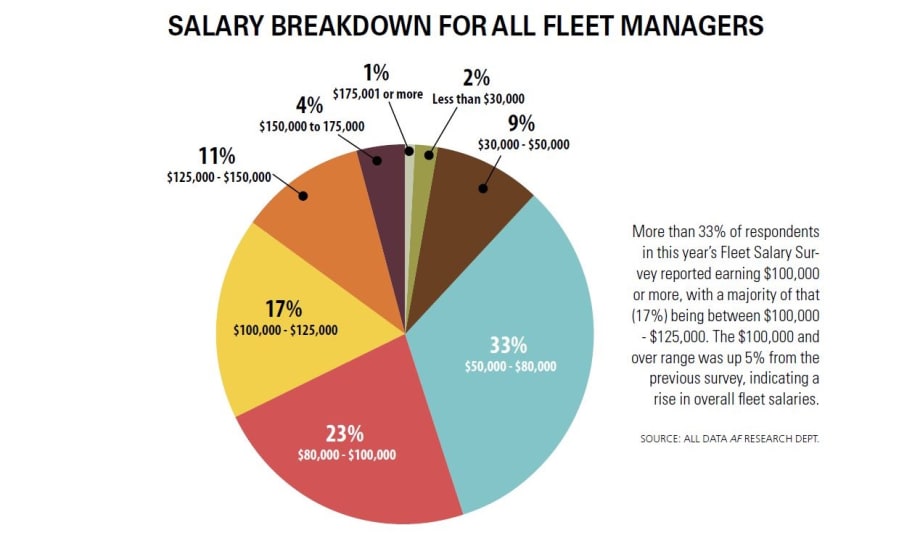
More than 33% of respondents in this year’s Biennial Fleet Salary Survey reported earning $100,000 or more annually, a 5% increase over the previous survey.
However, this year also saw more fleet managers who reported seeing a decrease in their salaries in 2020, primarily due to the effects of COVID-19, indicating an uneven year for overall fleet salaries.
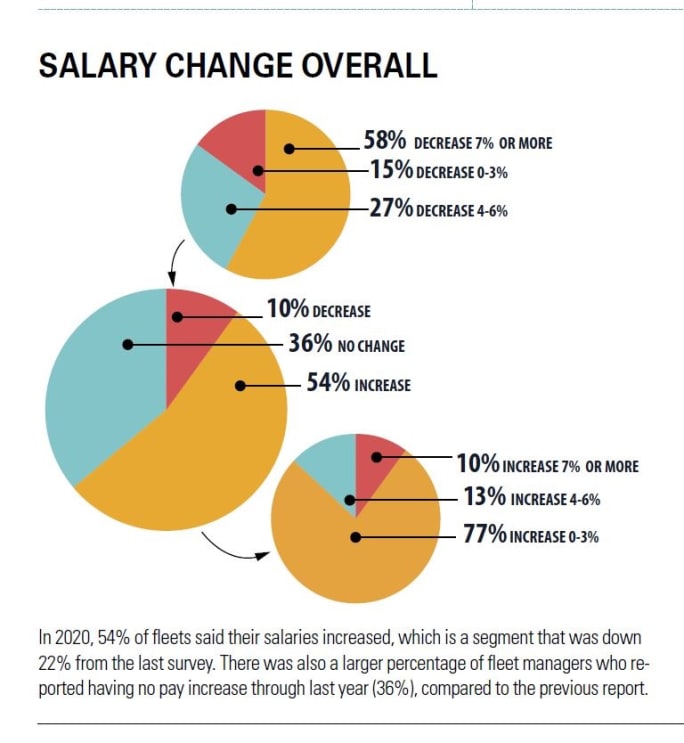
There was a 9% jump in fleet managers who reported a decrease in their salaries in 2020 compared to when fleet manager salary data was last compiled in 2019, with a total of 10% of respondents reporting a decline in their salaries according to AF’s 2021 Biennial Salary Survey. This was the largest percentage of fleets reporting a decrease in their salaries since fleets last reported a 6% salary decrease in 2013.
However, the majority of fleets in this year's survey (54%) continued to report an increase in their annual salaries, showing that not every fleet was negatively impacted by the pandemic.
There was also a larger percentage of fleet managers who reported having no pay increase through last year, which was 36% for the latest survey compared to 23% in the previous report.
Fleet Manager Feedback
One fleet manager who requested anonymity for this year’s salary survey stressed the repercussions of COVID-19 as being the cause for a decrease in their salary for 2020.
“This was directly related to a decrease in business activity resulting from the COVID-19 pandemic,” said the anonymous fleet manager.
The fleet manager added that this decrease was not a permanent effect and eventually reverted back to previous amounts. “Decreases were temporary and restored twelve months after being implemented,” the fleet manager said.
Other fleet managers who observed no fluctuations in their fleet salaries, such as Service Experts Heating & Air Conditioning, also noted this being a result of their corporate business plans to see through the pandemic.
“The company focused on making sure our front line field employees were taken care of but support personnel were frozen,” said David McCauley, North America fleet manager at Service Experts Heating & Air Conditioning. However, as companies such as McCauley’s began to navigate successfully through the pandemic, the return to normalcy has increased the likelihood of returning to regular salary increases.
Starting to see salaries return to normal or increase after periods of uncertainty was a common thread among several other fleet managers who opened up about their salaries for 2020.
“(Our company) did move up the date of the 2021 raises by two months,” noted McCauley.
Another anonymous fleet manager reported that COVID-19 created a period of uncertainty due to the repercussions of the pandemic, though successful business planning helped to mitigate the impact on fleet salaries.
“With COVID-19 last year we were modeling several scenarios (loss of sales in markets, etc.) in which salary increases and potential positions would be eliminated” said the anonymous fleet manager. “Thankfully with the diverse nature of our business units where we took severe hits in some segments others maintained and grew during the same time period for a much smaller, mitigated net loss overall.”
However, not every company navigated through the pandemic without experiencing substantial hardships.
Another anonymous fleet manager who exited a company that was on the verge of making major cutbacks to fleet successfully transitioned to another company during the pandemic and was fortunate enough to enter into a business that offered better pay and was more prepared to succeed in the pandemic.
“There was a tremendous concern about my salary in the beginning of 2020. The reason my salary went up is because I changed jobs,” the fleet manager said. “I was extremely lucky to avoid salary reduction and possible lay-off.”
Closer Look at the Numbers
While there were still fleets reporting an increase in their salary for 2020, more than three-fourths (77%) of these upticks represented at most a 3% salary increase. The other 23% said their salaries went up 4% or more.
Meanwhile, a majority (58%) of the salary decreases reported this year represented a 7% or more decline. Another 27% said that they saw salary decreases between 4% to 7%, and 15% saw a less than a 3% decrease.
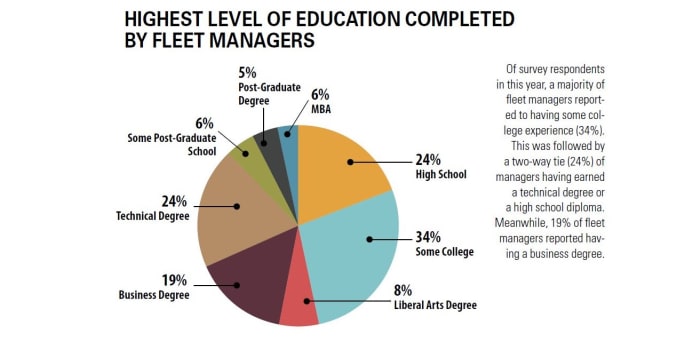
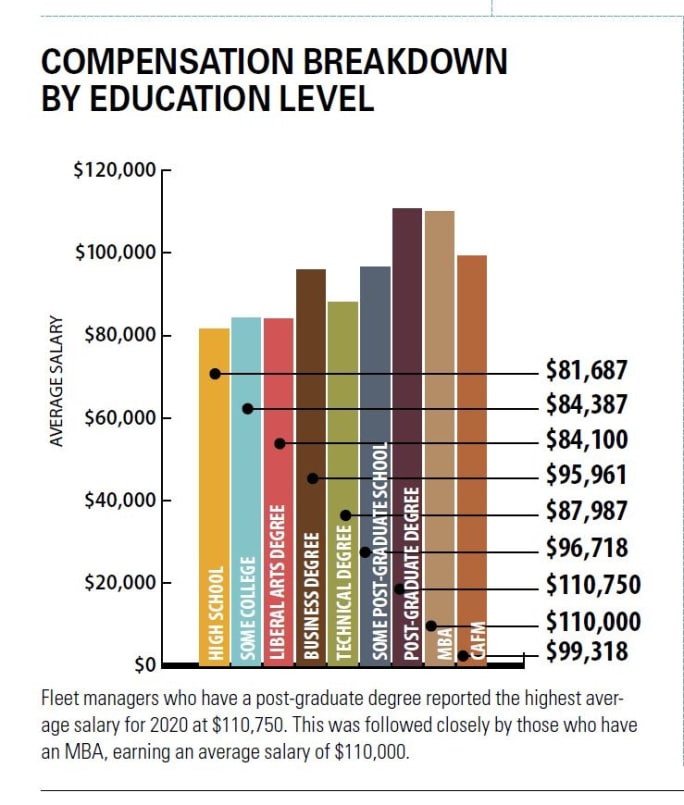
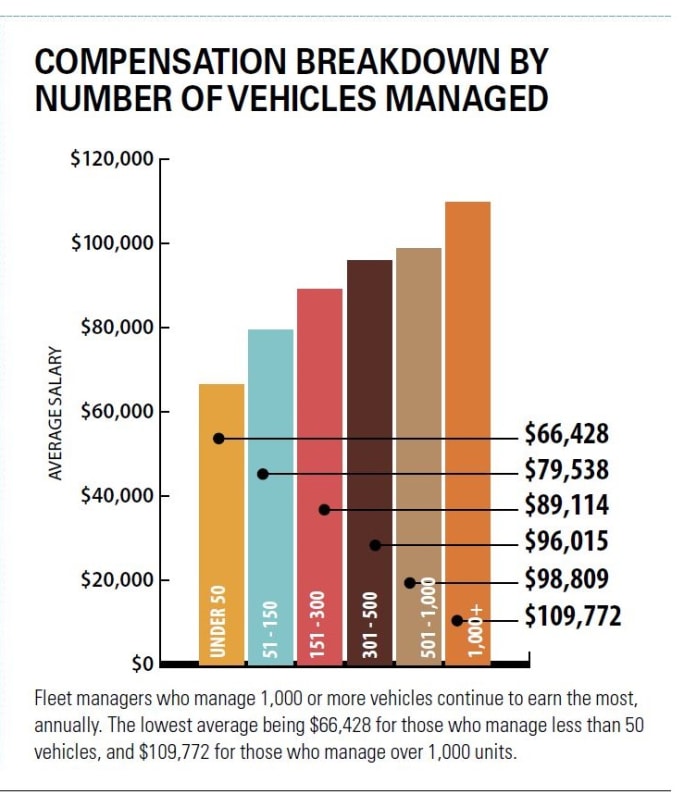
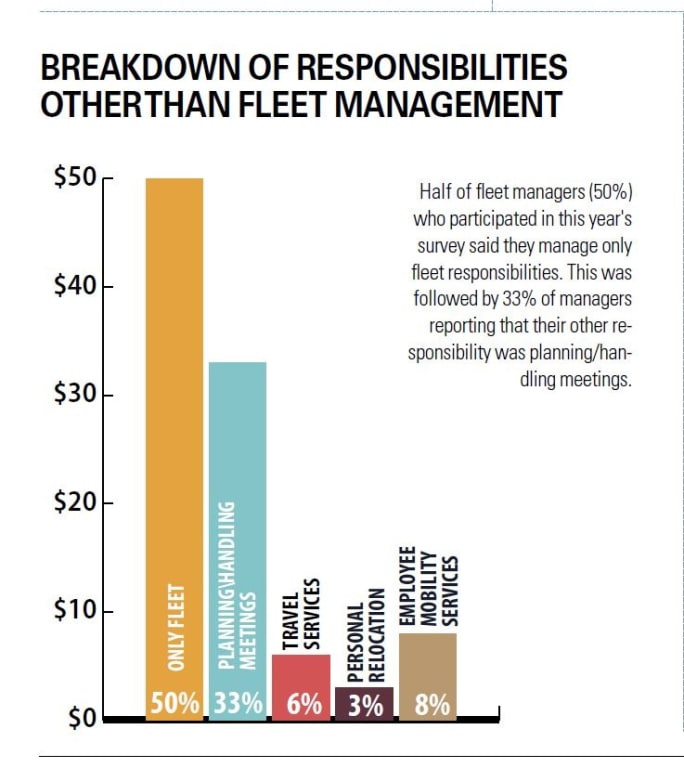
Despite the unprecedented 2020, the average salary for fleets remained mostly consistent with what was reported in the last iteration of the Salary Survey. The majority of fleet managers (33%) for this year’s survey reported earning a salary between $50,000 to $80,000, up slightly from 30% in the previous survey. The second most documented salary range, $80,000 to $100,000, accounted for 23% of fleet managers, which was down 5% from the previous survey’s 28%.
Comparing other salary ranges from the last survey noted a 2% increase in fleet managers who earned $100,000 - $125,000, and a 2% decrease for those who earned $30,000 to $50,000, annually.
Work Satisfaction
Despite the challenges that COVID-19 brought on fleet activity, with many seeing an impact on their average annual salaries, many fleet managers contributing their feedback to the survey this year reported being happy in their current position, which was due to a myriad of reasons, ranging from diverse work activity to simply appreciating the people in the industry
“It is always the people I work with and for that makes me happy in my current role. I was taught a long time ago by one of my mentors that the field employees are my customers. Work to keep them happy and things have a way of working out. He was not wrong,” said McCauley.
Echoing this sentiment was another anonymous fleet manager.
“The people interactions and knowing that my team is taking the right measures to evolve to a world class fleet focused on driver safety and bottom line has made me happy in my current role,” said an anonymous fleet manager.
Striving to have a successful fleet operation was a major contributor to general workplace happiness for the fleets who participated in the survey.
“My job keeps everything fresh, always moving forward with proven technologies,” said Gene Spencer, fleet asset manager for EC Source Services. “Everyone is always glad to see huge strides in company data consolidation. It’s the wow factor that makes work fun.”
For others it’s discovering solutions to various industry challenges that makes fleet an enjoyable industry to be a part of.
“As for me, the challenge (even with the added complexity of a pandemic) to develop and implement solutions that continue to add value, drive safety, increase vehicle uptime and deliver on driver and customer expectations is what motivates and keeps me happy in fleet management,” said Thurman Register, senior fleet manager for Ferguson.
Preparing for Change after COVID
The whirlwind of challenges that COVID-19 has brought on fleet managers has accelerated interest in initiating more changes in fleet management so that it might be better prepared to handle future obstacles.
“Fleet management by nature is constant change – long time fleet professionals have become change champions and accustomed to varying degrees of industry disruption every year. In some ways COVID accelerated projects and plans and caused fleet managers to develop, implement and refine processes to address ever evolving issues such as OEM shutdowns, supply chain disruption, and sudden shifts in customer expectations that required new ways to deliver and interact,” said Thurman Register, senior fleet manager for Ferguson. “Combined with keeping our drivers safe and vehicles moving, this past year of fleet management during a pandemic has proven to be an extreme challenge, and it’s not over yet. Semiconductor shortages and OEM order to delivery times increasing will keep fleet professionals extremely busy over the next 12-18 months.”
Driver safety continues to be a main area of focus for fleet managers to succeed moving forward, with proper vehicle sanitization still at the top of the list for many.
“I think (COVID-19) will add additional focus to the safety of our technicians and drivers. We will have to think of safety not only from a vehicle and driving perspective but how do we keep our drivers safe from the virus. We have started adding sanitizing stations to all of our new vehicles,” said McCauley.
However, not all of the changes in the industry are being completely welcomed by all fleet managers.
For example, some have expressed their grievances regarding the increase in the work-from-home business activity.
“I do think that this work from home movement is highly overrated and removes that spontaneous team environment which really supports loyalty and maybe takes the focus off salary,” said an anonymous fleet manager.
Subscribe to Our Newsletter
More Operations

How Fleets Can Recruit and Train Veterans for Technician Roles
Here's how the technician shortage has affected uptime for fleets, and what to do about it.
Read More →
Avis Budget Group Deploys Neology Toll Management Technology Across Major Brands
Neology’s neoFleet platform will manage toll transactions and toll-authority operations for vehicles across Avis, Budget, Payless, Budget Truck and Zipcar.
Read More →
Fleet Personal-Use Charges Edge Higher in 2026
Nearly eight in 10 surveyed fleets allow personal use of company vehicles, while just over half of respondents report charging employees for the privilege.
Read More →
The Future of Fleet + What’s Changing Right Now | AF News Recap
Could developments overseas offer a preview of what’s coming for U.S. fleets? This week, we’re looking at the future of AI, autonomy, and electrification, plus Ford Pro’s new certified pre-owned program, smarter vehicle offboarding, and a new way for fleets to manage toll expenses.
Read More →
How to Handle Vehicle Offboarding
What do fleet managers need to do when a driver leaves?
Read More →
Sponsored•October 1, 2026
Fleet Manager’s Ultimate Playbook: Navigating the New Standard in OEM Connectivity
Rising operating costs, driver safety concerns, and unplanned downtime are putting unprecedented pressure on modern fleets. Discover how fleet managers use embedded OEM connectivity and real-time vehicle data to cut TCO, prevent downtime, and protect drivers without aftermarket telematics hardware.
Read More →
U.S. Bank Adds Verra Mobility Toll Management to Voyager Fleet Platform
The integration allows U.S. Bank Voyager fleet customers to manage toll payments and violations alongside fuel, EV charging and maintenance expenses.
Read More →
ADAS Prevents Crashes. But Repairs Cost More | AF News Recap
ADAS-equipped vehicles may crash less often, but they can cost more when they do. This week, we’re breaking down what that tradeoff means for fleets, plus Subaru’s first Forester Wilderness Hybrid, Nissan’s new e-POWER Rogue, and why Calstart has become Catalyst Mobility.
Read More →
Moventum Fleet Management Names Mark Iorillo Head of Sales
Iorillo brings nearly 20 years of fleet management and sales experience to the role, including previous positions at Element Fleet Management, CEI, Donlen and Ryder.
Read More →
Fleet Has a Talent Pipeline Problem. What Comes Next? | AF News Recap
Where will fleet’s next generation of leaders come from? This week, we’re looking at the industry’s talent pipeline, what certification can add to a fleet career, how to build an award-worthy track record, and the return of Automotive Fleet’s Personal Use Survey.
Read More →