




Fleets Concerned of Budget Cuts Over Next Three Months, New Data Shows
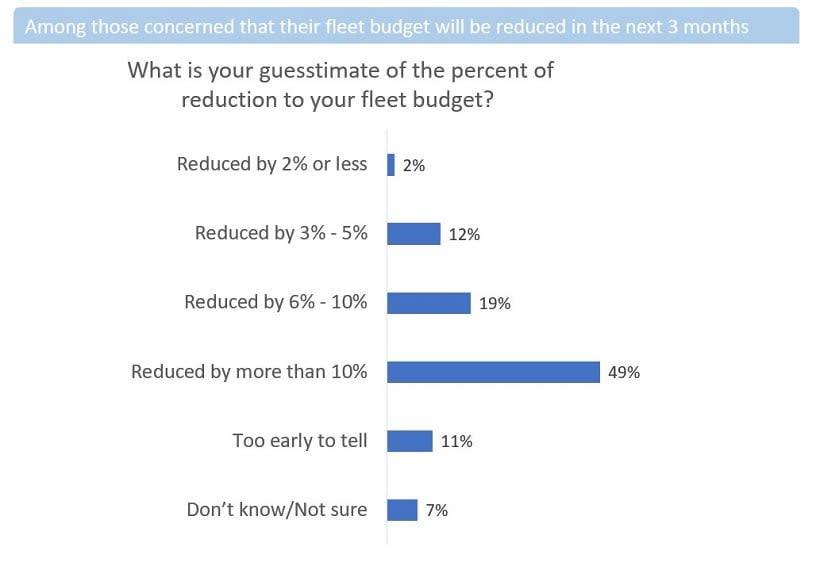
Nearly half of fleets concerned about budget cuts guesstimated cuts would be more than 10%. Another 37% of respondents expected budget cuts of varying percentages.

Data: Automotive Fleet
A majority of fleets are concerned that fleet budgets will be reduced by more than 10% over the next three months, according to findings from Automotive Fleet’s latest industry pulse survey.
Approximately 43% of fleet respondents said that they are concerned fleet budgets will be reduced in the next three months, with another 13% expressing uncertainty on how budgets will look in the next few months. Meanwhile, 36% said that they were unconcerned about budget cuts.
Nearly half (49%) who were concerned about budget cuts guesstimated cuts would be more than 10%. Meanwhile, approximately 37% of respondents expected budget cuts of varying percentages. Another 18% were unsure or said it was too early to tell.
Updated Fleet Policy
Changes to fleet policy were also observed by fleets in the latest pulse survey, with 45% stating that updates were recently made to policy with regards to responding to COVID-19. This was a 20% jump from the previous survey where only 25% said that updates were made.
Many examples were given by fleets regarding notes to policy updates that were made for the latest pulse survey, some of which include: extra sanitization of frequent touch points, only allowing one employee per vehicle, mandatory PPE, social distancing requirements, and more.
Acquisition and Fleet Cost Trends
A majority of respondents (49%) to the survey also expect vehicle acquisition volumes to remain unchanged in the next three months, which is up 9% from data pulled in the previous round of surveys. Those who reported they were acquiring fewer vehicles remained mostly unchanged from the previous month, which was at 26% mostly recently, down by only 1% from the previous survey findings.
Data: Automotive Fleet
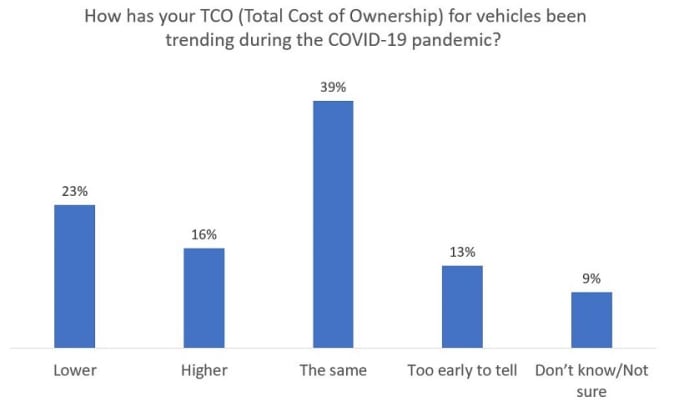
A majority of respondents (39%) also noted that TCO has remained the same amid the pandemic. However, 23% said that TCO was lower, and another 13% said it was too early to tell. Meanwhile, 16% reported TCO was higher. Findings for TCO remained consistent with what was reported in the previous pulse survey.
Fleet Activity
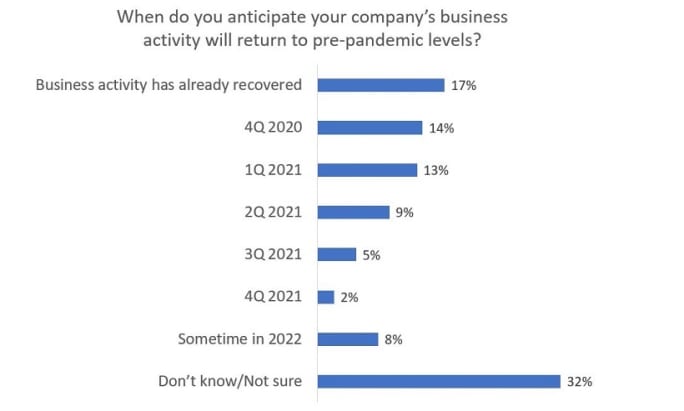
Readiness of fleets for reaching pre-pandemic levels of business activity varied significantly by fleets who participated in the latest round of surveys, most of whom (32%) said they were unsure of when activity would return to norms seen prior to the pandemic.
Following this 14% of fleets said they expected to return to pre-pandemic levels by Q4 2020, while 13% said things would return to normal somewhat after this in Q1 2021. Another 9% expected activity to return to normal in Q2 2021 and 5% said things would normalize by Q3 20201. Meanwhile, 8% expected activity to return to normal sometime in 2022.
Data: Automotive Fleet
Conversely to these fleets, 17% said that business activity had already recovered.
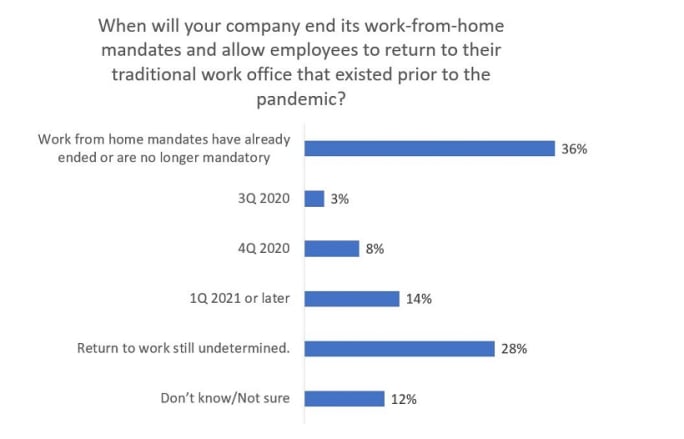
How companies are addressing work-from-home mandates also varied significantly during the latest survey, with most (36%) stating that these mandates had ended or are no longer mandatory. However, on the opposite end, 28% said they were still working from home indefinitely, another 8% expect this to lift by Q4 2020 and another 14% say this may not occur until Q1 2021 or later.
Most fleets expected a phased return to work (33%) when the work-from-home mandates start to lift, though 12% expect activity to remain work-from-home. Following this, 25% expect a full workforce return when these mandates lift and another 4% expect a partial workforce return.
Data: Automotive Fleet
Almost half of fleets involved in the survey say temperature checks are required prior to entering their place of work (47%), another 30% say this will not be mandatory, and another 23% say it’s too early to tell or that they are unsure.
A larger majority of fleets in the survey were declared an essential business by the government (64%), or is at least the case from some of their business units (21%). Another 12% said they were not declared and essential business.
More Operations

A buyer's guide to fleet management software in 2027
Buying fleet management software in 2027 means looking beyond features and price. As fleet operations, technology and expectations evolve, this guide explores what today’s fleet professionals should consider when choosing a system that can deliver value now and adapt to what comes next.
Read More →
What Will Shape the Next Era of Fleet Management?
EVs, AI, and autonomous vehicles are reshaping fleet management. Discover what’s ahead—and how fleet leaders can prepare for the next era.
Read More →
How Fleets Can Recruit and Train Veterans for Technician Roles
Here's how the technician shortage has affected uptime for fleets, and what to do about it.
Read More →

Avis Budget Group Deploys Neology Toll Management Technology Across Major Brands
Neology’s neoFleet platform will manage toll transactions and toll-authority operations for vehicles across Avis, Budget, Payless, Budget Truck and Zipcar.
Read More →
Fleet Personal-Use Charges Edge Higher in 2026
Nearly eight in 10 surveyed fleets allow personal use of company vehicles, while just over half of respondents report charging employees for the privilege.
Read More →
The Future of Fleet + What’s Changing Right Now | AF News Recap
Could developments overseas offer a preview of what’s coming for U.S. fleets? This week, we’re looking at the future of AI, autonomy, and electrification, plus Ford Pro’s new certified pre-owned program, smarter vehicle offboarding, and a new way for fleets to manage toll expenses.
Read More →
How to Handle Vehicle Offboarding
What do fleet managers need to do when a driver leaves?
Read More →
Fleet Manager’s Ultimate Playbook: Navigating the New Standard in OEM Connectivity
Rising operating costs, driver safety concerns, and unplanned downtime are putting unprecedented pressure on modern fleets. Discover how fleet managers use embedded OEM connectivity and real-time vehicle data to cut TCO, prevent downtime, and protect drivers without aftermarket telematics hardware.
Read More →
U.S. Bank Adds Verra Mobility Toll Management to Voyager Fleet Platform
The integration allows U.S. Bank Voyager fleet customers to manage toll payments and violations alongside fuel, EV charging and maintenance expenses.
Read More →
ADAS Prevents Crashes. But Repairs Cost More | AF News Recap
ADAS-equipped vehicles may crash less often, but they can cost more when they do. This week, we’re breaking down what that tradeoff means for fleets, plus Subaru’s first Forester Wilderness Hybrid, Nissan’s new e-POWER Rogue, and why Calstart has become Catalyst Mobility.
Read More →