




What Safety Features to Look for in a Luxury Vehicle
CHICAGO --- Luxury cars, as a vehicle class, have the best crash-test ratings. This vehicle class is also where automakers often introduce new innovations in safety technology.
CHICAGO --- Luxury cars, as a vehicle class, have the best crash-test ratings. This vehicle class is also where automakers often introduce new innovations in safety technology. According to cars.com, here are some of the safety features to look for when selecting a luxury vehicle: ** Discs and ABS --- If not standard, four-wheel disc brakes with an antilock braking system should at least be available for the vehicle. ** Electronic stability systems --- Such computer-based systems brake individual wheels and control the throttle to help the vehicle stay on its intended course in low-traction situations. This is especially desirable in SUVs to prevent rollovers. ** A full set of airbags --- All cars require frontal airbags, but the side-impact kind aren't required. Nearly all luxury models, however, include side-impact airbags for the front seats, at least in the form of torso-protection bags. Side curtain airbags cover side windows and provide protection for the heads of front and backseat occupants. In an SUV, it's a plus to have curtains that are designed to deploy in a rollover and to protect all passenger rows. ** Head restraints --- These protect against whiplash injuries. They should be high enough and close enough to the occupant's head to prevent injury. The best ones move forward in a collision in order to catch the occupant's head and ease it back. ** Tilt/telescoping steering wheel --- This feature helps maintain the proper distance between the driver and the airbag. ** Sonar and rearview cameras --- These help compensate for blind spots when backing up. ** Adjustable pedals --- Like the tilt/telescoping wheel, they also help maintain the right distance between the driver and airbag, regardless of the person's height. ** Headlights --- Xenon high-intensity-discharge headlights perform better than conventional incandescents. According to cars.com, they are brighter and cover a wider field of view. Also desirable are swiveling headlights that swing in the direction of a turn, as well as headlights that automatically switch between low and high beams after sensing other cars' headlights and taillights. ** Collision mitigation --- This feature can use the adaptive cruise control's radar sensor to monitor the road ahead and alert the driver about oncoming obstacles. If the driver fails to react to the visual and audible alerts, the system will begin to brake. If a collision is still imminent, the system brakes hard and triggers the front seat belt pretensioners. ** Collision preparation --- After a computer recognizes a panic stop or evasive maneuver, the system takes steps to prepare the occupants for impact. The front seat belt pretensioners tighten the belts, and the front seats change position if necessary. ** Rollover mitigation --- This feature is designed to stop a rollover after it has begun. ** Knee airbags --- These are designed to protect occupants' legs and prevent submarining. ** Lane-departure warning --- This uses a camera to track land markers on the pavement. Audible and visual alerts make the driver aware that the car is straying out of its lane. Activating a turn signal disables these warnings during intended lane changes. This helps prevent accidents resulting from falling asleep at the wheel. ** Active steering --- This system puts motor-controlled gearing in the steering column between the steering wheel and the rack-and-pinion mechanism. The resulting varied steering ratio allows the driver to turn the wheel less at lower speeds. The feature, tied to the electronic stability system, can take over and turn the front wheels when necessary to prevent such problems as fishtailing. ** Blind-spot warning --- A tiny camera mounted to each side mirror monitors blind spots and alerts the driver when they're occupied using a flashing light on either A-pillar.
More Safety

From Driver Well-Being to EV Charging | AF News Recap
Mental health belongs in the fleet safety conversation. This week, we’re looking at five ways fleets can support employee well-being before a crisis, plus Holman’s expansion in Mexico, new one-day Fleet Forward passes, and why EV charging demand is outpacing infrastructure growth.
Read More →
Nexar-Nauto Merger Aims to Give Fleets Better Safety Intelligence Through Larger Driving Dataset
Stefan Heck tells Automotive Fleet that combining more than 10 billion miles of driving history with Nexar's AI models will give fleets deeper insights into driver risk and roadway conditions than either company could provide independently.
Read More →
Don't Wait for a Crisis: 5 Ways to Build Mental Health Into Your Fleet Safety Program
For Suicide Prevention Month, fleet and safety leaders have an opportunity to put mental health where it belongs: at the center of workplace safety.
Read More →
How Camera Data Can Strengthen a Fleet’s Insurance Renewal
Insights from a commercial insurance carrier and a broker show how fleets can turn video telematic data, driver coaching, and improved claims results into a stronger case at insurance renewal.
Read More →
The Safest Fleets Aren’t the Ones with the Most Technology
You’ve made the telematics investment. Here’s how to capture the other half of its value and build the safest fleet on the road.
Read More →
Hidden in Plain Sight: Fleet Compliance Risks
Fleet compliance isn't just about having policies — it's about consistently enforcing them. This practical guide reveals six hidden compliance risks common in public sector and shared fleet operations and outlines proven strategies to improve visibility, accountability, and audit readiness
Read More →
NETS Sets 2026 Fleet Safety Benchmark Conference for Indianapolis
The Sept. 15–17 program will feature fleet benchmarking data, case studies, emerging technologies, and implementation strategies while running alongside the NSC Safety Congress & Expo.
Read More →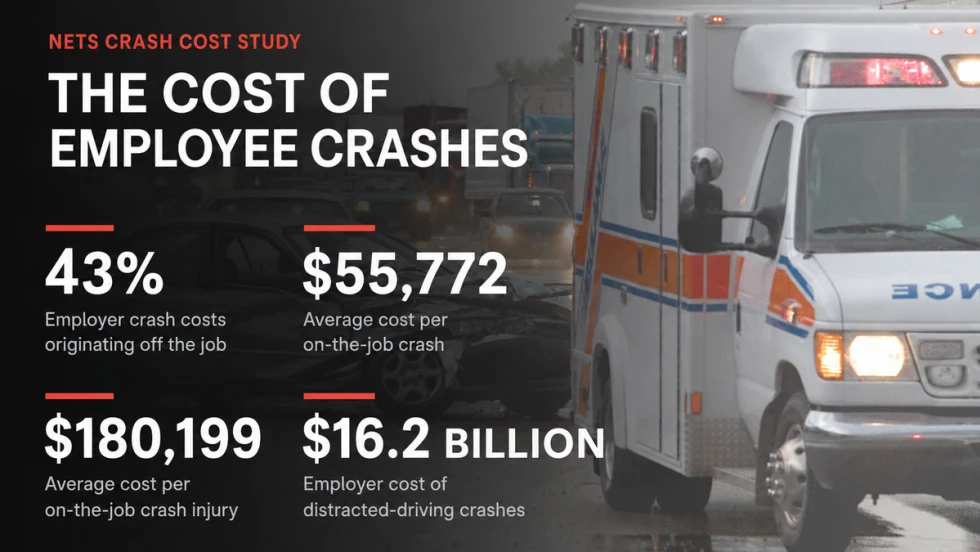
Off-the-Job Crashes Account for 43% of Employers’ $61.7 Billion Crash Burden
NETS quantifies costs dispersed across fleet, risk, HR, and other departments while providing new per-crash benchmarks for employers.
Read More →
Ram Recalls More Than 1.27 Million 1500 Pickups for Seat Belt Anchor Issue
The recall affects certain 2019-2026 Ram 1500 pickups that may have improperly attached second-row seat belt buckle anchors.
Read More →
Operation Safe Driver Week: Why the Industry's Oldest Safety Campaign Still Matters to Fleets
A look at how a 2007 enforcement initiative became one of the most consequential weeks on the fleet safety calendar, and what it means for your drivers in 2026.
Read More →