





Related: Industry Stakeholders Explore Innovation at the WEX North America Mobility Summit
WEX Report: Fleet Fuel Costs Rise as Purchasing Volumes Hold Steady in 2026
New analysis of WEX customer transaction data highlights rising fuel expenses, differences in purchasing behavior, and opportunities for fleet managers to evaluate operating costs.
November 18, 2026
WEX's 2026 fleet and mobility spending report examines fuel purchasing trends, rising operating costs, and potential vehicle replacement savings based on the company's customer transaction data.
Credit:
Automotive Fleet
4 min to read
- The WEX report indicates rising fuel expenses for fleet operations while purchasing volumes remain consistent in 2026.
- Analysis reveals differences in fleet purchasing behaviors, suggesting shifts in how resources are managed.
- Fleet managers are encouraged to explore opportunities to evaluate and potentially reduce operating costs.
*Summarized by AI
Commercial fleets continued purchasing roughly the same amount of fuel despite rising prices in 2026, according to a new report from WEX examining fuel spending and purchasing patterns.
The company released its WEX Index: The Fleet and Mobility Spend Report, which analyzes proprietary transaction data from January through September 2026 to examine how commercial fleets responded to higher fuel prices, where drivers purchased fuel, and opportunities to manage operating expenses.
The findings are based on WEX's customer transaction data, drawn from a business serving more than 600,000 mobility customers. Although the dataset provides insight into fleet purchasing behavior, it does not necessarily represent the broader commercial fleet industry.
Fuel Prices Increase While Consumption Remains Steady
According to WEX, the average U.S. fuel price reflected in its data increased approximately 43% in the third quarter of 2026 compared with the same period in 2025, rising from $3.38 to $4.85 per gallon.
Despite the increase, gallons purchased remained essentially unchanged across WEX's Mobility segment.
The report identified several areas where fleet purchasing decisions could influence operating costs.
Key findings include:
- Fuel purchasing costs: WEX found that 38.1% of North American local fleets analyzed paid more than the local WEX Fuel Price Index benchmark, while 36.1% paid approximately the benchmark price and 25.8% paid below it.
- Premium gasoline purchases: Premium fuel accounted for 7.6% of gasoline transactions across the five industries examined, with an average price difference of 78 cents per gallon compared with regular gasoline.
- Potential fuel savings: WEX estimated up to $86.9 million in potential savings through the third quarter of 2026 if vehicles that did not require premium gasoline used regular fuel instead.
- Driver spending differences: Among fleets with five or more drivers, 81.4% had at least one driver whose fuel spending exceeded the fleet average.
Higher driver spending does not necessarily indicate misuse or inefficient purchasing. Differences in routes, vehicle types, mileage, and operating requirements can influence fuel expenses.
Which Fleet Industries Paid More for Fuel?
WEX also examined differences in fuel purchasing costs across several commercial fleet industries.
Manufacturing fleets had the highest percentage of fleets paying above the local fuel price benchmark among the industries highlighted, followed by retail trade.
Fleet industry | Fleets paying above benchmark |
|---|---|
Manufacturing | 42.3% |
Retail trade | 39.4% |
Construction | 38.0% |
Other services | 38.0% |
Administrative and waste services | 36.2% |
The findings reflect transactions within WEX's customer base and may not represent fuel purchasing patterns across each industry as a whole.
The report notes that purchasing fuel above the local benchmark is not always avoidable. Driver schedules, route requirements, and station availability can influence where vehicles refuel.
For fleet managers, the findings point to the importance of evaluating fuel prices alongside operational factors, including the time and mileage required to reach lower-cost stations.
Using Fleet Data to Identify Spending and Operational Risks
Beyond fuel prices, the WEX Index examines how transaction data can help fleet managers identify spending variations and potential operational risks.
The report found that 81.4% of fleets with at least five drivers had one or more drivers spending above their fleet's average.
WEX suggests that fleet managers review unusual transactions alongside driver assignments, routes, and vehicle requirements before determining whether additional action is necessary.
The report also examines fuel purchasing activity outside typical business hours. Weekday overnight transactions, between 10 p.m. and 6 a.m., accounted for approximately 6.7% of transactions across industries.
For fleets operating overnight routes or around-the-clock services, those transactions may reflect normal business activity rather than suspicious behavior.
WEX recommends establishing spending baselines, comparing purchases with local fuel price benchmarks, and using transaction monitoring tools to identify unusual patterns.
Vehicle Replacement Decisions and Total Cost of Ownership
The report also considers how vehicle replacement decisions could influence long-term fleet operating expenses.
Sawatch Labs, a WEX company, analyzed telematics data from 8,798 vehicles in U.S. and European fleets to evaluate potential electric vehicle replacements.
The analysis identified 27% of the vehicles as candidates for EV replacement. According to the company's modeling, recommended replacements could generate average savings of $16,595 per vehicle, representing a 15% reduction in total cost of ownership over the vehicle's service life.
These figures represent modeled estimates rather than verified savings from completed replacements.
Actual costs depend on vehicle application, mileage, energy prices, charging access, and other operating requirements.
The findings emphasize the importance of evaluating individual vehicle use cases and total cost of ownership when making replacement decisions, rather than applying the same strategy across an entire fleet.
What Fleet Managers Can Take From the Findings
WEX recommends several practices for evaluating fleet operating costs, including establishing a fuel spending baseline, comparing transactions against local market prices, monitoring purchasing patterns, and reassessing vehicle replacement options.
"Fleets can't control the price of fuel, but they can control how they respond to it," said Melissa Smith, CEO and president of WEX. "The WEX Index gives the mobility sector a fixed point of reference built from real transactions by real fleets."
WEX said the inaugural report will serve as a baseline for future editions, allowing comparisons of fleet purchasing and spending trends over time.
The full report is available through the WEX Index resource page.
More Fuel

October Fuel Trends Show Diverging Gasoline and Diesel Prices
Get the latest fuel trends from October.
Read More →
Fuel Prices Surge in September | September Fuel Update
September brought major fuel price swings, including diesel crossing $6 a gallon. Here’s how gas and diesel prices changed throughout the month, and where they stood heading into October.
Read More →
Turning Fleet Payment Data into Executive Insights
Ramel Lindsay of U.S. Bank Voyager discusses how fleets can transform payment and transaction data into actionable intelligence to reduce costs, improve oversight, and support executive decision-making.
Read More →
Why the IRS Raised Its Mileage Rate in the Middle of 2026
Fuel-price volatility drove the rare increase to 76 cents per mile, the fifth midyear adjustment since 2000.
Read More →
July Fuel Update: Prices Keep Rising in Light of More Conflict
Gas prices continue to rise as more and more conflicts do, too.
Read More →
Bob Adamsky on Fuel Volatility: "Don't Panic, Have a Plan."
When it comes to up and down fuel prices, Adamsky has a message for fleets: “Don’t panic.”
Read More →
How Fleets Can Gain Control of Non-Fuel Spend
Fuel often gets the spotlight, but non-fuel expenses can have a major impact on fleet costs. Ramel Lindsay of U.S. Bank Voyager discusses how fleets can gain better visibility and control over these often-overlooked expenditures.
Read More →
Fuel is Just the Start: How Middle East Tensions are Driving Up Fleet Maintenance Costs
The Middle East conflict is doing more than pushing up fuel prices. It’s also raising the cost of key maintenance products your fleet depends on, from motor oil to tires to windshield wipers. Here’s what you need to know about this budget-busting situation.
Read More →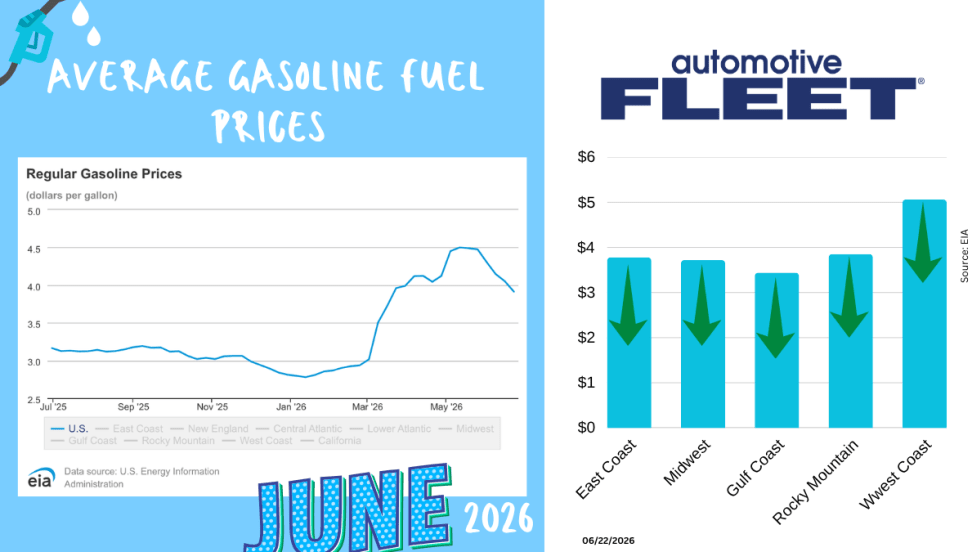
June Fuel Update: Prices Fall Below $4
Drivers are finally getting some relief at the pump. The national average gas price has dropped below $4 a gallon for the first time in months, with prices falling in 47 states as oil markets react to developments in U.S.-Iran negotiations.
Read More →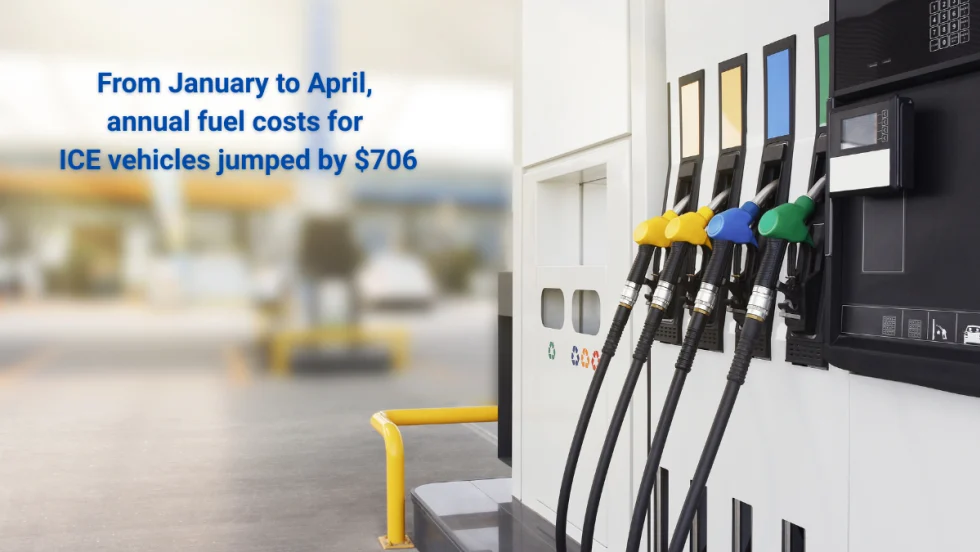
Study: How 2026's Gas Price Hikes Affect Different Vehicle Types
New data from iSeeCars reveals how rising fuel costs have affected different vehicle segments as gasoline prices climbed nearly 46% over the past four months.
Read More →