




Westport/Isuzu CNG-DI Cleaner than Diesel, More Efficient than CNG
Isuzu and Westport recently entered into a new joint venture agreement through which Isuzu will provide Westport approximately $1 million for the design and construction of two next-generation CNG-DI ELF trucks to be delivered in 2005, according to the Green Car Congress.
Isuzu and Westport recently entered into a new joint venture agreement through which Isuzu will provide Westport approximately $1 million for the design and construction of two next-generation CNG-DI ELF trucks to be delivered in 2005, according to the Green Car Congress. A technical analysis presented by Isuzu at the 9th International Association for Natural Gas Vehicles Conference shows that the mono-fuel CNG-DI engines can be 75 percent cleaner than today’s diesel engines and 25-30 percent more energy-efficient than current natural gas engines. The conventional use of CNG as fuel makes it possible to achieve virtually zero particulate matter (PM) emissions, with a significant reduction in NOx emissions as well. When it comes to the thermal efficiency, however, conventional CNG-powered engines are on par with gasoline-powered engines and slightly less efficient than conventional diesels. Isuzu and Westport wanted to improve thermal efficiency by 25 percent or more over the conventional approach and to achieve at least 75 percent lower emissions than the current ultra-low-emission vehicles. The CNG-DI system promises to be simple, lightweight, low-cost, reliable, and durable. It also has lower noise and less vibration. Isuzu has concluded that a good potential exists for commercial application of this technology. Isuzu and Westport first showed the CNG-DI technology in a 2-ton ELF prototype truck brought to last year’s Challenge Bibendum. The truck won 2 Gold and 1 Silver awards there. The CNG-DI engine in the ELF prototype used a 4.5-liter, in-line four-cylinder engine as the base. Isuzu developed the turbocharger Exhaust Gas Recirculation (EGR) oxidizing catalytic converter and urea SCR catalyst for NOx reduction. Westport and Isuzu jointly developed the electronically controlled common rail injection system and hot-surface ignition system. Isuzu/Westport CNG-DI ELF specifications include:
Displacement: 4.5 liter
Engine configuration: In-line, 4-cylinder
Power: 100 kW (134 hp)
Torque: 500 Nm (369 lb-ft)
Fuel storage: 2-bottle CNG cylinders (Dynetek)
Storage pressure: 250 bar (3,675 psi)
Maximum speed: 130 km/h (81 mph)
Operational range: 300 km (186 miles) Funding from the New Energy and Industrial Technology Development Organization (NEDO of Japan) and the Japan Gas Association supported the Isuzu/Westport research.
More Operations

Slate Electric SUV, Pickup Switchable Model Aims For Light-Duty Fleets
Everything about this EV is counterintuitive and understated, making it stand out from the crowd.
Read More →
How to Manage Conflict for Your Fleet Operations
Conflict management is becoming a core leadership skill. Here are five strategies fleet leaders should know.
Read More →
Turning Connected Vehicle Data Into Decisions That Matter
Fleet leaders have more data than ever, but turning that data into clear, actionable decisions remains a challenge. This white paper shows how leading organizations are using connected vehicle data to improve safety, reduce costs, and optimize fleet performance. Learn how to turn insight into action across your fleet.
Read More →

Cameras, Safety and Insurance: From Reactive Claims to Real-time Prevention
Commercial auto remains one of the most challenging and costly lines of coverage for fleet operators and insurers alike. Learn more about how to effectively address these issues from Onur Aksan, Enterprise Business Development Executive, Geotab.
Read More →
Are You Tracking Your Fleet's True Total Cost of Ownership?
Bobit Business Media surveyed 190 fleet professionals and found that while most fleets are tracking costs, fragmented systems and data gaps are keeping true TCO visibility out of reach. With rising pressure to control spend in an increasingly volatile environment, the gap between what fleets think they know and what the data actually shows is wider than you might expect. See how your peers are managing costs today and where the industry still has room to improve.
Read More →
Turn Fleet Data Into Smarter Decisions
Fleet leaders have access to more operational data than ever, but disconnected systems and unclear metrics often slow decision-making instead of improving it. This whitepaper outlines five practical steps fleets can take to transform fragmented data into actionable insights that improve planning, safety, utilization, and long-term performance.
Read More →
Hybrids: Electrification Without the Challenges
For fleet managers, fuel is one of the biggest line items in the budget — and it's one hybrids can shrink without changing how your people work. Download the eBook to see the numbers, understand the technology, and get a step-by-step guide to making the switch.
Read More →
How NOV Uses Telematics to Improve Fleet Safety Across 160 Locations
James Victory of NOV discusses how the company manages fleet safety, maintenance, and telematics across more than 150 locations supporting oilfield operations throughout the U.S.
Read More →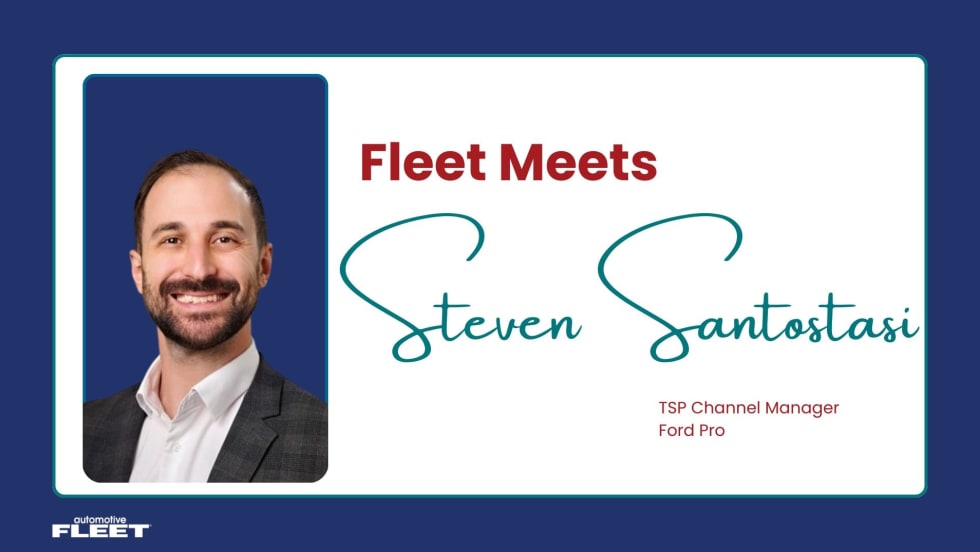
Fleet Meets: Steven Santostasi
This edition of the Fleet Meets series features Steven Santostasi, the current TSP channel manager for Ford Pro.
Read More →
Why Fleet Managers Are Replacing Departmental Vehicles with Shared Motor Pools
Departmentally assigned vehicles often create hidden costs through underutilization, poor visibility, and increased administrative burden. This white paper explores how shared motor pool strategies help fleets reduce costs, improve accountability, and optimize vehicle utilization.
Read More →