




Volvo V70 and S80 Available With Five-Cylinder, 2.5L Turbocharged Flexifuel Engine
GREENSBORO, N.C. – The Volvo V70 and S80 are now also available with a five-cylinder, 2.5L turbocharged Flexifuel engine with a power output of 200 hp and 300 Nm of torque.

GREENSBORO, N.C. – The Volvo V70 and S80 are now also available with a five-cylinder, 2.5L turbocharged Flexifuel engine with a power output of 200 hp (147 kW) and 300 Nm of torque. Volvo Cars is launching Flexifuel cars on increasing numbers of markets. In addition to Sweden, which is by far the largest market, these models are sold in France, Norway, Italy, Finland, Germany, Austria, the Netherlands, Spain, Great Britain, Ireland, Belgium, Switzerland, and Thailand. Flexifuel cars are about to be introduced in more countries across Europe.
“The 2.5L version adds spice to our environmental offer. It emphasizes our aim to offer our buyers the possibility of combining performance with environmental responsibility,” said Fredrik Arp, president and CEO of Volvo Car Corporation. “With 200 hp on tap, the driver gets a dynamic drive without compromising fuel economy.”
Another new development is that the 2.5FT is available with both a manual and an automatic gearbox. Fuel consumption (EU combined) for the new 2.5L Flexifuel version is 9.2 l/100 km (V70 and S80) with the manual gearbox and 10.2 l/100 km (V70) and 10.1 l/100 km (S80) with the automatic gearbox.
The Flexifuel cars can run on E-85 bioethanol or 95-octane unleaded petrol — or any mix of these two fuels. Due to its lower energy content, fuel consumption when running on E-85 is 30-40 percent higher than when running on petrol. The exact difference depends on variables such as driving style, exterior temperature, and variations in the fuel specification.
Both the
Volvo S80 and V70 have also been available with a 2L four-cylinder, naturally
aspirated Flexifuel engine since the end of 2007. The 2.0F produces 145 hp (107
kW) and 185 Nm of torque. The Flexifuel variants of the Volvo S40, V50, and C30
have a four-cylinder 1.8L naturally aspirated engine, the 1.8F, which produces
125 hp (92 kW) and 165 Nm of torque. All engines and other relevant components
have been adapted for driving on E85 through a number of modifications.

In total, Volvo Cars expects to sell around 20,000 Flexifuel cars in 2008.
Also, the smooth Powershift gearbox cuts fuel consumption by eight percent in the Volvo C30, S40, and V50. The two-liter turbodiesel version of the Volvo C30, S40, and V50 is now also available with a fully-automatic transmission. This new Powershift transmission is a six-speed unit and it significantly cuts fuel consumption compared with a conventional automatic transmission.
The Powershift transmission has been developed by Volvo Cars in cooperation with its transmission partner Getrag. Powershift operates in principle as two parallel manual gearboxes. It has twin wet clutches that work independently of one another. One clutch controls the odd gears (1, 3, 5, and reverse) while the other handles the even gears (2, 4, and 6). The two clutches operate alternately, with one engaging while the other disengages.
This means that at the same time as the engine gets full power and maximum thrust in first gear, second gear is placed in readiness to be engaged. And when second gear has been engaged, third gear is readied, and so on. This promotes a continuous flood of power without any disruption in power delivery or any torque loss, resulting in extremely fast and silky-smooth gearchanges while maintaining acceleration throughout the gearchanging process.
More Operations

Fleet Has a Talent Pipeline Problem. What Comes Next? | AF News Recap
Where will fleet’s next generation of leaders come from? This week, we’re looking at the industry’s talent pipeline, what certification can add to a fleet career, how to build an award-worthy track record, and the return of Automotive Fleet’s Personal Use Survey.
Read More →
Smith System Launches Driver Risk Management Program
Fleets have more driver data than ever, but identifying risky behavior doesn't necessarily correct it. Smith System's new Driver Risk Management program combines monitoring, training, and follow-up coaching to help fleets connect risk signals with driver intervention.
Read More →
Automotive Fleet Opens 2026 Personal Use Survey for Commercial Fleet Managers
Less than two weeks left! Commercial and corporate fleet managers are invited to share how their organizations handle company vehicle personal-use policies, charges, and driver eligibility.
Read More →
From AI Prompts to AI-Generated Safety Songs | AF News Recap
Can better prompts make AI more useful for fleet managers? This week, we’re breaking down smarter fleet analysis, an AI-assisted experiment that turned safety training into music, and what happened to fuel prices in August.
Read More →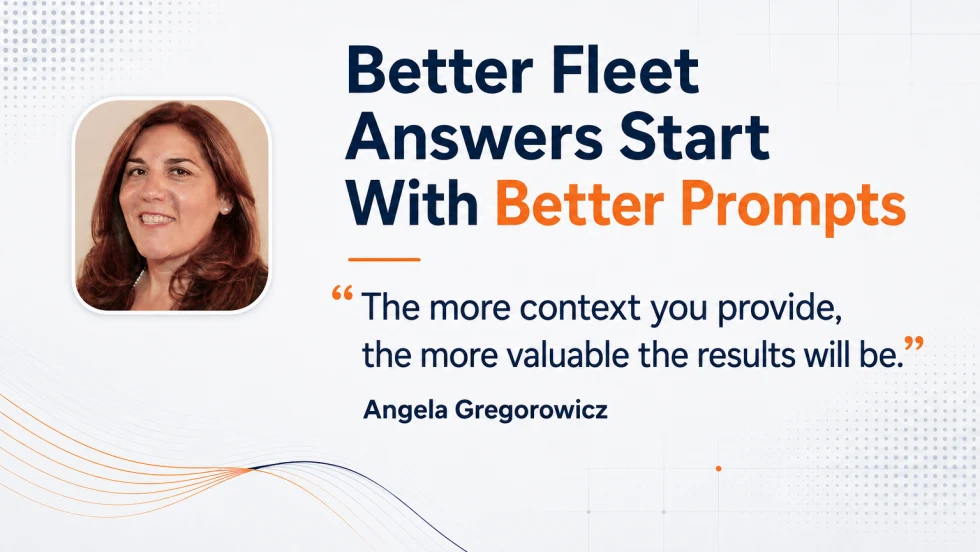
How to Write Better AI Prompts for Fleet Analysis
Include these six elements in your fleet prompts to generate more relevant analysis and accurate answers.
Read More →
Fleet Meets: Eric Kilgore
This edition of the Fleet Meets series features one of the industry's best leaders driving multi-market and national operations.
Read More →
Why Reactive Fleet Management Is Becoming Too Expensive to Sustain
Research highlights a growing need for proactive management strategies to address rising costs in fleet operations effectively.
Read More →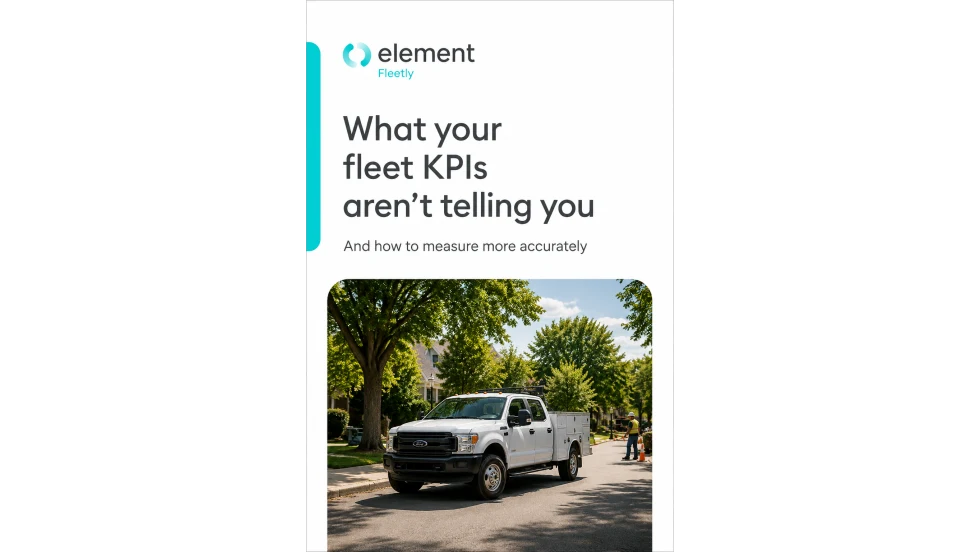
What Your Fleet KPIs Aren’t Telling You
Tracking fleet metrics is only useful when the data leads to better decisions. This guide helps fleet leaders assess cost, utilization, and downtime more accurately, identify performance gaps, and prioritize the actions that can improve operational results.
Read More →
Hidden in Plain Sight: Fleet Compliance Risks
Fleet compliance isn't just about having policies — it's about consistently enforcing them. This practical guide reveals six hidden compliance risks common in public sector and shared fleet operations and outlines proven strategies to improve visibility, accountability, and audit readiness
Read More →
Turning Fleet Payment Data into Executive Insights
Does data alone drive results in operations?
Read More →