




Volvo to Supply Autonomous Vehicles to Uber
Volvo and Uber have formed a $300-million partnership in which the Swedish automaker will supply fully autonomous vehicles to Uber for use by the ride-sharing service by 2021.
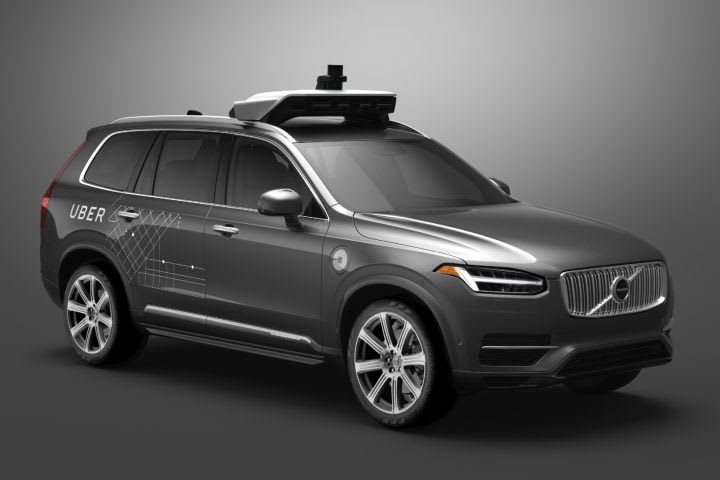
Photo courtesy of Volvo.
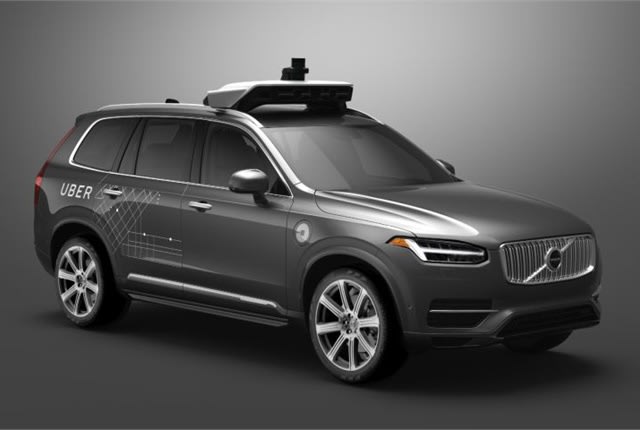
Photo courtesy of Volvo.
Volvo and Uber have formed a $300-million partnership in which the Swedish automaker will supply fully autonomous vehicles to Uber for use by the ride-sharing service by 2021.
Volvo will also supply modified XC90 SUVs for use in Pittsburgh later this month, reports Bloomberg. Uber will allow customers summon the self-driving cars from their mobile phones.
The joint project will focus on the development of new base vehicles using the latest autonomous driving technologies, including driverless cars, Volvo announced. Volvo Cars will manufacture the base vehicles for purchase by Uber. Volvo and Uber are contributing a combined $300 million to the project.
“Both Uber and Volvo will use the same base vehicle for the next stage of their own autonomous car strategies,” according to a Volvo statement. “This will involve Uber adding its own self-developed autonomous driving systems to the Volvo base vehicle. Volvo will use the same base vehicle for the next stage of its own autonomous car strategy, which will involve fully autonomous driving.”
The new base vehicle will be developed on Volvo Cars’ Scalable Product Architecture (SPA), currently used on Volvo’s XC90, S90, and V90.
Volvo Cars and Uber engineers will work closely together on project development, extending the scalability of the SPA platform to include all needed safety, redundancy, and new features required for autonomous vehicles, according to Volvo.
In related news, Uber announced it has acquired Otto, a driverless-truck startup founded earlier this year.
More Operations

Avis Budget Group Deploys Neology Toll Management Technology Across Major Brands
Neology’s neoFleet platform will manage toll transactions and toll-authority operations for vehicles across Avis, Budget, Payless, Budget Truck and Zipcar.
Read More →
Fleet Personal-Use Charges Edge Higher in 2026
Nearly eight in 10 surveyed fleets allow personal use of company vehicles, while just over half of respondents report charging employees for the privilege.
Read More →
The Future of Fleet + What’s Changing Right Now | AF News Recap
Could developments overseas offer a preview of what’s coming for U.S. fleets? This week, we’re looking at the future of AI, autonomy, and electrification, plus Ford Pro’s new certified pre-owned program, smarter vehicle offboarding, and a new way for fleets to manage toll expenses.
Read More →
How to Handle Vehicle Offboarding
What do fleet managers need to do when a driver leaves?
Read More →
Fleet Manager’s Ultimate Playbook: Navigating the New Standard in OEM Connectivity
Rising operating costs, driver safety concerns, and unplanned downtime are putting unprecedented pressure on modern fleets. Discover how fleet managers use embedded OEM connectivity and real-time vehicle data to cut TCO, prevent downtime, and protect drivers without aftermarket telematics hardware.
Read More →
U.S. Bank Adds Verra Mobility Toll Management to Voyager Fleet Platform
The integration allows U.S. Bank Voyager fleet customers to manage toll payments and violations alongside fuel, EV charging and maintenance expenses.
Read More →
ADAS Prevents Crashes. But Repairs Cost More | AF News Recap
ADAS-equipped vehicles may crash less often, but they can cost more when they do. This week, we’re breaking down what that tradeoff means for fleets, plus Subaru’s first Forester Wilderness Hybrid, Nissan’s new e-POWER Rogue, and why Calstart has become Catalyst Mobility.
Read More →
Moventum Fleet Management Names Mark Iorillo Head of Sales
Iorillo brings nearly 20 years of fleet management and sales experience to the role, including previous positions at Element Fleet Management, CEI, Donlen and Ryder.
Read More →
Fleet Has a Talent Pipeline Problem. What Comes Next? | AF News Recap
Where will fleet’s next generation of leaders come from? This week, we’re looking at the industry’s talent pipeline, what certification can add to a fleet career, how to build an award-worthy track record, and the return of Automotive Fleet’s Personal Use Survey.
Read More →
Smith System Launches Driver Risk Management Program
Fleets have more driver data than ever, but identifying risky behavior doesn't necessarily correct it. Smith System's new Driver Risk Management program combines monitoring, training, and follow-up coaching to help fleets connect risk signals with driver intervention.
Read More →