




Volkswagen Recalls Tiguan, Routan Vehicles
The Tiguan recall affects 151,389 SUVs at risk for stalling, while the Routan recall concerns 18,526 minivans that may have faulty ignition switches.
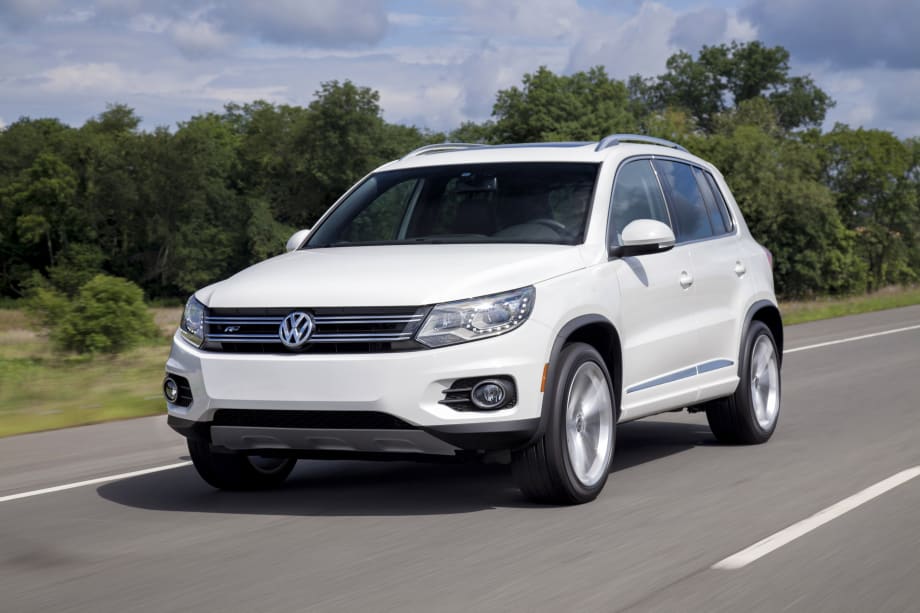
Photo of 2014 Volkswagen Tiguan courtesy of Volkswagen.
Photo of 2014 Volkswagen Tiguan courtesy of Volkswagen.
Volkswagen Group of America is issuing two separate safety recalls – one for 2009-2014 model-year Tiguan SUVs and another for 2009 MY Routan minivans, according to the National Highway Traffic Safety Administration.
The Tiguan recall involves 151,389 SUVs manufactured from July 2007 to June 2014. When the vehicle uses winterized fuel, bubbles might form in the fuel system and lead to stalling.
Dealers will update the vehicle software to increase the fuel pump pressure and remedy the problem. There will be no charge for this service.
The Routan recall involves 18,526 2009 model-year minivans. The ignition switch in these vehicles might inadvertently move from the “run” position to the “off” or “accessory” position and deactivate vehicle safety systems, NHTSA said.
If the ignition switch moves from the “run” position, the engine can turn off and depower such safety systems as air bags, power steering and power braking.
The minivans were built by Chrysler, which recently issued recalls of its own to address ignition switch problems.
Volkswagen has previously recalled 2010-MY Routans for the same issue. A similar problem spurred General Motors’ ignition switch recalls.
The problem is most likely to occur when the vehicle is traveling over rough road conditions, or when something else jars the key ring. Until dealer technicians make the needed ignition switch modification, Volkswagen is advising drivers to remove everything from their key ring except the car key. Any added weight on the key ring can increase the likelihood of the problem occurring.
The Routan recall is set to begin this month. There will be no charge for the ignition switch modification.
Volkswagen can be reached at 1-800-822-8987.
More Safety

Nexar-Nauto Merger Aims to Give Fleets Better Safety Intelligence Through Larger Driving Dataset
Stefan Heck tells Automotive Fleet that combining more than 10 billion miles of driving history with Nexar's AI models will give fleets deeper insights into driver risk and roadway conditions than either company could provide independently.
Read More →
Don't Wait for a Crisis: 5 Ways to Build Mental Health Into Your Fleet Safety Program
For Suicide Prevention Month, fleet and safety leaders have an opportunity to put mental health where it belongs: at the center of workplace safety.
Read More →
How Camera Data Can Strengthen a Fleet’s Insurance Renewal
Insights from a commercial insurance carrier and a broker show how fleets can turn video telematic data, driver coaching, and improved claims results into a stronger case at insurance renewal.
Read More →
The Safest Fleets Aren’t the Ones with the Most Technology
You’ve made the telematics investment. Here’s how to capture the other half of its value and build the safest fleet on the road.
Read More →
Hidden in Plain Sight: Fleet Compliance Risks
Fleet compliance isn't just about having policies — it's about consistently enforcing them. This practical guide reveals six hidden compliance risks common in public sector and shared fleet operations and outlines proven strategies to improve visibility, accountability, and audit readiness
Read More →
NETS Sets 2026 Fleet Safety Benchmark Conference for Indianapolis
The Sept. 15–17 program will feature fleet benchmarking data, case studies, emerging technologies, and implementation strategies while running alongside the NSC Safety Congress & Expo.
Read More →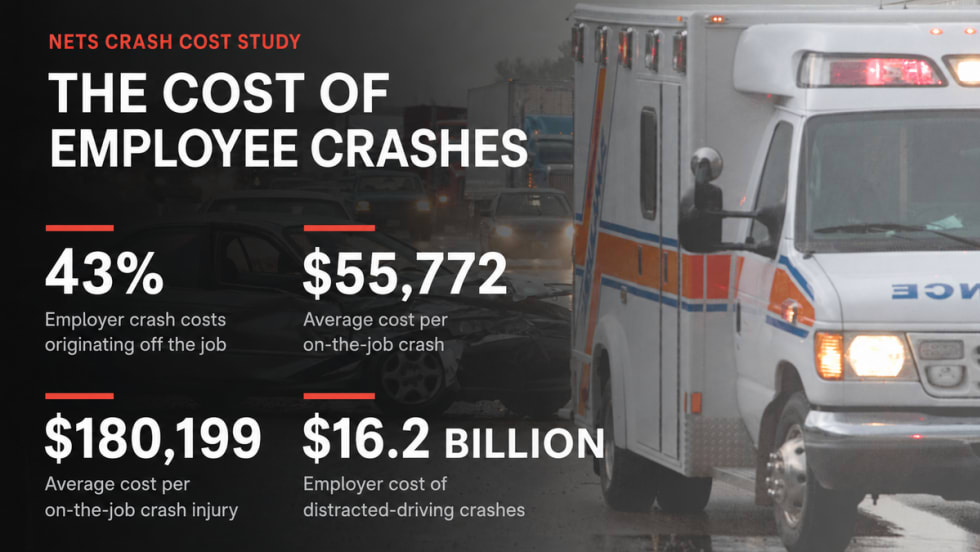
Off-the-Job Crashes Account for 43% of Employers’ $61.7 Billion Crash Burden
NETS quantifies costs dispersed across fleet, risk, HR, and other departments while providing new per-crash benchmarks for employers.
Read More →
Ram Recalls More Than 1.27 Million 1500 Pickups for Seat Belt Anchor Issue
The recall affects certain 2019-2026 Ram 1500 pickups that may have improperly attached second-row seat belt buckle anchors.
Read More →
How Better Visibility Cut Speeding Violations by 48%
Fleet leaders don't need more data, they need clearer visibility into what the data is saying. This case study explores how one utility replaced speeding-event counts with a single metric — miles driven in violation — to strengthen safety and significantly reduce speeding violations.
Read More →
Operation Safe Driver Week: Why the Industry's Oldest Safety Campaign Still Matters to Fleets
A look at how a 2007 enforcement initiative became one of the most consequential weeks on the fleet safety calendar, and what it means for your drivers in 2026.
Read More →