




Vincentric: Hybrids Losing Their Competitive Edge
Gasoline-electric hybrids are losing their competitive edge over ther gasoline counterparts due to falling fuel prices and more efficient internal combustion engines, according to a five-year owner cost analysis by Vincentric.
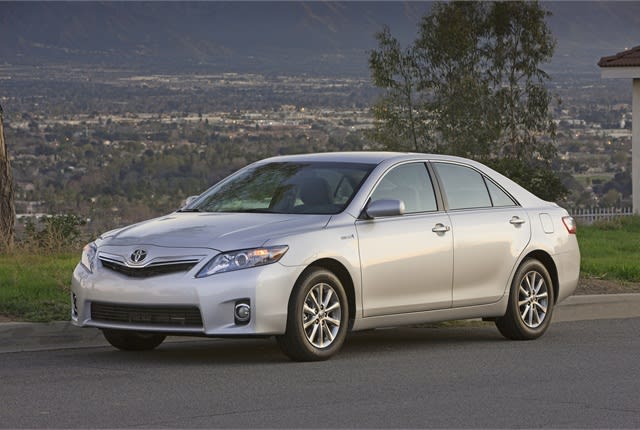
Photo of 2014.5 Camry Hybrid courtesy of Toyota.
Photo of 2014.5 Camry Hybrid courtesy of Toyota.
Gasoline-electric hybrids are losing their competitive edge over ther gasoline counterparts due to falling fuel prices and more efficient internal combustion engines, according to a five-year owner cost analysis by Vincentric.
The research firm studied the total cost of owning a hybrid, and found that 10 of the 31 hybrids included in the research were more cost-effective to own that their gasoline counterpart. The percentage of cost-effective hybrids has fallen to 32 percent from 39 percent in the 2013 study and 44 percent in the 2012 study.
The Lexus CT200h and the Toyota Avalon Hybrid returned impressive lower ownership costs with savings of over $7,600 and $3,200 respectively. Additional hybrids from Acura, Audi, Honda, Hyundai, Lexus, Lincoln, and Toyota also showed cost advantages, according to Vincentric.
However, when the costs to own and operate all 31 hybrid vehicles were taken into account, the average five-year cost-of-ownership for hybrids was $1,339 more than their gasoline-powered counterparts.
“In some cases, fuel cost savings associated with hybrid vehicles are able to offset their price premium. However, hybrids are losing their competitive edge due to the improved fuel economy of gas-powered combustion engines and falling fuel prices,” stated David Wurster, Vincentric's president. “Consumers must look at individual models to determine whether a hybrid or its gas-powered counterpart has lower ownership costs and will save them money in the long run."
Vincentric measured total cost-of-ownership using eight different cost factors: depreciation, fees & taxes, financing, fuel, insurance, maintenance, opportunity cost, and repairs. The analysis assumed vehicle ownership of five years and 15,000 annual miles of driving.
Here's the list of the top 10 models:
2014 Acura ILX Hybrid ($1,613)
2014 Audi Q5 Hybrid ($2,611)
2014 Honda Insight ($86)
2014 Hyundai Sonata Hybrid ($1,379)
2014 Infiniti QX60 Hybrid ($191)
2014 Lexus CT 200h ($7,632)
2014 Lexus ES 300h ($1,179)
2014 Lincoln MKZ Hybrid ($3,252)
2014 Toyota Avalon Hybrid ($3,356)
2014 Toyota Camry 2014.5 Hybrid ($1,075)
More Green Fleet

EV Charging Use Is Outpacing Infrastructure Growth
ChargePoint’s 2026 Charging Forward Report points to rising charger use, higher-powered charging, commercial vehicle electrification, and energy-management technology. Here’s what fleets should know.
Read More →
Merchants Fleet Reports 290M EV Miles as Fleets Navigate Changing Electrification Market
From millions in operating savings to hundreds of millions of EV miles, Merchants Fleet’s latest report reveals what’s working and what’s changing in fleet electrification.
Read More →
The EV Breakdown Nobody's Talking About: Why Most Electric Vehicle Roadside Calls Aren't Mechanical Failures
Here's why EV breakdowns are widely misunderstood.
Read More →
ChargePoint Now Available in Energy Pass
ChargePoint and additional planned charging network integrations were added to GM's Energy Pass.
Read More →

First Look: Slate Auto's Electric Fleet Pickup
Could an affordable, modular EV pickup make electrification more practical for fleets?
Read More →
Slate Debuts Colorful, Unique EV Models
A recent media and client event, studded with electric vehicles dressed up on platforms, planted a new position for the manufacturer in the wider EV market. Fleets will find cost-saving advantages.
Read More →
Slate Electric SUV, Pickup Switchable Model Aims For Light-Duty Fleets
Everything about this EV is counterintuitive and understated, making it stand out from the crowd.
Read More →
Inspiration Mobility Acquires Key Electrada Assets
Inspiration Mobility Group has acquired select assets of Electrada, adding the fleet electrification provider's team, technology, and charging infrastructure development capabilities to its energy management business.
Read More →
Turning Connected Vehicle Data Into Decisions That Matter
Fleet leaders have more data than ever, but turning that data into clear, actionable decisions remains a challenge. This white paper shows how leading organizations are using connected vehicle data to improve safety, reduce costs, and optimize fleet performance. Learn how to turn insight into action across your fleet.
Read More →