




Video Safety Tip: Tire Blowout Response
Here are tips from AAA and Travelers Insurance on how to respond to a tire blowout.
Since 2008, all new vehicles must have an automatic tire pressure monitoring system — a requirement that has decreased the occurrence of tire blowouts. Blowouts still do occur, however, resulting in nearly 11,000 collisions and 200 fatalities annually, according to government statistics.
To help prevent blowouts, drivers need to make sure their vehicle’s tires are properly inflated, the treads aren’t excessively worn, and the vehicle is never overloaded. Tire pressure should be checked on a regular basis.
But it’s also important that drivers quickly recognize the initial signs of a tire blowout and respond properly — without delay or panic. A tire blowout typically results in three key sounds: a loud boom or bang, the sound of air escaping from the tire, and then the flapping or flopping of the deflated tire hitting the pavement.
Here are some tips, provided by Travelers Insurance and AAA, you can pass along to fleet drivers as a friendly reminder.
In the event of a tire blowout:
Stay calm, keep a firm grip on the steering wheel, and maintain a straight course. (When a front tire blows out, the vehicle pulls strongly to one side. When a rear tire blows out, you usually feel it more in the seat or body of the vehicle.)
Don’t slam on the brakes — that could dangerously upset the vehicle’s balance. Simply ease up on the accelerator and let the vehicle slow down gradually.
Once the vehicle is coasting at 20-25 mph, then gently apply the brakes and pull off the road at a safe location after signaling.
Shift to “park” and set the parking brake. Activate your emergency flashers to alert other drivers.
Exit your vehicle only if you’re certain you’re safely off the road and out of harm’s way.
Follow fleet protocol for contacting roadside assistance, or change the tire if it's safe to do so.
Keep in mind that a spare tire is only recommended for emergencies and shouldn’t be driven for long distances or at high speeds.
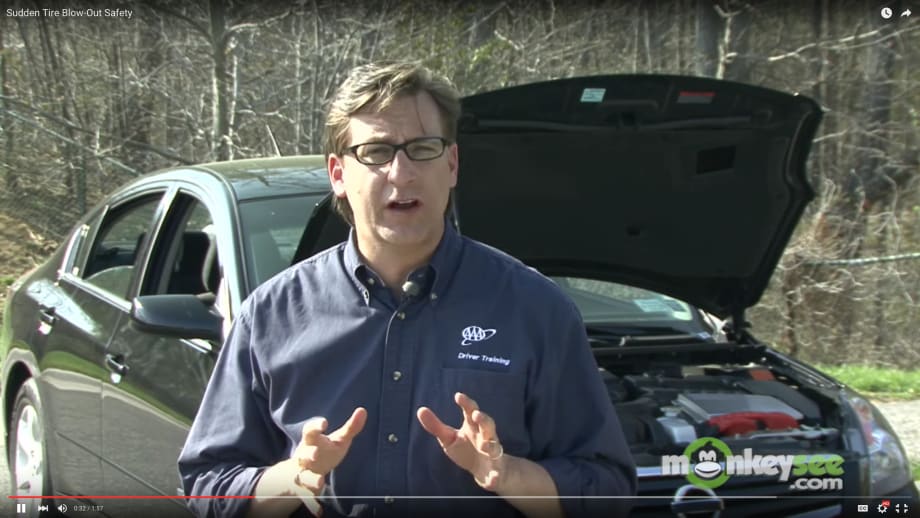
To watch a AAA video on how to respond to a tire blowout, click on the photo or link below the headline.
More Safety
IIHS Crash Avoidance Tests Reveal Safety Gaps in Cargo Vans and Work Trucks
New crash-avoidance ratings from the Insurance Institute for Highway Safety reveal inconsistent performance among commercial vehicles, with several popular cargo vans and heavy-duty pickups struggling to avoid collisions with other vehicles and pedestrians.
Read More →
What’s Next for Fleet? Safety, AI & Industry Recognition | AF News Recap
Could your company's culture be encouraging distracted driving? This week, we're exploring how workplace expectations affect driver safety, what AI, EVs, and autonomous vehicles could mean for the future of fleet management, and how fleet professionals can strengthen their award nominations.
Read More →
Does Your Fleet's Culture Encourage Distracted Driving?
What happens when the people responsible for enforcing safety rules are the ones setting the wrong example? The answer may reveal why some of the biggest risks to fleet drivers have little to do with what's written in the employee handbook.
Read More →
Fleet Manager’s Ultimate Playbook: Navigating the New Standard in OEM Connectivity
Rising operating costs, driver safety concerns, and unplanned downtime are putting unprecedented pressure on modern fleets. Discover how fleet managers use embedded OEM connectivity and real-time vehicle data to cut TCO, prevent downtime, and protect drivers without aftermarket telematics hardware.
Read More →
From Driver Well-Being to EV Charging | AF News Recap
Mental health belongs in the fleet safety conversation. This week, we’re looking at five ways fleets can support employee well-being before a crisis, plus Holman’s expansion in Mexico, new one-day Fleet Forward passes, and why EV charging demand is outpacing infrastructure growth.
Read More →
Nexar-Nauto Merger Aims to Give Fleets Better Safety Intelligence Through Larger Driving Dataset
Stefan Heck tells Automotive Fleet that combining more than 10 billion miles of driving history with Nexar's AI models will give fleets deeper insights into driver risk and roadway conditions than either company could provide independently.
Read More →
Don't Wait for a Crisis: 5 Ways to Build Mental Health Into Your Fleet Safety Program
For Suicide Prevention Month, fleet and safety leaders have an opportunity to put mental health where it belongs: at the center of workplace safety.
Read More →
How Camera Data Can Strengthen a Fleet’s Insurance Renewal
Insights from a commercial insurance carrier and a broker show how fleets can turn video telematic data, driver coaching, and improved claims results into a stronger case at insurance renewal.
Read More →
The Safest Fleets Aren’t the Ones with the Most Technology
You’ve made the telematics investment. Here’s how to capture the other half of its value and build the safest fleet on the road.
Read More →
Hidden in Plain Sight: Fleet Compliance Risks
Fleet compliance isn't just about having policies — it's about consistently enforcing them. This practical guide reveals six hidden compliance risks common in public sector and shared fleet operations and outlines proven strategies to improve visibility, accountability, and audit readiness
Read More →