




Video: Report Urges Lowering Driver Blood Alcohol Limits
To reduce alcohol-related crashes, a new National Academies of Sciences study also recommends raising alcohol taxes and requiring interlocks for all DWI offenders.


State governments can adopt several strategies to reduce alcohol-related crashes, according to a new report, including lowering the DWI blood alcohol concentration (BAC) threshold from .08 to .05 percent and raising alcohol taxes.
A committee of the National Academies of Sciences, Engineering, and Medicine conducted the study at the request of the National Highway Traffic Safety Administration. Other report recommendations include strengthening policies to prevent alcohol sales to people under 21 and to adults who are already intoxicated, requiring ignition interlocks for all DWI offenders, and making effective treatment available to all offenders.
More than 10,000 alcohol-impaired driving fatalities occur in the U.S. each year, despite progress in recent decades. All 50 states currently have a BAC threshold of .08 percent in place. In 2017, however, Utah passed a law lowering the limit to .05 percent. That state law takes effect Dec. 30.
The committee’s report asserts that a driver’s ability to operate a motor vehicle safely begins to deteriorate at low levels of BAC. The report cites studies showing that adopting a .05 percent BAC limit can markedly reduce road deaths tied to alcohol-impaired driving. Countries that have such a lower threshold include Austria, Denmark, and Japan.
The report also recommends that the federal government create incentives for states to lower the BAC limit. Moreover, strong media and enforcement campaigns should accompany such policy changes, according to the report.
“The plateauing fatality rates indicate that what has been done to decrease deaths from alcohol-impaired driving has been working but is no longer sufficient to reverse this growing public health problem,” said committee chair Steven Teutsch, an adjunct professor at UCLA Fielding School of Public Health and a senior fellow at the Public Health Institute. “Our report offers a comprehensive blueprint to reinvigorate commitment and calls for systematic implementation of policies, programs, and systems changes to renew progress and save lives.”
Additional report recommendations include:
State and local limitations on alcohol availability, including restrictions on the number of on- and off-premise outlets and the days and hours of alcohol sales
Stronger federal, state and local standards for alcohol marketing content
Sobriety checkpoints to identify and arrest alcohol-impaired drivers
State DWI courts that specialize in changing offender behavior through monitoring and substance abuse treatment
Municipality support for alternative transportation
Further development of Driver Alcohol Detection System for Safety (DADSS) technology.
Last month, National Transportation Safety Board member T. Bella Dinh-Zarr urged employers with motor vehicle fleets to publicly support legislative efforts to lower BAC thresholds to .05 percent.
“Many peer-reviewed studies have shown that such a law would prevent impaired-driving crashes,” Dinh-Zarr wrote in a blog. “While commercial drivers already are required to comply with a .04 BAC limit, employers can be an important influence in the lives of their employees, as well as in the communities in which they operate, by educating their employees and spreading the word about the effectiveness of a .05 BAC law.”
On average, since 1982, one-third of all traffic deaths are attributed to alcohol-impaired driving, and nearly 40 percent of alcohol-impaired driving fatalities are victims other than the drinking driver, according to the National Academies of Sciences report.
Click here to download the report. To view a video about the recommendations, click on the photo or link below the headline.
More Safety

Nexar-Nauto Merger Aims to Give Fleets Better Safety Intelligence Through Larger Driving Dataset
Stefan Heck tells Automotive Fleet that combining more than 10 billion miles of driving history with Nexar's AI models will give fleets deeper insights into driver risk and roadway conditions than either company could provide independently.
Read More →
Don't Wait for a Crisis: 5 Ways to Build Mental Health Into Your Fleet Safety Program
For Suicide Prevention Month, fleet and safety leaders have an opportunity to put mental health where it belongs: at the center of workplace safety.
Read More →
How Camera Data Can Strengthen a Fleet’s Insurance Renewal
Insights from a commercial insurance carrier and a broker show how fleets can turn video telematic data, driver coaching, and improved claims results into a stronger case at insurance renewal.
Read More →
The Safest Fleets Aren’t the Ones with the Most Technology
You’ve made the telematics investment. Here’s how to capture the other half of its value and build the safest fleet on the road.
Read More →
Hidden in Plain Sight: Fleet Compliance Risks
Fleet compliance isn't just about having policies — it's about consistently enforcing them. This practical guide reveals six hidden compliance risks common in public sector and shared fleet operations and outlines proven strategies to improve visibility, accountability, and audit readiness
Read More →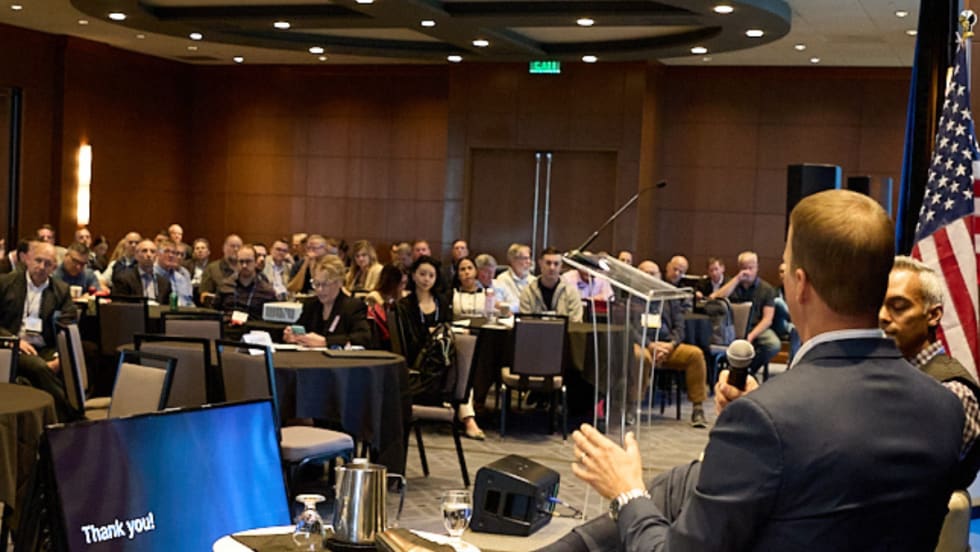
NETS Sets 2026 Fleet Safety Benchmark Conference for Indianapolis
The Sept. 15–17 program will feature fleet benchmarking data, case studies, emerging technologies, and implementation strategies while running alongside the NSC Safety Congress & Expo.
Read More →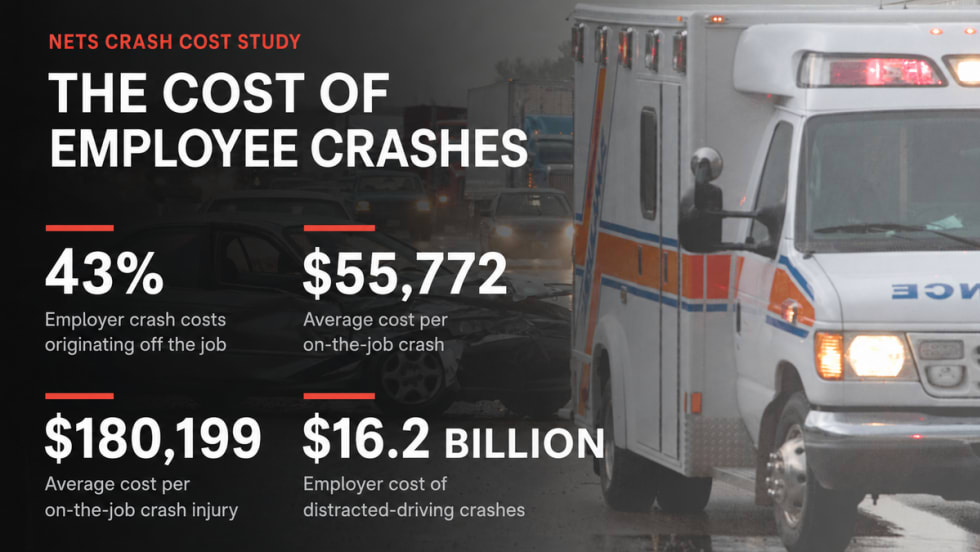
Off-the-Job Crashes Account for 43% of Employers’ $61.7 Billion Crash Burden
NETS quantifies costs dispersed across fleet, risk, HR, and other departments while providing new per-crash benchmarks for employers.
Read More →
Ram Recalls More Than 1.27 Million 1500 Pickups for Seat Belt Anchor Issue
The recall affects certain 2019-2026 Ram 1500 pickups that may have improperly attached second-row seat belt buckle anchors.
Read More →
How Better Visibility Cut Speeding Violations by 48%
Fleet leaders don't need more data, they need clearer visibility into what the data is saying. This case study explores how one utility replaced speeding-event counts with a single metric — miles driven in violation — to strengthen safety and significantly reduce speeding violations.
Read More →
Operation Safe Driver Week: Why the Industry's Oldest Safety Campaign Still Matters to Fleets
A look at how a 2007 enforcement initiative became one of the most consequential weeks on the fleet safety calendar, and what it means for your drivers in 2026.
Read More →