




Video: How Drivers Can Deal with Physical Issues
Leg cramps, back pain, and muscle spasms can strike at any time, including when a driver is behind the wheel. When it happens on the road, certain physical issues can be downright dangerous.

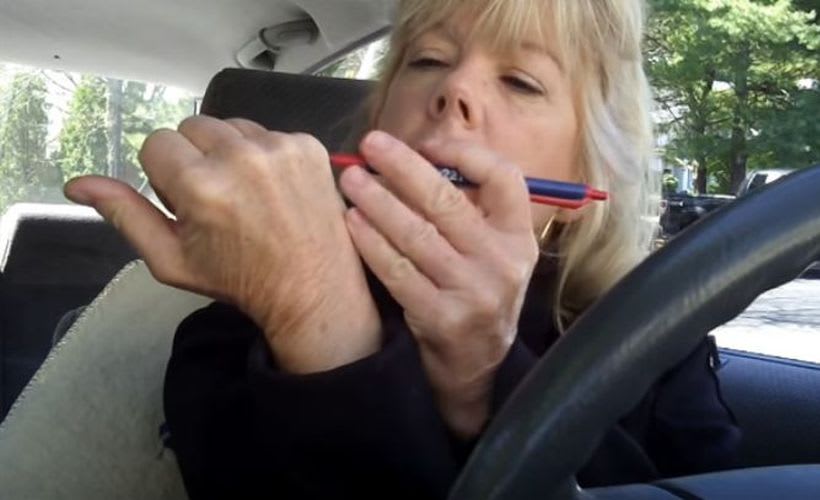
Leg cramps, back pain, and muscle spasms can strike at any time, including when a driver is behind the wheel.
Screenshot via Patricia Gilmore/YouTube.
Leg cramps, back pain, and muscle spasms can strike at any time, including when a driver is behind the wheel. When it happens on the road, certain physical issues can be downright dangerous.
For example, leg cramps can cause a driver to experience temporary paralysis — making it very difficult to brake or accelerate. And muscle spasms — particularly the kind that feel like a stabbing pain in the chest — can be so scary when they occur while driving that the incident could cause a driver to lose control of the vehicle.
Commercial drivers should be reminded about ways to avoid physical issue as well as what to do if they experience a sudden physical problem while driving. A wide range of experts — fitness professionals, physical therapists, chiropractors, and others — have contributed to the following suggestions:
Limit Leg Cramps
Leg cramps are likely to occur when you are sitting too long or driving long distances. The right leg, in particular, is vulnerable because it is in constant use and engaging in a repetitive motion — lifting up and down to hit the gas, then the brake. This can cause a good deal of tension throughout the thigh muscle.
In order to ward off the problem, while off duty, drivers can use a massage tool such as a massage bar to deeply massage the thigh muscles, especially in the right leg, according to a fitness expert from Upright Health. In addition, drivers should always drink plenty of water as dehydration can also cause leg cramps.
Once on the road, experts suggest drivers stop every 30 minutes and do some leg stretches. Step out of the vehicle, put your foot up on the car seat and stretch out the hamstrings. You should hold a stretch for at least one minute. Rub the thighs to get the blood flowing. Take a quick walk around the rest area.
Consider Vehicle Ergonomics
Physical issues can be avoided or at least limited by good ergonomic practices. Experts offer these tips:
Sit upright
Slide all the way to the back of your car seat in order to ensure the best lumbar support. Your whole body should be as far back against the seat as possible. Drivers may also want to use additional support by placing a lumbar back roll behind them in the seat.
Legs at a 90-degree angle
Make sure your driver’s seat is moved relatively close to the steering wheel. Physical therapist Todd Wellman says the goal is to keep your legs at a 90-degree angle rather than stretched out, which puts pressure on the lower back. However, be sure that your seat is not too close to the airbag as that can pose another kind of safety hazard.
Adjust the headrest
The best support for your neck comes from the proper usage of the headrest, according to chiropractor Dr. William Holdsworth from Pain Relief Chiropractic. Make sure there is about one inch of headrest above your head — this ensures that if you have a collision or get jolted around, you are less likely to experience whiplash. Experts also note that if you know you are about to get hit from the rear, the best position for limiting injury is to lean all the way back into your chair and headrest.
Buckle up the right way
Seatbelts can save lives, but they can also save you neck pain — as long as you wear them correctly. Make sure the seatbelt is sitting right over your shoulder — not too low, but also not so high that it is cutting into your neck and causing potential neck strain.
How to Relieve a Muscle Spasm
Perhaps one of the most frightening physical incidents that can occur while driving is a sudden stabbing chest pain. Very often, it is actually just a muscle spasm in the shoulder blade — but you feel it in your chest. It can occur when you twist or turn too quickly — perhaps when you are checking your blind spot, for example. So what can a driver do if this event happens while he is operating the vehicle?
One expert suggests relieving the pain by pressing on an acupuncture point. Specifically, if you make a fist, the point is on located on the side of the hand near the pinky knuckle. A driver can simply make the fist and press that point against the steering wheel and the stabbing chest pain — if it is due to a muscle spasm in the shoulder blade — will instantly ease up.
Watch this video to learn more about releasing a muscle spasm while behind the wheel.
More Safety

Nexar-Nauto Merger Aims to Give Fleets Better Safety Intelligence Through Larger Driving Dataset
Stefan Heck tells Automotive Fleet that combining more than 10 billion miles of driving history with Nexar's AI models will give fleets deeper insights into driver risk and roadway conditions than either company could provide independently.
Read More →
Don't Wait for a Crisis: 5 Ways to Build Mental Health Into Your Fleet Safety Program
For Suicide Prevention Month, fleet and safety leaders have an opportunity to put mental health where it belongs: at the center of workplace safety.
Read More →
How Camera Data Can Strengthen a Fleet’s Insurance Renewal
Insights from a commercial insurance carrier and a broker show how fleets can turn video telematic data, driver coaching, and improved claims results into a stronger case at insurance renewal.
Read More →
The Safest Fleets Aren’t the Ones with the Most Technology
You’ve made the telematics investment. Here’s how to capture the other half of its value and build the safest fleet on the road.
Read More →
Hidden in Plain Sight: Fleet Compliance Risks
Fleet compliance isn't just about having policies — it's about consistently enforcing them. This practical guide reveals six hidden compliance risks common in public sector and shared fleet operations and outlines proven strategies to improve visibility, accountability, and audit readiness
Read More →
NETS Sets 2026 Fleet Safety Benchmark Conference for Indianapolis
The Sept. 15–17 program will feature fleet benchmarking data, case studies, emerging technologies, and implementation strategies while running alongside the NSC Safety Congress & Expo.
Read More →
Off-the-Job Crashes Account for 43% of Employers’ $61.7 Billion Crash Burden
NETS quantifies costs dispersed across fleet, risk, HR, and other departments while providing new per-crash benchmarks for employers.
Read More →
Ram Recalls More Than 1.27 Million 1500 Pickups for Seat Belt Anchor Issue
The recall affects certain 2019-2026 Ram 1500 pickups that may have improperly attached second-row seat belt buckle anchors.
Read More →
How Better Visibility Cut Speeding Violations by 48%
Fleet leaders don't need more data, they need clearer visibility into what the data is saying. This case study explores how one utility replaced speeding-event counts with a single metric — miles driven in violation — to strengthen safety and significantly reduce speeding violations.
Read More →
Operation Safe Driver Week: Why the Industry's Oldest Safety Campaign Still Matters to Fleets
A look at how a 2007 enforcement initiative became one of the most consequential weeks on the fleet safety calendar, and what it means for your drivers in 2026.
Read More →