





Background News:New Vehicle Supply Rises Despite UAW Strike
U.S. Auto Sales Up in October Despite UAW Strike
While the UAW strike has slowed output at auto factories nationwide, the fallout has not fully hit consumers in dealer showrooms.
October 30, 2023
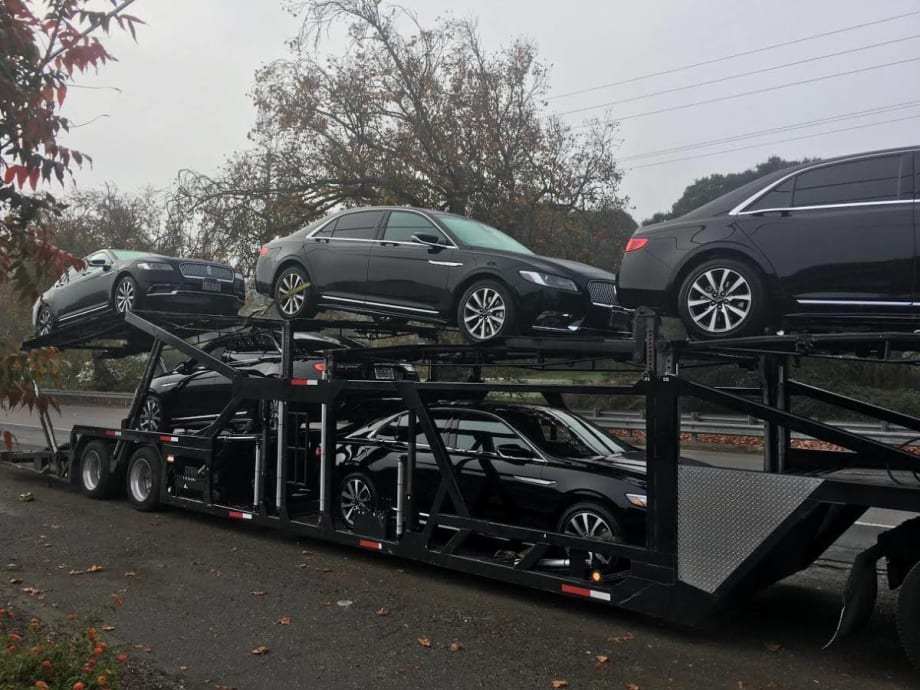
Vehicle inventory is holding up so far during the UAW strike, with enough product arriving at dealerships to meet demand.
File photo: Bobit
3 min to read
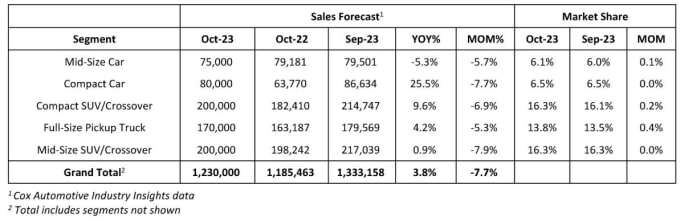
Amid economic and political uncertainty throughout October, new-vehicle sales remain remarkably stable, according to a forecast by Cox Automotive released Oct. 25.
New-vehicle sales volume in the U.S. is expected to rise nearly 4% compared to October 2022, a market that was in the early stages of recovery from severe product shortages.
The October seasonally adjusted annual rate (SAAR), or sales pace, is expected to finish near 15.8 million, up 1.1 million from last year’s pace and a slight gain over last month’s 15.7 million level. The sales strength continues to stand out, given the current economic climate and the fact average new-vehicle auto loans are flirting with 10%.
However, some of these sales gains and good news can be attributed to seasonal adjustments, as October has one less selling day than October 2022 and last month.
“Though there are many headwinds in the market today, new-vehicle sales continue to show gains over last year’s supply-constrained market," said Charlie Chesbrough, senior economist at Cox Automotive, in a news release. " Concerns about high interest rates, a potential economic recession, and the ongoing UAW strike are all likely holding back some potential vehicle buyers. However, there are still enough individuals and businesses with the need and ability to buy vehicles, which has helped sustain the sales recovery.”
Estimates from vAuto in mid-October suggest industry-wide, new-vehicle inventory in the U.S. was at 2.3 million units, up from 2.1 million in mid-September, when the strike began, and well above the estimate of 1.5 million for mid-October 2022.
Graphic: Cox Automotive
New-Vehicle Inventory Levels Grow
A key driver of new-vehicle sales strength has been growing inventory levels across the industry. Despite the ongoing UAW strike slowing production across the major Detroit-based automakers, estimates from vAuto in mid-October suggest industry-wide, new-vehicle inventory in the U.S. was at 2.3 million units, up from 2.1 million in mid-September, when the strike began, and well above the estimate of 1.5 million for mid-October 2022. Days’ supply in mid-October reached 62, the highest point since the spring of 2021. A year ago, days’ supply was at 48.
Toyota and Honda continue to show the lowest measure of days’ supply, at under 23 days. Of the Detroit brands, where production is being hurt by the UAW strike, Chevrolet and Cadillac had the tightest supply in mid-October, both below the industry average of 62. Ford had 90 days’ supply in the same timeframe, while Lincoln and the core Stellantis brands had inventory levels well above 100 days’ supply.
“While the UAW strike is certainly slowing down production at select assembly plants across the U.S., the impact has not yet fully materialized for consumers in the showroom," Chesbrough said. "Compared to this point last year, industry inventory levels are much higher, which is helping support — to this point at least — relatively healthy new-vehicle sales.”
All percentages are based on raw volume, not daily selling rate. There were 25 selling days in October 2023, one less than September and one less than October 2022.
Originally posted on Vehicle Remarketing
More Operations

How Fleets Can Recruit and Train Veterans for Technician Roles
Here's how the technician shortage has affected uptime for fleets, and what to do about it.
Read More →
Avis Budget Group Deploys Neology Toll Management Technology Across Major Brands
Neology’s neoFleet platform will manage toll transactions and toll-authority operations for vehicles across Avis, Budget, Payless, Budget Truck and Zipcar.
Read More →
Fleet Personal-Use Charges Edge Higher in 2026
Nearly eight in 10 surveyed fleets allow personal use of company vehicles, while just over half of respondents report charging employees for the privilege.
Read More →
The Future of Fleet + What’s Changing Right Now | AF News Recap
Could developments overseas offer a preview of what’s coming for U.S. fleets? This week, we’re looking at the future of AI, autonomy, and electrification, plus Ford Pro’s new certified pre-owned program, smarter vehicle offboarding, and a new way for fleets to manage toll expenses.
Read More →
How to Handle Vehicle Offboarding
What do fleet managers need to do when a driver leaves?
Read More →
Sponsored•October 1, 2026
Fleet Manager’s Ultimate Playbook: Navigating the New Standard in OEM Connectivity
Rising operating costs, driver safety concerns, and unplanned downtime are putting unprecedented pressure on modern fleets. Discover how fleet managers use embedded OEM connectivity and real-time vehicle data to cut TCO, prevent downtime, and protect drivers without aftermarket telematics hardware.
Read More →
U.S. Bank Adds Verra Mobility Toll Management to Voyager Fleet Platform
The integration allows U.S. Bank Voyager fleet customers to manage toll payments and violations alongside fuel, EV charging and maintenance expenses.
Read More →
ADAS Prevents Crashes. But Repairs Cost More | AF News Recap
ADAS-equipped vehicles may crash less often, but they can cost more when they do. This week, we’re breaking down what that tradeoff means for fleets, plus Subaru’s first Forester Wilderness Hybrid, Nissan’s new e-POWER Rogue, and why Calstart has become Catalyst Mobility.
Read More →
Moventum Fleet Management Names Mark Iorillo Head of Sales
Iorillo brings nearly 20 years of fleet management and sales experience to the role, including previous positions at Element Fleet Management, CEI, Donlen and Ryder.
Read More →
Fleet Has a Talent Pipeline Problem. What Comes Next? | AF News Recap
Where will fleet’s next generation of leaders come from? This week, we’re looking at the industry’s talent pipeline, what certification can add to a fleet career, how to build an award-worthy track record, and the return of Automotive Fleet’s Personal Use Survey.
Read More →