




UPS to Use Drones to Deliver Medical Samples
UPS will begin using drones to deliver medical samples at WakeMed's flagship hospital in Raleigh, N.C., once it gains approval from the Federal Aviation Administration, the parcel delivery company has announced.

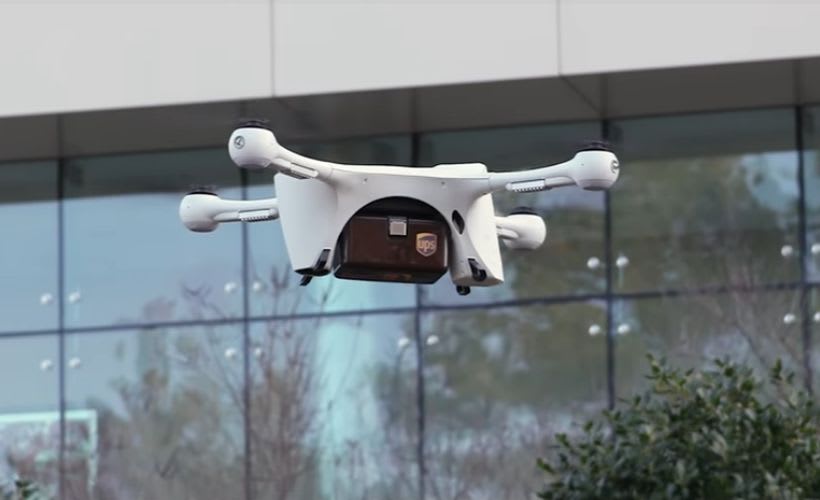
UPS hopes to start drone flights of medical specimens in North Carolina.
Screenshot via UPS.
UPS will begin using drones to deliver medical samples at WakeMed's flagship hospital in Raleigh, N.C., once it gains approval from the Federal Aviation Administration, the parcel delivery company has announced.
UPS is working with Matternet, an autonomous delivery drone startup, on the program, which is believed to be the first revenue-generating drone delivery service in the U.S. Matternet is supplying its M2 quadcopter drone that can carry up to 5 pounds as far as 12.5 miles. The M2 is powered by a rechargeable lithium-ion battery.
The service will provide the option for on-demand and same-day delivery.
"UPS Healthcare & Life Sciences is excited to expand on our current lab specimen logistics portfolio to drive step change in today’s delivery models," said Chris Cassidy, UPS president of global healthcare and life sciences strategy. "Using drones to bring blood and other diagnostic specimens from medical facilities to central labs will improve transport efficiencies like never before. And with fewer vehicles on the road, we’ll generate less environmental impact."
The flights would begin, after a medical professional loads a secure drone container with the sample or specimen at one of WakeMed's nearby facilities. The drone will then take off with the supervision of a remote pilot, who will fly it to a fixed landing pad at the main hospital and central pathology lab.
Test flights were completed in August at WakeMed's campus as part of the FAA's unmanned aircraft pilot program.
UPS has been experimenting with drone flights to support healthcare logistics. In 2016, UPS partnered with GAVI and Zipline to deliver blood products to remote locations in Rwanda. Matternet has completed more than 3,000 flights for heathcare providers in Switzerland.
More Operations
Here's When You Should Make an Exception to Fleet Policy
Fleet policies are designed to create consistency, but not every driver or situation fits neatly within standard rules.
Read More →
AI-Native or AI-Acquired: What Should Fleet Managers Look for in an AI Platform?
Six questions can help fleet managers look beyond AI marketing claims to evaluate integration, data access, and real-world operational performance.
Read More →
A buyer's guide to fleet management software in 2027
Buying fleet management software in 2027 means looking beyond features and price. As fleet operations, technology and expectations evolve, this guide explores what today’s fleet professionals should consider when choosing a system that can deliver value now and adapt to what comes next.
Read More →

What Will Shape the Next Era of Fleet Management?
EVs, AI, and autonomous vehicles are reshaping fleet management. Discover what’s ahead—and how fleet leaders can prepare for the next era.
Read More →
How Fleets Can Recruit and Train Veterans for Technician Roles
Here's how the technician shortage has affected uptime for fleets, and what to do about it.
Read More →
Avis Budget Group Deploys Neology Toll Management Technology Across Major Brands
Neology’s neoFleet platform will manage toll transactions and toll-authority operations for vehicles across Avis, Budget, Payless, Budget Truck and Zipcar.
Read More →
Fleet Personal-Use Charges Edge Higher in 2026
Nearly eight in 10 surveyed fleets allow personal use of company vehicles, while just over half of respondents report charging employees for the privilege.
Read More →
The Future of Fleet + What’s Changing Right Now | AF News Recap
Could developments overseas offer a preview of what’s coming for U.S. fleets? This week, we’re looking at the future of AI, autonomy, and electrification, plus Ford Pro’s new certified pre-owned program, smarter vehicle offboarding, and a new way for fleets to manage toll expenses.
Read More →
How to Handle Vehicle Offboarding
What do fleet managers need to do when a driver leaves?
Read More →
Fleet Manager’s Ultimate Playbook: Navigating the New Standard in OEM Connectivity
Rising operating costs, driver safety concerns, and unplanned downtime are putting unprecedented pressure on modern fleets. Discover how fleet managers use embedded OEM connectivity and real-time vehicle data to cut TCO, prevent downtime, and protect drivers without aftermarket telematics hardware.
Read More →