




UPS to Manage Most of Merck's U.S. Distribution
ATLANTA – UPS has been selected by Merck & Co., Inc. to manage a significant portion of its U.S. distribution of pharmaceuticals and vaccines, and to provide package transportation services.
ATLANTA – UPS has been selected by Merck & Co., Inc. to manage a significant portion of its U.S. distribution of pharmaceuticals and vaccines, and to provide package transportation services.
Through its subsidiary UPS Supply Chain Solutions, UPS has assumed control of two key Merck distribution centers, which provide Merck with temperature-sensitive storage, packaging, and transportation services critical to its pharmaceutical and vaccine products.
The majority of Merck's U.S. vaccines and pharmaceutical volume flow through these two centers located in suburban Atlanta and Reno, Nev.
The two U.S. facilities are cGMP-compliant and add more than 200,000 square feet of secure, automated healthcare logistics space to UPS's network. They join UPS' 23 existing compliant healthcare facilities in North America, and two soon-to-open healthcare facilities in Puerto Rico and The Netherlands. In total, UPS will have more than 3.5 million square feet of dedicated healthcare space globally.
This transaction allows UPS to leverage the new facilities for other healthcare customers and allows Merck to take advantage of UPS's existing healthcare distribution network. This also will allow Merck to utilize a broad spectrum of UPS services to gain additional supply chain flexibility needed for initiatives such as new product launches. Through this arrangement with UPS, Merck will be able to improve its cost structure while providing enhanced customer service.
In addition to shipping expertise, UPS services that now will be available to Merck include storage, warehousing, order fulfillment and shipping of pharmaceuticals and vaccines. UPS will assume responsibility for the movement of all package volume for product to the U.S. market.
"Our latest initiative with Merck marks the next step in our relationship to meet this customer's evolving needs," said Bill Hook, UPS vice president of global strategy, healthcare logistics. "UPS has invested heavily to provide healthcare customers such key advantages as integrated supply chain solutions combining multiple modes of transportation, plus dedicated healthcare facilities that help them speed new products to market, navigate regulatory compliance, and respond to evolving industry demands."
More Operations
How to Manage Conflict for Your Fleet Operations
Conflict management is becoming a core leadership skill. Here are five strategies fleet leaders should know.
Read More →
Turning Connected Vehicle Data Into Decisions That Matter
Fleet leaders have more data than ever, but turning that data into clear, actionable decisions remains a challenge. This white paper shows how leading organizations are using connected vehicle data to improve safety, reduce costs, and optimize fleet performance. Learn how to turn insight into action across your fleet.
Read More →
Cameras, Safety and Insurance: From Reactive Claims to Real-time Prevention
Commercial auto remains one of the most challenging and costly lines of coverage for fleet operators and insurers alike. Learn more about how to effectively address these issues from Onur Aksan, Enterprise Business Development Executive, Geotab.
Read More →

Are You Tracking Your Fleet's True Total Cost of Ownership?
Bobit Business Media surveyed 190 fleet professionals and found that while most fleets are tracking costs, fragmented systems and data gaps are keeping true TCO visibility out of reach. With rising pressure to control spend in an increasingly volatile environment, the gap between what fleets think they know and what the data actually shows is wider than you might expect. See how your peers are managing costs today and where the industry still has room to improve.
Read More →
Turn Fleet Data Into Smarter Decisions
Fleet leaders have access to more operational data than ever, but disconnected systems and unclear metrics often slow decision-making instead of improving it. This article outlines five practical steps fleets can take to transform fragmented data into actionable insights that improve planning, safety, utilization, and long-term performance.
Read More →
Hybrids: Electrification Without the Challenges
For fleet managers, fuel is one of the biggest line items in the budget — and it's one hybrids can shrink without changing how your people work. Download the eBook to see the numbers, understand the technology, and get a step-by-step guide to making the switch.
Read More →
How NOV Uses Telematics to Improve Fleet Safety Across 160 Locations
James Victory of NOV discusses how the company manages fleet safety, maintenance, and telematics across more than 150 locations supporting oilfield operations throughout the U.S.
Read More →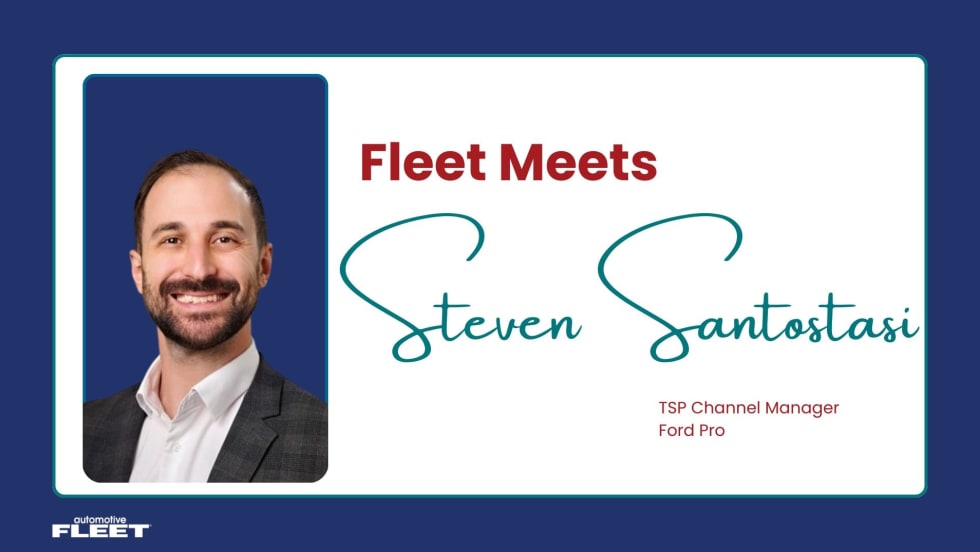
Fleet Meets: Steven Santostasi
This edition of the Fleet Meets series features Steven Santostasi, the current TSP channel manager for Ford Pro.
Read More →
Why Fleet Managers Are Replacing Departmental Vehicles with Shared Motor Pools
Departmentally assigned vehicles often create hidden costs through underutilization, poor visibility, and increased administrative burden. This white paper explores how shared motor pool strategies help fleets reduce costs, improve accountability, and optimize vehicle utilization.
Read More →
Soap Box Derby Challenge: Assembling the Crew
Meet Gabriel, Matthew, and Angel — the team helping bring this soap box derby build to life.
Read More →