




Related: UPS Drone Delivers Medicine to Remote Location in Test
UPS Tests Drone Launched From Atop Truck
UPS has successfully tested a drone that launches from atop one of its package cars, the company announced. The system is designed to autonomously deliver a package while the truck is driven on a route.
by Staff
February 22, 2017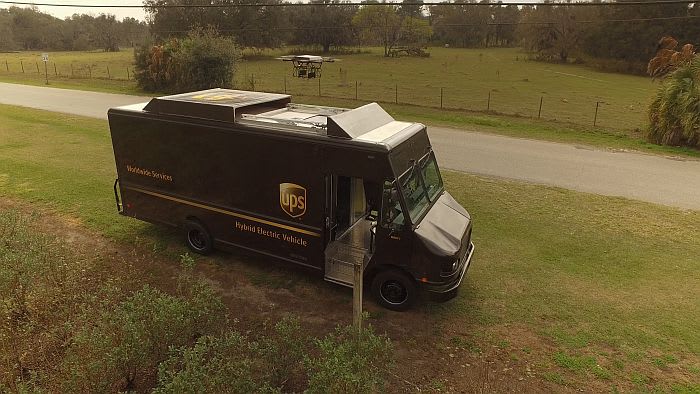
Photo: UPS
2 min to read
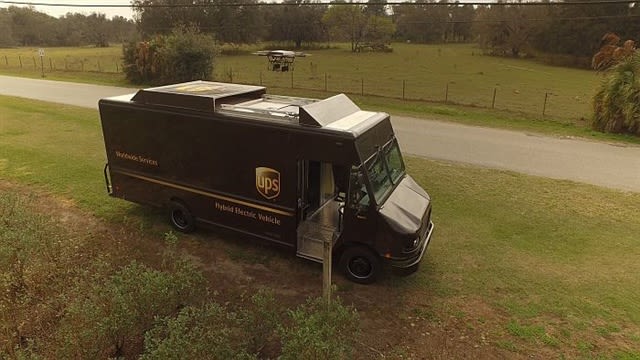
Photo: UPS
UPS has successfully tested a drone that launches from atop one of its package cars, the company announced. The system is designed to autonomously deliver a package while the truck is driven on a route.
The drone can autonomously deliver a package to a home and return to the truck while a delivery driver continues along the route to make a separate delivery.
The test was conducted in Tampa, Fla., with Ohio-based Workhorse Group, a battery-electric truck and drone developer. Workhorse built the drone and the electric UPS delivery truck used in the test.
“This test is different than anything we’ve done with drones so far,” said Mark Wallace, UPS senior vice president of global engineering and sustainability. “It has implications for future deliveries, especially in rural locations where our package cars often have to travel miles to make a single delivery.”
Rural delivery routes are the most expensive to serve for UPS due to the time and vehicle expenses required to complete each delivery. A reduction of just one mile per driver per day could save UPS up to $50 million in a single year, according to the company.
If implemented, the drone can aid drivers at various points along a route to help save time and reduce costs. The drone docks on the roof of the delivery truck. A UPS driver can load a package into a cage suspended beneath the drone through a hatch built into the truck. The driver can then direct the drone along a preset autonomous route to the address.
The done in the test was a Workhorse HorseFly UAV Delivery system model. It has a 30-minute flight time and can carry a package weighing up to 10 pounds. The drone recharges in between flights while it is docked.
“Imagine a triangular delivery route where the stops are miles apart by road,” said Wallace. “Sending a drone from a package car to make just one of those deliveries can reduce costly miles driven. This is a big step toward bolstering efficiency in our network and reducing our emissions at the same time.”
The drone in the test was loaded with a preset route but in the future, routes could be determined by UPS’s On-Road Integrated Optimization and Navigation, which is the company’s proprietary routing software.
“It’s wonderful to see this technology applied in such a practical way,” said Stephen Burns, Workhorse founder and CEO. “The drone is fully autonomous. It doesn’t require a pilot. So the delivery driver is free to make other deliveries while the drone is away.”
Watch a video of the drone test in action below:
More Operations

Here's When You Should Make an Exception to Fleet Policy
Fleet policies are designed to create consistency, but not every driver or situation fits neatly within standard rules.
Read More →
AI-Native or AI-Acquired: What Should Fleet Managers Look for in an AI Platform?
Six questions can help fleet managers look beyond AI marketing claims to evaluate integration, data access, and real-world operational performance.
Read More →
Sponsored•October 14, 2026
A buyer's guide to fleet management software in 2027
Buying fleet management software in 2027 means looking beyond features and price. As fleet operations, technology and expectations evolve, this guide explores what today’s fleet professionals should consider when choosing a system that can deliver value now and adapt to what comes next.
Read More →

What Will Shape the Next Era of Fleet Management?
EVs, AI, and autonomous vehicles are reshaping fleet management. Discover what’s ahead—and how fleet leaders can prepare for the next era.
Read More →
How Fleets Can Recruit and Train Veterans for Technician Roles
Here's how the technician shortage has affected uptime for fleets, and what to do about it.
Read More →
Avis Budget Group Deploys Neology Toll Management Technology Across Major Brands
Neology’s neoFleet platform will manage toll transactions and toll-authority operations for vehicles across Avis, Budget, Payless, Budget Truck and Zipcar.
Read More →
Fleet Personal-Use Charges Edge Higher in 2026
Nearly eight in 10 surveyed fleets allow personal use of company vehicles, while just over half of respondents report charging employees for the privilege.
Read More →
The Future of Fleet + What’s Changing Right Now | AF News Recap
Could developments overseas offer a preview of what’s coming for U.S. fleets? This week, we’re looking at the future of AI, autonomy, and electrification, plus Ford Pro’s new certified pre-owned program, smarter vehicle offboarding, and a new way for fleets to manage toll expenses.
Read More →
How to Handle Vehicle Offboarding
What do fleet managers need to do when a driver leaves?
Read More →
Sponsored•October 1, 2026
Fleet Manager’s Ultimate Playbook: Navigating the New Standard in OEM Connectivity
Rising operating costs, driver safety concerns, and unplanned downtime are putting unprecedented pressure on modern fleets. Discover how fleet managers use embedded OEM connectivity and real-time vehicle data to cut TCO, prevent downtime, and protect drivers without aftermarket telematics hardware.
Read More →