




UPS Settles Vehicle Safety Suit in New York
ATLANTA and SYRACUSE, N.Y. - UPS stated that independent inspections did not find fault with the company’s safety record in the State.
ATLANTA – UPS has settled a lawsuit filed by the New York Office of the Attorney General (OAG) for $1.3 million. The company said it was involved in a four-year investigation by the New York Attorney General's Office concerning the company’s fleet of vehicles in upstate New York. UPS stated that “it neither admits nor denies the allegations that formed the basis of the investigation.” The company said it made a business decision to settle in order to avoid expending additional funds and resources.
Attorney General Eric T. Schneiderman’s investigation alleged that UPS “knowingly permitted package delivery trucks in serious disrepair to be driven and operated by UPS employees throughout New York State.”
The investigation began when a UPS mechanic contacted the OAG about four package delivery trucks that he had removed from service at the Watertown, New York facility in March 2006 with concerns about cracked frames. The OAG alleged that UPS allowed those trucks to remain in service without being repaired.
Despite this allegation, UPS said that independent inspections did not find fault with the company’s safety record in the State.
An independent expert concluded that UPS' fleet was safe in all respects, a conclusion that was never challenged, the company said. Also, during the state investigation, the U.S. Department of Transportation conducted its own inspections of UPS's fleet and facilities in the Empire State District. UPS stated that the U.S. DOT's Safety Inspector “paid special attention to frames," but concluded that "[n]o frame violations were found."
UPS said it maintains one of the safest fleets in the industry, and that this has been confirmed by the federal government as well as an independent expert who, as part of the investigation, both physically inspected UPS's fleet in New York and reviewed the same records the Attorney General's Office reviewed.
UPS stated that it firmly believes the Assurance of Discontinuance reached with the attorney general in this case does not reflect on the safety of its automotive fleet in upstate New York or anywhere else in the country. The company added that there has never been an accident or injury relating to the allegations made by the New York attorney general.
As part of the agreement with the State of New York, in addition to paying $1.3 million in penalties, fees, and costs, UPS agreed to bear the expense of retaining an independent inspector for the next five years, who the State of New York said will be pre-approved by the OAG, and who will conduct New York State vehicle inspections of UPS trucks in service within New York State.
For the first three years of this agreement, the independent inspector will conduct inspections of all UPS trucks in service within New York State. During the fourth and fifth years, the independent inspector will conduct "spot checks" of UPS trucks in service within New York State.
The OAG said that UPS also agreed to graduated penalties for any future violations ranging from $500 for the first violation within a one-year period and up to $10,000 for a fourth or any subsequent violation within a one-year period.
More Operations

Moventum Fleet Management Names Mark Iorillo Head of Sales
Iorillo brings nearly 20 years of fleet management and sales experience to the role, including previous positions at Element Fleet Management, CEI, Donlen and Ryder.
Read More →
Fleet Has a Talent Pipeline Problem. What Comes Next? | AF News Recap
Where will fleet’s next generation of leaders come from? This week, we’re looking at the industry’s talent pipeline, what certification can add to a fleet career, how to build an award-worthy track record, and the return of Automotive Fleet’s Personal Use Survey.
Read More →
Smith System Launches Driver Risk Management Program
Fleets have more driver data than ever, but identifying risky behavior doesn't necessarily correct it. Smith System's new Driver Risk Management program combines monitoring, training, and follow-up coaching to help fleets connect risk signals with driver intervention.
Read More →
Automotive Fleet Opens 2026 Personal Use Survey for Commercial Fleet Managers
Less than two weeks left! Commercial and corporate fleet managers are invited to share how their organizations handle company vehicle personal-use policies, charges, and driver eligibility.
Read More →
From AI Prompts to AI-Generated Safety Songs | AF News Recap
Can better prompts make AI more useful for fleet managers? This week, we’re breaking down smarter fleet analysis, an AI-assisted experiment that turned safety training into music, and what happened to fuel prices in August.
Read More →
How to Write Better AI Prompts for Fleet Analysis
Include these six elements in your fleet prompts to generate more relevant analysis and accurate answers.
Read More →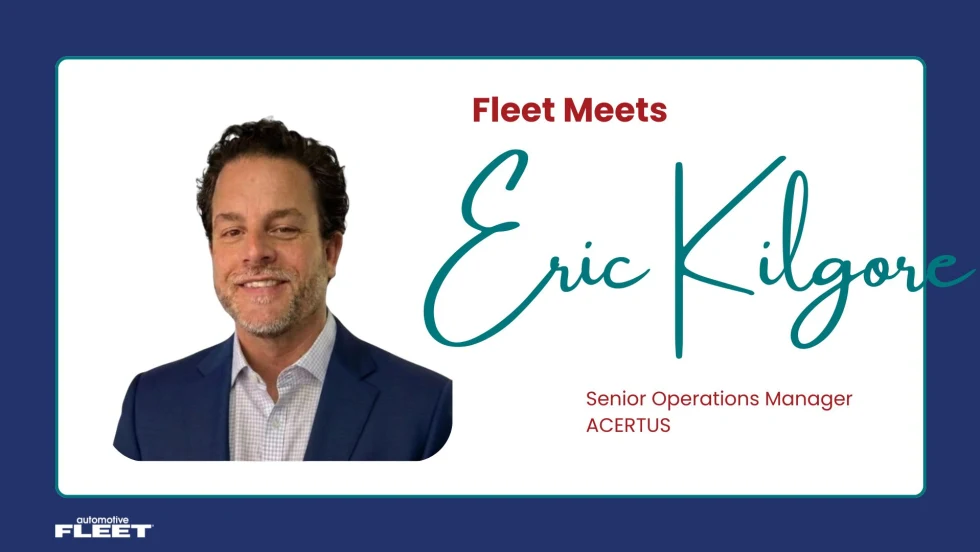
Fleet Meets: Eric Kilgore
This edition of the Fleet Meets series features one of the industry's best leaders driving multi-market and national operations.
Read More →
Why Reactive Fleet Management Is Becoming Too Expensive to Sustain
Research highlights a growing need for proactive management strategies to address rising costs in fleet operations effectively.
Read More →
What Your Fleet KPIs Aren’t Telling You
Tracking fleet metrics is only useful when the data leads to better decisions. This guide helps fleet leaders assess cost, utilization, and downtime more accurately, identify performance gaps, and prioritize the actions that can improve operational results.
Read More →
Hidden in Plain Sight: Fleet Compliance Risks
Fleet compliance isn't just about having policies — it's about consistently enforcing them. This practical guide reveals six hidden compliance risks common in public sector and shared fleet operations and outlines proven strategies to improve visibility, accountability, and audit readiness
Read More →