




Related: Uber - Self-Driving Trucks Could Help Alleviate Driver Shortage
Uber, Waymo Settle Autonomous Vehicle Technology Lawsuit
Uber and Waymo have agreed to terms on a settlement in a lawsuit over alleged stolen autonomous vehicle technology that will give Waymo a stake in Uber and absolve the company of wrongdoing.
by Staff
February 9, 2018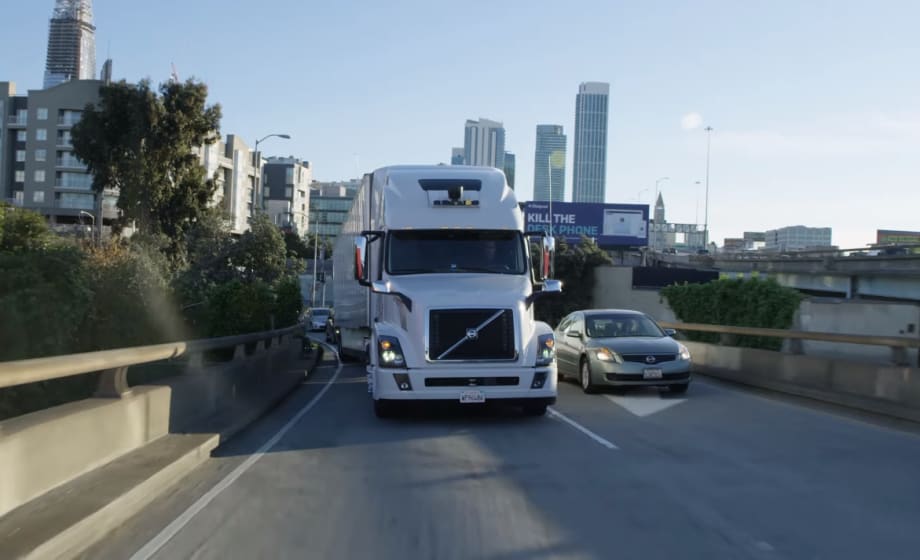
The lawsuit centered around Uber's acquisiton of Otto, an autonomous truck company started by a former Waymo employee. Photo: Uber
2 min to read
The lawsuit centered around Uber's acquisiton of Otto, an autonomous truck company started by a former Waymo employee. Photo: Uber
Uber and Waymo have agreed to terms on a settlement in a lawsuit over alleged stolen autonomous vehicle technology that will give Waymo a stake in Uber and absolve the company of wrongdoing. The settlement came amid legal proceedings.
Waymo will reportedly receive a relatively small amount of equity in Uber equal to about $245 million, or 0.34% of Uber’s $72 billion value. The two companies will also work together to ensure that Waymo’s Lidar and software in no way directly influenced Uber’s own designs. Uber stated that while it does not believe it has stolen any trade secrets or used Waymo’s proprietary self-driving technology, it will cooperate with Waymo to ensure the Lidar and software represents the company’s own work.
“While I cannot erase the past, I can commit, on behalf of every Uber employee, that we will learn from it, and it will inform our actions going forward,” said Dara Khosrowshahi, CEO of Uber in a statement. “I’ve told Alphabet that the incredible people at Uber ATG are focused on ensuring that our development represents the very best of Uber’s innovation and experience in self-driving technology.”
The lawsuit stems from an accusation last year by Waymo, which is owned by Google parent company Alphabet, alleging that certain trade secrets related to the company’s custom built Lidar (light detection and ranging) sensor technology were stolen by Uber employee Anthony Levandowski.
Levandowski worked for Waymo before leaving to start his own autonomous truck company Otto. Otto was purchased by Uber and Levandowski became a key figure in the company’s autonomous vehicle technology efforts.
As a result of the accusations, Levandowski was forced to step down from his position and was later fired by Uber. When ordered to testify in the lawsuit, he invoked the Fifth Amendment to avoid self-incrimination.
The trial finally began on Feb. 5 and ended quickly on Feb. 9, after a year of back and forth between the two companies.
“To our friends at Alphabet: we are partners, you are an important investor in Uber, and we share a deep belief in the power of technology to change people’s lives for the better,” said Khosrowshahi. “Of course, we are also competitors. And while we won’t agree on everything going forward, we agree that Uber’s acquisition of Otto could and should have been handled differently.”
More Safety

Sponsored•October 1, 2026
Fleet Manager’s Ultimate Playbook: Navigating the New Standard in OEM Connectivity
Rising operating costs, driver safety concerns, and unplanned downtime are putting unprecedented pressure on modern fleets. Discover how fleet managers use embedded OEM connectivity and real-time vehicle data to cut TCO, prevent downtime, and protect drivers without aftermarket telematics hardware.
Read More →
From Driver Well-Being to EV Charging | AF News Recap
Mental health belongs in the fleet safety conversation. This week, we’re looking at five ways fleets can support employee well-being before a crisis, plus Holman’s expansion in Mexico, new one-day Fleet Forward passes, and why EV charging demand is outpacing infrastructure growth.
Read More →
Nexar-Nauto Merger Aims to Give Fleets Better Safety Intelligence Through Larger Driving Dataset
Stefan Heck tells Automotive Fleet that combining more than 10 billion miles of driving history with Nexar's AI models will give fleets deeper insights into driver risk and roadway conditions than either company could provide independently.
Read More →
Don't Wait for a Crisis: 5 Ways to Build Mental Health Into Your Fleet Safety Program
For Suicide Prevention Month, fleet and safety leaders have an opportunity to put mental health where it belongs: at the center of workplace safety.
Read More →
How Camera Data Can Strengthen a Fleet’s Insurance Renewal
Insights from a commercial insurance carrier and a broker show how fleets can turn video telematic data, driver coaching, and improved claims results into a stronger case at insurance renewal.
Read More →
The Safest Fleets Aren’t the Ones with the Most Technology
You’ve made the telematics investment. Here’s how to capture the other half of its value and build the safest fleet on the road.
Read More →
Sponsored•August 7, 2026
Hidden in Plain Sight: Fleet Compliance Risks
Fleet compliance isn't just about having policies — it's about consistently enforcing them. This practical guide reveals six hidden compliance risks common in public sector and shared fleet operations and outlines proven strategies to improve visibility, accountability, and audit readiness
Read More →
NETS Sets 2026 Fleet Safety Benchmark Conference for Indianapolis
The Sept. 15–17 program will feature fleet benchmarking data, case studies, emerging technologies, and implementation strategies while running alongside the NSC Safety Congress & Expo.
Read More →
Off-the-Job Crashes Account for 43% of Employers’ $61.7 Billion Crash Burden
NETS quantifies costs dispersed across fleet, risk, HR, and other departments while providing new per-crash benchmarks for employers.
Read More →
Ram Recalls More Than 1.27 Million 1500 Pickups for Seat Belt Anchor Issue
The recall affects certain 2019-2026 Ram 1500 pickups that may have improperly attached second-row seat belt buckle anchors.
Read More →