




TRW Expresses Optimism for New Decade of Safety
LIVONIA, MI --- According to TRW Automotive Holdings Corp., the auto industry is poised to make significant progress in making the world's roads safer in the coming decade, despite challenges arising from explosive growth in Asian markets and a heightened focus on fuel efficiency.
LIVONIA, MI --- According to TRW Automotive Holdings Corp., the auto industry is poised to make significant progress in making the world's roads safer in the coming decade, despite challenges arising from explosive growth in Asian markets and a heightened focus on fuel efficiency.
"As we start a new decade, we feel optimistic about our ability to work together with industry groups, national governments and our customers to make a difference in road safety," said Peter Lake, executive vice president of sales and business development for TRW Automotive. "Over recent years we have seen an increase in safety and environmentally led regulation being introduced in emerging and mature markets alike. This balance of market forces and government leadership looks set to continue driving developments in technology, which should ultimately lead to safer roads."
According to World Health Organization statistics, approximately 1.3 million people die each year on the world's roads. The focus from the industry has made a significant difference in the past decade. Since the turn of the millennium, annual fatalities have been reduced by more than 28 percent in Europe, and by approximately 10 percent in the U.S.
But everyone agrees there is still more to be done. The challenges that come with tremendous growth in emerging markets require a different set of objectives to tackle road safety. In the year 2000, some 2 million vehicles were produced in China. But by the end of the decade, annual production was running at 12 million units.
"The automotive landscape is so very different from 10 years ago," Lake noted. "We've not only seen some serious new contenders arrive on the world stage in the form of the BRIC markets, but we've also been through an unprecedented period of crisis. And as we look forward, the focus in established markets has to be about making advanced safety solutions affordable across the range of platforms -- including for the increasing proportion of fuel-efficient smaller or hybrid/electric vehicles. And for emerging markets we need to return to the fundamentals of passive safety; seek to deliver affordable, more basic active systems; and work together with industry bodies and governments to educate drivers and other road users as road traffic volumes increase at a significant pace."
TRW has a broad portfolio of active technologies, occupant safety and advanced driver assist systems. According to the company, milestones for the past decade include:
First-to-market launch of Electric Park Brake with Fiat in 2002 and Audi in 2004.
First integrated active/passive safety system with the Active Control Retractor that was part of Mercedes' presafe system launched in 2002.
TRW's first column drive Electrically Powered Steering system was launched on the Nissan Micra and Fiat Stilo in 2002.
TRW launched its radar-based Adaptive Cruise Control system on the Volkswagen Phaeton in 2003.
Launch of regenerative braking system, Slip Control Boost, for the GM Tahoe two-mode hybrid system in 2008.
Launch of a video-based Lane Departure Warning system on the Lancia Delta in 2008.
"Our engineers across the globe are working to develop affordable solutions -- whether that's delivering a low-cost radar collision warning system for the family car market in the U.S. or Europe, providing airbags for breakthrough low-cost models in India or China or helping to develop smaller, lighter vehicles," Lake said.
Lake also stressed that fuel-efficient vehicles needn't sacrifice safety.
"The advances in vehicle structures and in active technologies to prevent accidents -- and passive systems to mitigate against them -- mean that smaller, fuel-efficient vehicles should be a safe option," Lake explained. "TRW has evaluated its portfolio and is positioned to support the move to hybrid and full electric vehicles. We believe strongly that there is no need to compromise safety for fuel efficiency."
More Safety

Nexar-Nauto Merger Aims to Give Fleets Better Safety Intelligence Through Larger Driving Dataset
Stefan Heck tells Automotive Fleet that combining more than 10 billion miles of driving history with Nexar's AI models will give fleets deeper insights into driver risk and roadway conditions than either company could provide independently.
Read More →
Don't Wait for a Crisis: 5 Ways to Build Mental Health Into Your Fleet Safety Program
For Suicide Prevention Month, fleet and safety leaders have an opportunity to put mental health where it belongs: at the center of workplace safety.
Read More →
How Camera Data Can Strengthen a Fleet’s Insurance Renewal
Insights from a commercial insurance carrier and a broker show how fleets can turn video telematic data, driver coaching, and improved claims results into a stronger case at insurance renewal.
Read More →
The Safest Fleets Aren’t the Ones with the Most Technology
You’ve made the telematics investment. Here’s how to capture the other half of its value and build the safest fleet on the road.
Read More →
Hidden in Plain Sight: Fleet Compliance Risks
Fleet compliance isn't just about having policies — it's about consistently enforcing them. This practical guide reveals six hidden compliance risks common in public sector and shared fleet operations and outlines proven strategies to improve visibility, accountability, and audit readiness
Read More →
NETS Sets 2026 Fleet Safety Benchmark Conference for Indianapolis
The Sept. 15–17 program will feature fleet benchmarking data, case studies, emerging technologies, and implementation strategies while running alongside the NSC Safety Congress & Expo.
Read More →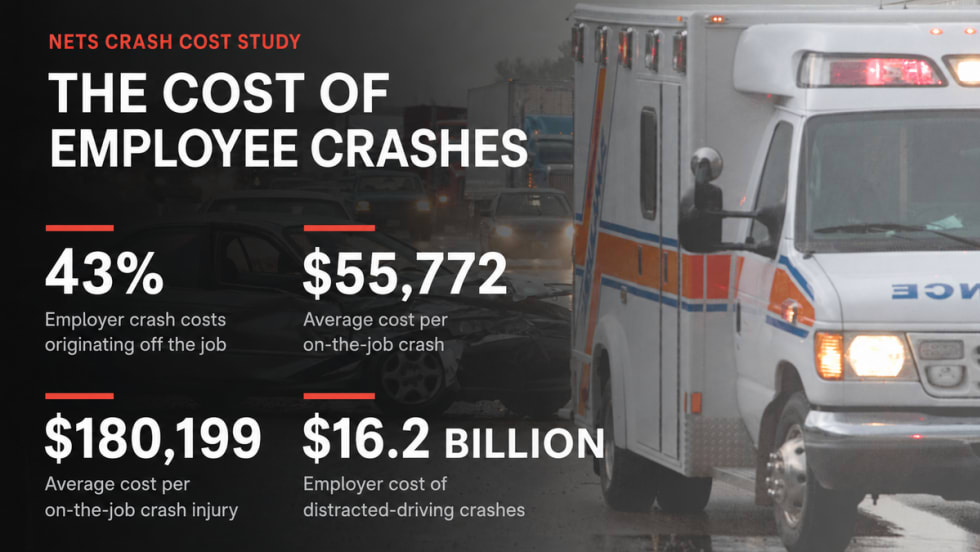
Off-the-Job Crashes Account for 43% of Employers’ $61.7 Billion Crash Burden
NETS quantifies costs dispersed across fleet, risk, HR, and other departments while providing new per-crash benchmarks for employers.
Read More →
Ram Recalls More Than 1.27 Million 1500 Pickups for Seat Belt Anchor Issue
The recall affects certain 2019-2026 Ram 1500 pickups that may have improperly attached second-row seat belt buckle anchors.
Read More →
How Better Visibility Cut Speeding Violations by 48%
Fleet leaders don't need more data, they need clearer visibility into what the data is saying. This case study explores how one utility replaced speeding-event counts with a single metric — miles driven in violation — to strengthen safety and significantly reduce speeding violations.
Read More →
Operation Safe Driver Week: Why the Industry's Oldest Safety Campaign Still Matters to Fleets
A look at how a 2007 enforcement initiative became one of the most consequential weeks on the fleet safety calendar, and what it means for your drivers in 2026.
Read More →