




Trump's EPA Expands Review of Obama's Mileage Rules
The Trump administration is reopening a federal review of Obama-era fuel economy rules covering the 2022 to 2025 model years, and expanding the review to include the 2021 model year signed into law in 2012.

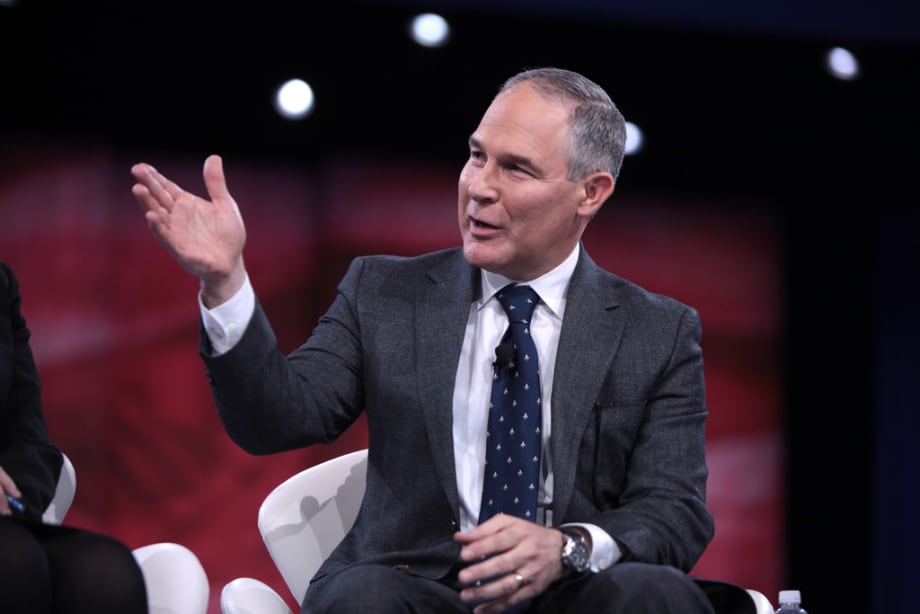
Photo of Scott Pruitt via Gage Skidmore/Flickr.
Photo of Scott Pruitt via Gage Skidmore/Flickr.
The Trump administration is reopening a federal review of Obama-era fuel economy rules covering the 2022 to 2025 model years, and expanding the review to include the 2021 model year signed into law in 2012.
The Environmental Protection Agency has reopened its midterm review that was finalized in the waning days of the Obama administration, the agency announced Thursday. The National Highway Traffic Safety Administration has also said it will reconsider civil penalties for automakers that are unable to meet the Corporate Average Fuel Economy standards.
The moves allow the agencies to begin taking public comment on the matter. The agency would begin accepting comments on the 2021 model year, by which automakers to meet a combined average of 41 miles per gallon under current rules.
The agencies will accept comments for 45 days on model years beyond 2020.
"We are moving forward with an open and robust review of emissions standards, consistent with the timeframe provided in our regulations," said EPA Administrator Scott Pruitt. "We encourage the public to submit the best-available and most up-to-date information, so that we can get back on track with what the regulation actually requires of the agency. Finally, we are working with DOT to ensure that our standards are ultimately aligned."
The move may have a limited impact in California, which was granted a federal waiver under the Clean Air Act to set and maintain its own more stringent emissions rules. The California Air Resources Board hasn't released a statement about the move.
A possible loosening of the rules could abate price increases of new vehicles that have been driven by engineering choices such as light-weighting and emission-control software. One estimate puts the cost of those initiatives as $2,000 per vehicle, reports the Detroit News.
The review comes amid an environment of low fuel prices and increasing popularity of larger vehicles such as trucks and SUVs. Whatever decision is ultimately made will likely filter down to commercial fleets, said Dan Hannan, executive director of product and services for Merchants Fleet Management.

Hannan
"The review of the standards leaves the window open for replacement of those standards and they may go down," Hannan said. "If the targets stay in place or rise, OEMs need to continue focus on developing smaller lighter vehicles. For some service fleets this has resulted in shorter life cycles due to wear and tear of the application. I could see the targets being lowered, which could reintroduce larger vehicle options. The cargo van and light truck sector has seen a great deal of movement in this area. Clearly fuel consumption and the vehicles cap cost can shift accordingly."
Consumer groups criticized the move as wasteful and ineffectual. Jack Gillis, the Consumer Federation of America's director of public affairs, called the move "a colossal waste of money" during a conference call with reporters. Gillis said 85% of new vehicles meet current standards.
Shannon Baker-Branstetter, policy counsel of Consumers Union, said the current standards are "good for consumers and reasonable for the automakers." She also said the review isn't necessary.
"By reopening the midterm review, EPA is bringing up questions that have already been answered," she said. "The standards to 2025 are reasonable and achievable."
The standards apply to light-duty vehicles that weigh less than 8,500 pounds, which would apply to some Class 3 trucks. Most cargo vans would be required to meet the standards.
In a related move, on July 12, NHTSA published a notice in the Federal Register that it would reconsider civil penalties against automakers who can't meet the standards.
More Operations

Fleet Has a Talent Pipeline Problem. What Comes Next? | AF News Recap
Where will fleet’s next generation of leaders come from? This week, we’re looking at the industry’s talent pipeline, what certification can add to a fleet career, how to build an award-worthy track record, and the return of Automotive Fleet’s Personal Use Survey.
Read More →
Smith System Launches Driver Risk Management Program
Fleets have more driver data than ever, but identifying risky behavior doesn't necessarily correct it. Smith System's new Driver Risk Management program combines monitoring, training, and follow-up coaching to help fleets connect risk signals with driver intervention.
Read More →
Automotive Fleet Opens 2026 Personal Use Survey for Commercial Fleet Managers
Less than two weeks left! Commercial and corporate fleet managers are invited to share how their organizations handle company vehicle personal-use policies, charges, and driver eligibility.
Read More →
From AI Prompts to AI-Generated Safety Songs | AF News Recap
Can better prompts make AI more useful for fleet managers? This week, we’re breaking down smarter fleet analysis, an AI-assisted experiment that turned safety training into music, and what happened to fuel prices in August.
Read More →
How to Write Better AI Prompts for Fleet Analysis
Include these six elements in your fleet prompts to generate more relevant analysis and accurate answers.
Read More →
Fleet Meets: Eric Kilgore
This edition of the Fleet Meets series features one of the industry's best leaders driving multi-market and national operations.
Read More →
Why Reactive Fleet Management Is Becoming Too Expensive to Sustain
Research highlights a growing need for proactive management strategies to address rising costs in fleet operations effectively.
Read More →
What Your Fleet KPIs Aren’t Telling You
Tracking fleet metrics is only useful when the data leads to better decisions. This guide helps fleet leaders assess cost, utilization, and downtime more accurately, identify performance gaps, and prioritize the actions that can improve operational results.
Read More →
Hidden in Plain Sight: Fleet Compliance Risks
Fleet compliance isn't just about having policies — it's about consistently enforcing them. This practical guide reveals six hidden compliance risks common in public sector and shared fleet operations and outlines proven strategies to improve visibility, accountability, and audit readiness
Read More →
Turning Fleet Payment Data into Executive Insights
Does data alone drive results in operations?
Read More →