




Trump: Infrastructure Plan Will Ride on Public Funds, Too
In his address to a joint session of Congress on Feb. 28, President Trump called for a $1-trillion infusion of public and private investment to repair and expand the nation’s infrastructure. It was the first time the president indicated that public— not just private— financing would be needed to fund his infrastructure proposal.

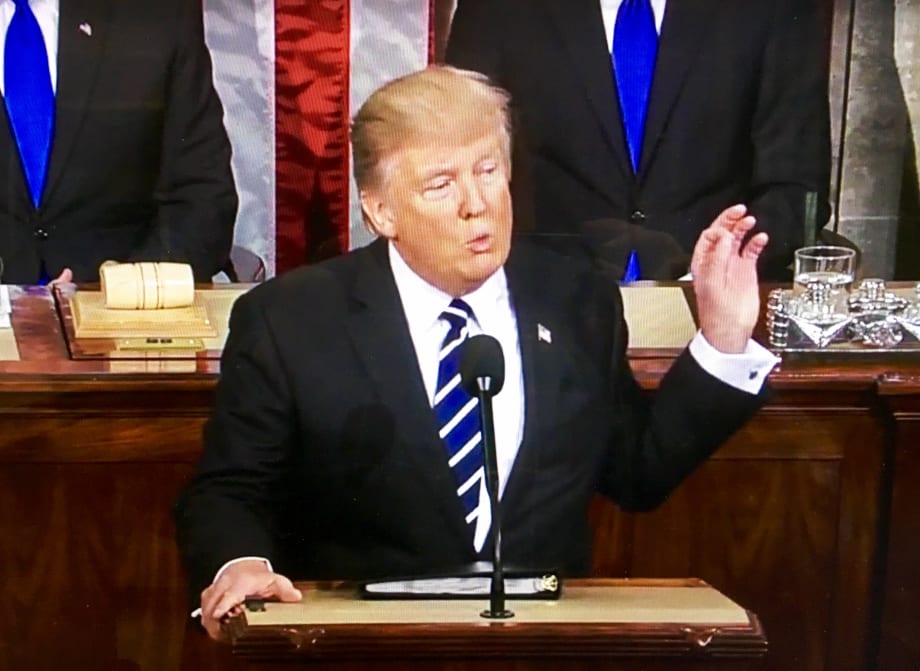
President Trump addressing Congress on Feb. 28. Image via WhiteHouse.gov
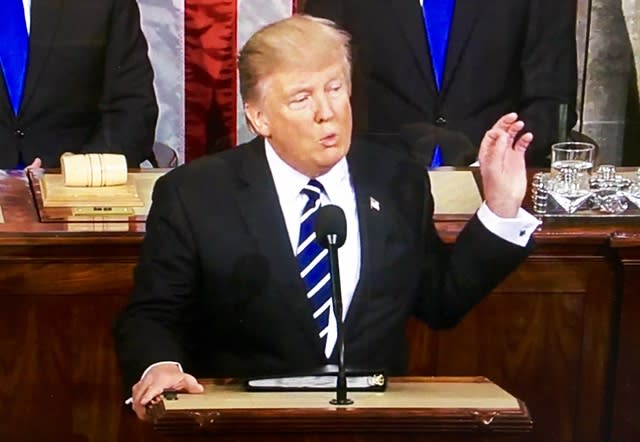
President Trump addressing Congress on Feb. 28. Image via WhiteHouse.gov
In his address to a joint session of Congress on Feb. 28, President Trump called for a $1-trillion infusion of public and private investment to repair and expand the nation’s infrastructure. He devoted just about one minute of his hour-long speech to promoting that initiative, but it was the first time the president indicated that public— not just private— financing would be needed to fund his infrastructure proposal.
Invoking President Dwight Eisenhower, who championed the building of the Interstate Highway System in the 1950s, Trump said “the time has come for a new program of national rebuilding. America has spent approximately $6 trillion in the Middle East -- all the while our infrastructure at home is crumbling. With this $6 trillion, we could have rebuilt our country twice, and maybe even three times if we had people who had the ability to negotiate.”
Trump said he will be “asking Congress to approve legislation that produces a $1-trillion investment in infrastructure of the United States -- financed through both public and private capital -- creating millions of new jobs.”
What remains to be heard is exactly how the administration expects to pay for the lavish infrastructure outlay promised by the president. Before moving onto other issues, Trump noted further only that his infrastructure proposal will be “guided by two core principles: buy American and hire American.”
Despite the lack of details given, the American Trucking Associations was pleased for the attention paid to infrastructure in this major policy speech by the new president. “ATA was pleased to hear President Trump again sound the call to address our nation’s need to improve our transportation infrastructure,” said ATA President and CEO Chris Spear in a statement to HDT.
“Trucks move 70% of our nation’s goods – more than half of our GDP – on a system of highways and bridges that is now on life support,” he continued. Spear added that the trucking lobby is “eager to work with the administration and Congress on solutions to funding this bold and long overdue goal.”
The Intelligent Transportation Society of America also appreciated the mention of infrastructure by the president. “ITS America looks forward to working with the White House, Congress and others to find intelligent technological solutions to repair and rebuild our extensive transportation system,” the group’s President and CEO Regina Hopper said in a statement issued right after the speech.
“Transportation drives our economy and makes America competitive around the world,” she said. “It connects communities, increases job opportunities, and it is essential to addressing equity, poverty, unemployment and access to education and health care.”
Hopper added that “safer highways and roads are urgently needed. In 2016, more than 40,000 people died in accidents on our nation’s highways and roads. Intelligent transportation solutions will go a long way to saving lives and preventing injuries.”
Rep. Bill Shuster (R-PA), chairman of the House Transportation and Infrastructure Committee, also released a statement soon after the address. “President Trump made infrastructure a priority before the election, and his address tonight reaffirmed his commitment to building a 21stcentury infrastructure,” Shuster contended.
“Renewing the American spirit starts with creating jobs and economic opportunity,” he continued. “Our infrastructure is what ties all of these things together. The Committee looks forward to working with the president and the secretary of transportation to improve our infrastructure and strengthen our economy.”
The president along with Republican and Democratic leaders as well as stakeholders large and small may all be on the same page when it comes to the crying need to fix and grow the nation’s infrastructure, but the devil in passing any such plan will be in the details. And as there are still none to pore over let alone influence, where Trump’s proposal may ultimately end up remains anyone’s guess.
More Operations

Fleet Has a Talent Pipeline Problem. What Comes Next? | AF News Recap
Where will fleet’s next generation of leaders come from? This week, we’re looking at the industry’s talent pipeline, what certification can add to a fleet career, how to build an award-worthy track record, and the return of Automotive Fleet’s Personal Use Survey.
Read More →
Smith System Launches Driver Risk Management Program
Fleets have more driver data than ever, but identifying risky behavior doesn't necessarily correct it. Smith System's new Driver Risk Management program combines monitoring, training, and follow-up coaching to help fleets connect risk signals with driver intervention.
Read More →
Automotive Fleet Opens 2026 Personal Use Survey for Commercial Fleet Managers
Less than two weeks left! Commercial and corporate fleet managers are invited to share how their organizations handle company vehicle personal-use policies, charges, and driver eligibility.
Read More →
From AI Prompts to AI-Generated Safety Songs | AF News Recap
Can better prompts make AI more useful for fleet managers? This week, we’re breaking down smarter fleet analysis, an AI-assisted experiment that turned safety training into music, and what happened to fuel prices in August.
Read More →
How to Write Better AI Prompts for Fleet Analysis
Include these six elements in your fleet prompts to generate more relevant analysis and accurate answers.
Read More →
Fleet Meets: Eric Kilgore
This edition of the Fleet Meets series features one of the industry's best leaders driving multi-market and national operations.
Read More →
Why Reactive Fleet Management Is Becoming Too Expensive to Sustain
Research highlights a growing need for proactive management strategies to address rising costs in fleet operations effectively.
Read More →
What Your Fleet KPIs Aren’t Telling You
Tracking fleet metrics is only useful when the data leads to better decisions. This guide helps fleet leaders assess cost, utilization, and downtime more accurately, identify performance gaps, and prioritize the actions that can improve operational results.
Read More →
Hidden in Plain Sight: Fleet Compliance Risks
Fleet compliance isn't just about having policies — it's about consistently enforcing them. This practical guide reveals six hidden compliance risks common in public sector and shared fleet operations and outlines proven strategies to improve visibility, accountability, and audit readiness
Read More →
Turning Fleet Payment Data into Executive Insights
Does data alone drive results in operations?
Read More →