




Trump Infrastructure Funding Plan Faces Uphill Climb
Getting President Trump’s infrastructure plan through Congress may make the actual fixing of America’s crumbling highways (and the rest of its subpar infrastructure) a mere walk in the park, says HDT Executive Editor David Cullen in this news analysis.

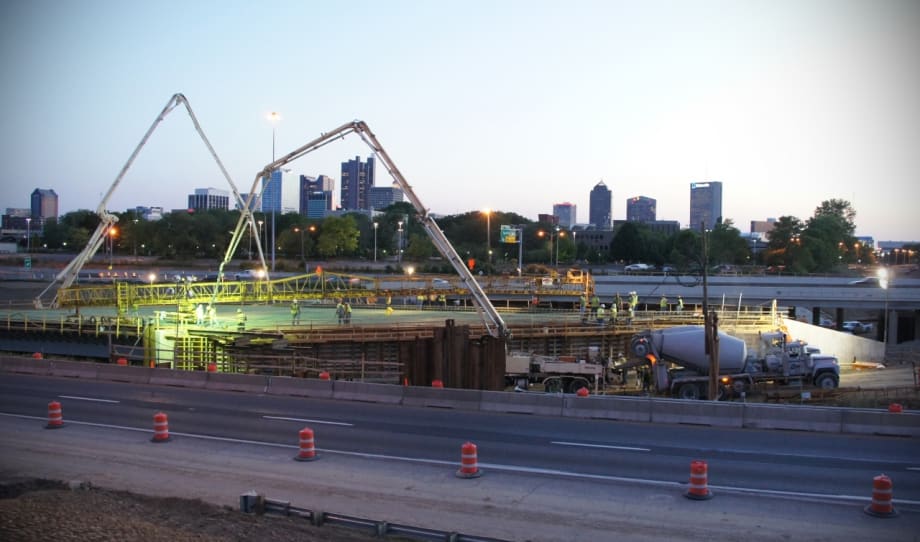
Trump plan still sees limited role for federal spending to fix infrastructure. Photo: U.S. Dept. of Transportation

Trump plan still sees limited role for federal spending to fix infrastructure.Photo: U.S. Dept. of Transportation
Getting President Trump’s infrastructure funding plan through Congress may make the actual fixing of America’s crumbling highways (and the rest of its subpar infrastructure) a mere walk in the park.
The plan, finally rolled out by the White House on Feb. 12 as a “framework for rebuilding infrastructure,” largely sticks to the script that has been talked up by the president and/or leaked by administration officials going back for nearly an entire year.
The 55-page plan can be boiled down to two key elements: A prime-the-pump concept for funding infrastructure improvements, and a campaign to slice the red tape that can slow projects and drive up their costs.
While few on Capitol Hill or in trucking, not to mention American business in general, will argue against spending a lot – and spending it wisely – to bring our infrastructure into the 21st century, horse-trading and arm-twisting by the president and leaders in Congress will be all about who will pay for the $1.5 trillion package, and how exactly they will pay for it.
Priming the Infrastructure-Funding Pump
The Trump plan envisions spending $200 billion in federal funds — attained via unspecified cuts in the White House budget proposal for fiscal year 2019 (also released on Feb. 12) – to stoke the spending of another $1.3 trillion or more in public (including state and local funds) and private investments.
The president had first promised a $1 trillion infrastructure plan on the day after his election; it was during his State of the Union address last month that he upped the ante by another $500 billion.
To be sure, the proposal faces an uphill fight in Congress. On the one hand, conservative Republicans are already blanching at the plan’s total cost, especially as the GOP majority has just pushed through its deficit-bloating tax reform bill. On the other hand, Democrats generally favor committing more federal monies directly to improving infrastructure, rather than relying on a mix of federal cash and tax credits to act as stimulus to get projects rolling.
Although members of Congress as well as key trucking lobbies have long supported raising the federal fuel tax and indexing it to inflation to fill and maintain the coffers of the Highway Trust Fund, the Trump plan makes no mention of pursuing that avenue of funding.
The fear of many trucking and related stakeholder groups is that relying too heavily on state/local and private investments could open the floodgates to tolled highways. It could up-end how states and cities receive federal assistance for building and maintaining the infrastructure that is an integral part of interstate commerce, not to mention our national defense.
Specifically, the president sees federal infrastructure spending as “promoting” state, local, and private investments to “maximize the value of every taxpayer dollar,” with $100 billion of the $200 billion coming from the federal government used “to create an Incentives Program to spur additional dedicated funds from states, localities, and the private sector.”
Applications for that program will be “evaluated on objective criteria, with creating additional infrastructure investment being the largest factor.” The White House said this program would promote accountability by making federal funding conditional on projects meeting “agreed-upon milestones.”
A separate Transformative Projects Program is earmarked for $20 billion to provide federal aid for “bold and innovative projects that have the potential to dramatically improve America’s infrastructure” but that may not boast the characteristics that attract private investors.
Of $20 billion allocated to expanding infrastructure financing programs, $14 billion would go to expanding some existing credit programs, such as TIFIA, WIFIA, RRIF, and rural utility lending. Private Activity Bonds would be expanded by $6 billion. Another $10 billion would go to a new Federal Capital Revolving Fund, which the White House said will "reduce inefficient leasing of federal real property, which would be more cost-effective to purchase.”
Another $50 billion of the $200 billion in direct federal funding would be devoted to a new Rural Infrastructure Program. The bulk of these dollars would be allocated to governors, “giving states the flexibility to prioritize their communities’ needs.”
Red Tape Cutting for Highway Projects
As for cutting away at red tape, the Trump plan includes measures that would result in allowing environmental review and permitting decisions to be delegated to the states and let federal agencies divest assets that can be “better managed by state or local governments or the private sector.”
Trump also wants to provide more flexibility to transportation projects that have minimal federal funding but are currently required to seek federal review and approval. In addition, he wants to streamline projects through various means, including by establishing a “one agency, one decision” structure for environmental reviews; shortening the environmental review process to two years “while still protecting the environment,” and eliminating “certain redundant and inefficient provisions in environmental laws.”
In the end, it will be up to Congress to turn all, some, or none of Trump’s infrastructure proposals into law.
In a statement on the plan’s release, House Transportation and Infrastructure Committee Chairman Rep. Bill Shuster (R-PA) hit on both the need for bipartisan action on Capitol Hill to pass such a measure and, quite specifically, to fix the Highway Trust Fund issue.
“An infrastructure bill needs to be bipartisan, fiscally responsible, and make real long-term investments in our nation," said Shuster. "By addressing the long-term sustainability of the Highway Trust Fund, exploring new ways to invest, and ensuring the fast delivery of projects, we can rebuild and improve our highways, water infrastructure, public buildings, rail transportation, and other infrastructure.”
Shuster heads up just one of eleven House and Senate committees that may write legislation touching upon one element or another of the overall Trump Infrastructure plan.
Related: Trump on Infrastructure Draws More Trucking Questions than Applause
More Operations

Here's When You Should Make an Exception to Fleet Policy
Fleet policies are designed to create consistency, but not every driver or situation fits neatly within standard rules.
Read More →
AI-Native or AI-Acquired: What Should Fleet Managers Look for in an AI Platform?
Six questions can help fleet managers look beyond AI marketing claims to evaluate integration, data access, and real-world operational performance.
Read More →
A buyer's guide to fleet management software in 2027
Buying fleet management software in 2027 means looking beyond features and price. As fleet operations, technology and expectations evolve, this guide explores what today’s fleet professionals should consider when choosing a system that can deliver value now and adapt to what comes next.
Read More →

What Will Shape the Next Era of Fleet Management?
EVs, AI, and autonomous vehicles are reshaping fleet management. Discover what’s ahead—and how fleet leaders can prepare for the next era.
Read More →
How Fleets Can Recruit and Train Veterans for Technician Roles
Here's how the technician shortage has affected uptime for fleets, and what to do about it.
Read More →
Avis Budget Group Deploys Neology Toll Management Technology Across Major Brands
Neology’s neoFleet platform will manage toll transactions and toll-authority operations for vehicles across Avis, Budget, Payless, Budget Truck and Zipcar.
Read More →
Fleet Personal-Use Charges Edge Higher in 2026
Nearly eight in 10 surveyed fleets allow personal use of company vehicles, while just over half of respondents report charging employees for the privilege.
Read More →
The Future of Fleet + What’s Changing Right Now | AF News Recap
Could developments overseas offer a preview of what’s coming for U.S. fleets? This week, we’re looking at the future of AI, autonomy, and electrification, plus Ford Pro’s new certified pre-owned program, smarter vehicle offboarding, and a new way for fleets to manage toll expenses.
Read More →
How to Handle Vehicle Offboarding
What do fleet managers need to do when a driver leaves?
Read More →
Fleet Manager’s Ultimate Playbook: Navigating the New Standard in OEM Connectivity
Rising operating costs, driver safety concerns, and unplanned downtime are putting unprecedented pressure on modern fleets. Discover how fleet managers use embedded OEM connectivity and real-time vehicle data to cut TCO, prevent downtime, and protect drivers without aftermarket telematics hardware.
Read More →