




Trump Administration Moves to Establish Drone Policy
The Trump administration issued a memorandum on Oct. 25 directing the Department of Transportation to establish a program in conjunction with state and local governments to regulate drone operation in delivery applications.
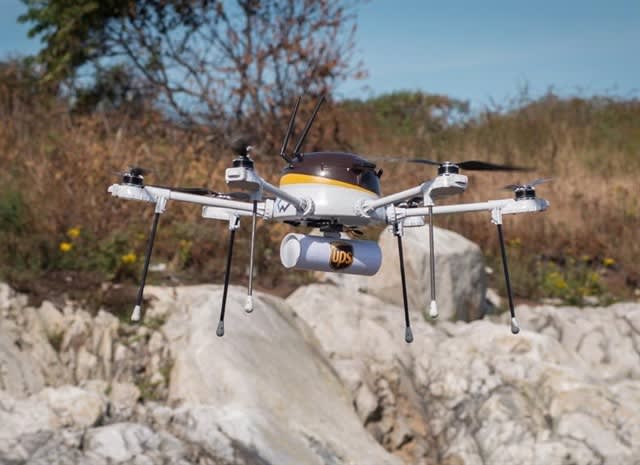
A new drone policy proposed by the Trump Administration allows drone operations up to 200 feet above ground or even 400 feet where appropriate. Photo: UPS
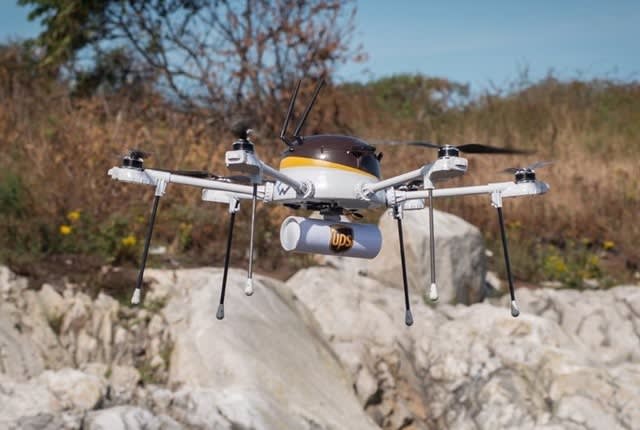
A new drone policy proposed by the Trump Administration allows drone operations up to 200 feet above ground or even 400 feet where appropriate.Photo: UPS
The Trump administration is making moves to establish a coherent federal policy governing the use of drones in delivery applications.
A presidential memorandum issued Wednesday, Oct. 25, directs the Department of Transportation to establish a pilot program inviting state and local governments, in partnership with private entities, to enter into agreements with the Federal Aviation Administration for sweeping waivers of current regulations on activities like flying at night and over people.
According to Politico.com, the DOT has six months to enter into at least five agreements pertaining to delivery drone operation, and the program is set to last three years. The information gathered from local and state experiments with drone operations will inform future regulatory actions.
FAA has been clear that it thinks state and local participation will be necessary for the foreseeable future, Politico notes. The memorandum states that "input from state, local, tribal, and private-sector stakeholders will be necessary to craft an optimal strategy for the national management of [unmanned aircraft system] operations. A coordinated effort between the private sector and among these governments will provide certainty and stability to UAS owners and operators, maximize the benefits of UAS technologies for the public, and mitigate risks to public safety and security."
The White House said a flexible regulatory framework is needed to "promote continued technological innovation and to ensure the global leadership of the United States in this emerging industry."
The memorandum allows for proposals for drone operations up to 200 feet above ground or even 400 feet where appropriate. More details will come in a federal register notice in the coming days or weeks.
Rep. Jason Lewis (R-Minn.), who had previously proposed a similar program, said the pilot should go even further in allowing states and municipalities to set restrictions on drone flights. "Amazon wants to take that delivery right down your avenue on Sunday morning," Lewis told Politico. "The question is, who should decide that?"
Additionally, Politico reports, FAA is looking for applications submitted jointly from a state or municipality and a private entity for a specific program. Ideally, the applications would be from "a commercial operation or first responder operation or, quite frankly, anything innovative that a community would want to employ and partner with a private entity to conduct," according to a DOT official cited by Politico. This move is part of an effort on the part of the FAA to learn how potential operators plan to use drones without being a nuisance for people on the ground. Concerns about drones used for snooping in private areas will be addressed as well.
More Operations

How to Write Better AI Prompts for Fleet Analysis
Include these six elements in your fleet prompts to generate more relevant analysis and accurate answers.
Read More →
Fleet Meets: Eric Kilgore
This edition of the Fleet Meets series features one of the industry's best leaders driving multi-market and national operations.
Read More →
Why Reactive Fleet Management Is Becoming Too Expensive to Sustain
Research highlights a growing need for proactive management strategies to address rising costs in fleet operations effectively.
Read More →


What Your Fleet KPIs Aren’t Telling You
Tracking fleet metrics is only useful when the data leads to better decisions. This guide helps fleet leaders assess cost, utilization, and downtime more accurately, identify performance gaps, and prioritize the actions that can improve operational results.
Read More →
Hidden in Plain Sight: Fleet Compliance Risks
Fleet compliance isn't just about having policies — it's about consistently enforcing them. This practical guide reveals six hidden compliance risks common in public sector and shared fleet operations and outlines proven strategies to improve visibility, accountability, and audit readiness
Read More →
Turning Fleet Payment Data into Executive Insights
Does data alone drive results in operations?
Read More →
Automotive Fleet Opens 2026 Personal Use Survey for Commercial Fleet Managers
Commercial and corporate fleet managers are invited to share how their organizations handle company vehicle personal-use policies, charges, and driver eligibility.
Read More →
Gary Van Orden Retires After Nearly Four Decades in Commercial Fleet
From answering customer calls at Ford Motor Company to leading fleet sales across multiple OEMs and a fleet management company, Gary Van Orden's career reflects nearly four decades of leadership in commercial fleet.
Read More →
How Stellantis Plans to Get Ahead of Fleet Downtime
Vehicle acquisition may grab the headlines, but fleet uptime increasingly determines operating success. Darren Bradshaw of Mopar North America gives the details.
Read More →
Hyundai Releases 2027 Commercial Program Incentives
The 2027 Model Year "Fleet Street Incentives" are available to commercial and government fleets.
Read More →