




Travel Advisories in Effect as Hurricane Harvey Nears Texas
Meteorologists say the storm could dump up to 30 inches of water on the Texas and Louisiana coasts and are urging drivers to stay off of roads.
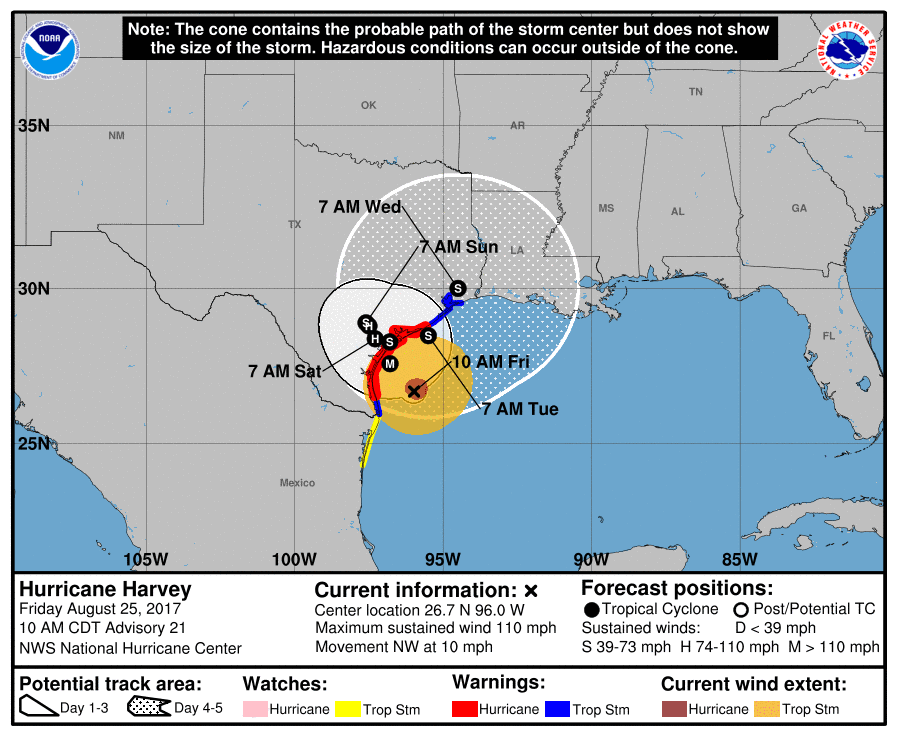
The National Hurricane Center is advising against all but essential local travel on roadways affected by Hurricane Harvey. Photo: National Hurricane Center
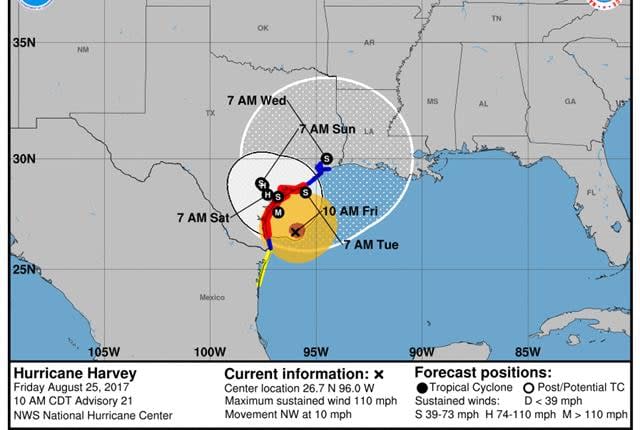
The National Hurricane Center is advising against all but essential local travel on roadways affected by Hurricane Harvey. Photo: National Hurricane Center
A dangerous hurricane has prompted state and federal authorities to issue a variety of travel warnings and advisories that will impact and disrupt trucking operations along with Louisiana and Texas coast for the next several days.
Latest reports say Hurricane Harvey is a Category 2 storm, with the potential to reach Category 3 by the time it makes landfall. According to the National Hurricane Center, Category 3 hurricanes have great potential for structural damage as far away as 25 miles from the eye of the storm. Meteorologists say the storm could dump as much as 30 inches of rain on affected areas. Sustained winds of 111 mph are also possible.
Drivers in the storm’s footprint should be aware of the potential for severe flooding, says the Texas Department of Transportation. The agency says the heavy rainfall, combined with storm surges up to 5 feet, will cause dangerous flood situations on roadways along the coast and is urging drivers to exercise caution and simply turn around when confronted with submerged roadways.
Currently, Texas DOT says the state is prepared, and storm response rescue and maintenance crews are positioned and ready to go once the full brunt of the storm hits the coastline. As of 10 a.m. Central time Friday morning, the agency was advising drivers to suspend all non-essential local travel in areas affected by the storm.
The storm also may affect fuel prices. This is an area rich in petroleum refineries and off-shore drilling operations, many of which are shutting down in advance of the storm. Hurricane Katrina, which hit the Gulf Coast in 2005, caused about a 40-cent increase in fuel prices overnight. Tom Kloza of the Oil Price Infomation Service tweeted Thursday, "Gasoline season may end with a bang, and not a whimper. Worries about Hurricane Harvey add 4-8cts gal to spot prices today." By 9 a.m. Friday morning he was reporting that spot gasoline prices were "screaming higher," hitting $1.73 per gallon at 9 a.m., up from $1.50 per gallon Tuesday.
For up-to-date information on conditions and travel advisories in areas affected by Hurricane Harvey, follow the TxDOT Ferry Twitter feeds, @GalvestonFerry and @PortA_Ferry, as well as @TxDOT_CRP.
Additional updates can be found on DriveTexas.org and on Facebook, www.facebook.com/txdot and Twitter, www.twitter.com/txdot.
More Operations

How Fleets Can Recruit and Train Veterans for Technician Roles
Here's how the technician shortage has affected uptime for fleets, and what to do about it.
Read More →
Avis Budget Group Deploys Neology Toll Management Technology Across Major Brands
Neology’s neoFleet platform will manage toll transactions and toll-authority operations for vehicles across Avis, Budget, Payless, Budget Truck and Zipcar.
Read More →
Fleet Personal-Use Charges Edge Higher in 2026
Nearly eight in 10 surveyed fleets allow personal use of company vehicles, while just over half of respondents report charging employees for the privilege.
Read More →
The Future of Fleet + What’s Changing Right Now | AF News Recap
Could developments overseas offer a preview of what’s coming for U.S. fleets? This week, we’re looking at the future of AI, autonomy, and electrification, plus Ford Pro’s new certified pre-owned program, smarter vehicle offboarding, and a new way for fleets to manage toll expenses.
Read More →
How to Handle Vehicle Offboarding
What do fleet managers need to do when a driver leaves?
Read More →
Fleet Manager’s Ultimate Playbook: Navigating the New Standard in OEM Connectivity
Rising operating costs, driver safety concerns, and unplanned downtime are putting unprecedented pressure on modern fleets. Discover how fleet managers use embedded OEM connectivity and real-time vehicle data to cut TCO, prevent downtime, and protect drivers without aftermarket telematics hardware.
Read More →
U.S. Bank Adds Verra Mobility Toll Management to Voyager Fleet Platform
The integration allows U.S. Bank Voyager fleet customers to manage toll payments and violations alongside fuel, EV charging and maintenance expenses.
Read More →
ADAS Prevents Crashes. But Repairs Cost More | AF News Recap
ADAS-equipped vehicles may crash less often, but they can cost more when they do. This week, we’re breaking down what that tradeoff means for fleets, plus Subaru’s first Forester Wilderness Hybrid, Nissan’s new e-POWER Rogue, and why Calstart has become Catalyst Mobility.
Read More →
Moventum Fleet Management Names Mark Iorillo Head of Sales
Iorillo brings nearly 20 years of fleet management and sales experience to the role, including previous positions at Element Fleet Management, CEI, Donlen and Ryder.
Read More →
Fleet Has a Talent Pipeline Problem. What Comes Next? | AF News Recap
Where will fleet’s next generation of leaders come from? This week, we’re looking at the industry’s talent pipeline, what certification can add to a fleet career, how to build an award-worthy track record, and the return of Automotive Fleet’s Personal Use Survey.
Read More →