




Transit Connect Wagons Get Ultimate Upfits
Ford and MAKE magazine are highlighting the Transit Connect's flexibility and upfit possibilities with this year's Maker Faire, an all-ages event celebrating the do-it-yourself spirit
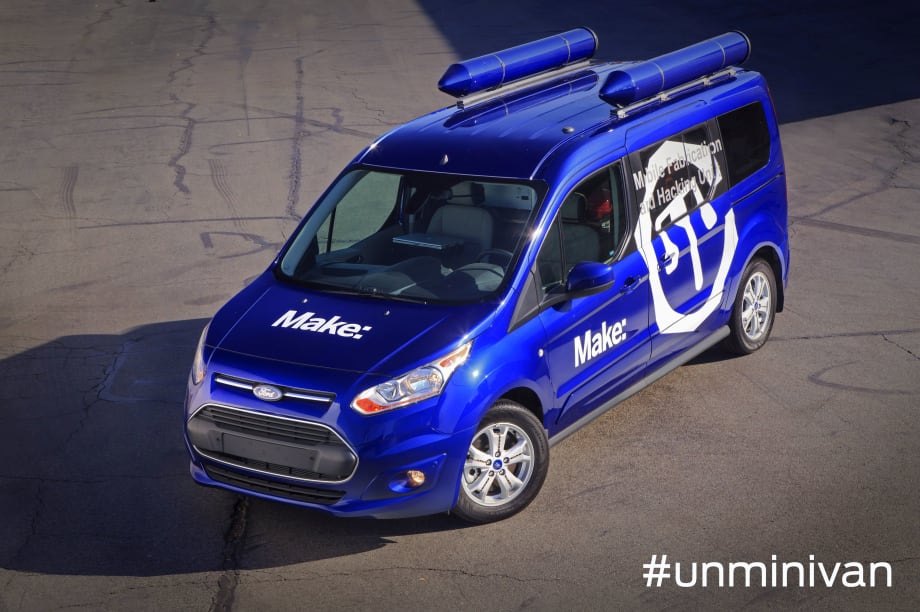
Photo: Ford
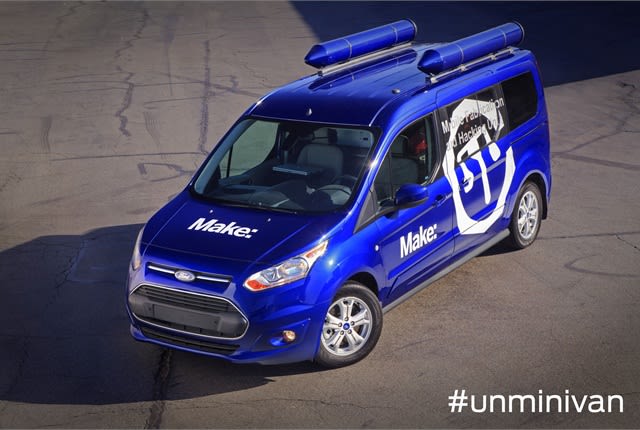
Photo: Ford
Ford and MAKE magazine will show two creative takes on personalizing the all-new Transit Connect Wagon as part of Maker Faire, an all-ages event celebrating the do-it-yourself spirit.
MAKE magazine put on the first Maker Faire in 2006 in the San Francisco Bay Area, bringing together tech enthusiasts, crafters, educators, hobbyists, engineers, and artists. It has since grown, with several Maker Faire events taking place around the world. Last year, about 195,000 people attended the two flagship Maker Faire events, held in San Francisco and New York. This year, Maker Faire events will take place in more than 60 cities in North America and beyond.
Hackmobile and Happy Mutant Mobile Transit Connect Wagons will make a public appearances at several of the events, including those in San Francisco, San Mateo, and New York City.
“Transit Connect Wagon is exactly what customers want it to be,” said Minyang Jiang, brand manager for Ford Transit Connect Wagon. “Whether it’s used as a people mover or to carry cargo, the spirit of the vehicle is in how it can be transformed by its owners to express their passions. We think these two vehicles are a perfect example of the unminivan, of how to inspire the imagination in a new way.”
Hackmobile, a fabricating workshop on four wheels, was the winner of MAKE magazine’s Ultimate Maker Vehicle Challenge, a competition that saw 10 teams vie to create the ultimate Ford Transit Connect Wagon for the do-it-yourself enthusiast. As part of winning the contest, Ford commissioned California-based builder CGS Motorsports to build Hackmobile.
The winning design team, Twin Cities Maker, is part of a Minnesota-based community nonprofit that operates a shop called Hack Factory, where members build projects and hold classes for the community.
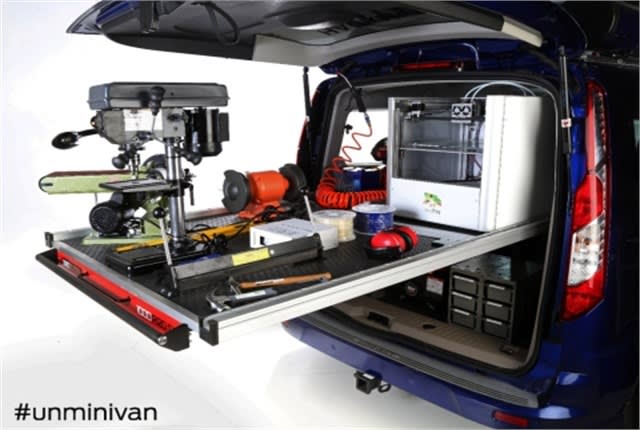
Photo: Ford
The concept was for a Transit Connect Wagon to be designed and built around a machine the team dubbed “The Fabber” due to its use as a multipurpose tool in fabricating. Hackmobile has shelving and storage for tools to do woodworking, metalworking and 3D fabrication.
Happy Mutant Mobile was developed in collaboration with MAKE magazine and Boing Boing, a Web-based magazine devoted to technology and culture.
Boing Boing’s editors designed Happy Mutant Mobile to be as original as its name, serving as an official vehicle for the site.
The custom-designed exterior features a large screen that can roll down to show outdoor movies, a hood ornament that blows bubbles and LED signs mounted to the roof. The interior is decorated in dark custom woodwork and green leather upholstery. It houses a mix of oddities and knickknacks, a 3D printer, camera equipment, magazine rack and computer equipment.
Theresa Contreras of California-based LGE*CTS Motorsports, which served as builder on the project, said the whimsical design features, like the bubble machine on the hood, make it one of the most unique builds the team has worked on.
“Transit Connect is a great platform for any build of this magnitude, or for the weekend warrior, for that matter,” Contreras said. “It’s amazing that the minute everyone lays eyes on this vehicle, they start thinking about how they would use it. I’ve heard everything from office desks to mountain bikes to band equipment. The unminivan can be a vehicle for everyone.”
More Operations

Fleet Has a Talent Pipeline Problem. What Comes Next? | AF News Recap
Where will fleet’s next generation of leaders come from? This week, we’re looking at the industry’s talent pipeline, what certification can add to a fleet career, how to build an award-worthy track record, and the return of Automotive Fleet’s Personal Use Survey.
Read More →
Smith System Launches Driver Risk Management Program
Fleets have more driver data than ever, but identifying risky behavior doesn't necessarily correct it. Smith System's new Driver Risk Management program combines monitoring, training, and follow-up coaching to help fleets connect risk signals with driver intervention.
Read More →
Automotive Fleet Opens 2026 Personal Use Survey for Commercial Fleet Managers
Less than two weeks left! Commercial and corporate fleet managers are invited to share how their organizations handle company vehicle personal-use policies, charges, and driver eligibility.
Read More →
From AI Prompts to AI-Generated Safety Songs | AF News Recap
Can better prompts make AI more useful for fleet managers? This week, we’re breaking down smarter fleet analysis, an AI-assisted experiment that turned safety training into music, and what happened to fuel prices in August.
Read More →
How to Write Better AI Prompts for Fleet Analysis
Include these six elements in your fleet prompts to generate more relevant analysis and accurate answers.
Read More →
Fleet Meets: Eric Kilgore
This edition of the Fleet Meets series features one of the industry's best leaders driving multi-market and national operations.
Read More →
Why Reactive Fleet Management Is Becoming Too Expensive to Sustain
Research highlights a growing need for proactive management strategies to address rising costs in fleet operations effectively.
Read More →
What Your Fleet KPIs Aren’t Telling You
Tracking fleet metrics is only useful when the data leads to better decisions. This guide helps fleet leaders assess cost, utilization, and downtime more accurately, identify performance gaps, and prioritize the actions that can improve operational results.
Read More →
Hidden in Plain Sight: Fleet Compliance Risks
Fleet compliance isn't just about having policies — it's about consistently enforcing them. This practical guide reveals six hidden compliance risks common in public sector and shared fleet operations and outlines proven strategies to improve visibility, accountability, and audit readiness
Read More →
Turning Fleet Payment Data into Executive Insights
Does data alone drive results in operations?
Read More →