




Toyota to Offer 2007 Prius Touring Edition
TORRANCE, Calif. --- Toyota said its Prius offers a more engaging driving experience for 2007 with the availability of a new Touring Edition model.
TORRANCE, Calif. --- Toyota said its Prius offers a more engaging driving experience for 2007 with the availability of a new Touring Edition model. In addition, the 2007 Prius gains standard driver and front passenger seat-mounted side airbags and front and rear side curtain airbags, which were previously optional. Toyota said the 2007 Prius Touring Edition provides more spirited driving responses due to its European-tuned suspension and 16-inch alloy wheels. The Prius Touring Edition is distinguished externally by the new wheels, a larger rear spoiler, High Intensity Discharge (HID) headlamps and integrated fog lamps. For 2007, a new Camry Hybrid joins the Prius and Highlander Hybrid SUV in the Toyota lineup. Last year, Toyota boosted Prius production to keep up with demand. "Prius was already the most successful hybrid car in the market, and the rising gasoline prices seen in 2006 have only added to its appeal," said Jim Lentz, Toyota Motor Sales, U.S.A. executive vice president. Prius provides the best fuel efficiency ratings of any midsize car sold in America, with estimated EPA ratings of 60 mpg in city driving, 51 mpg on the highway and 55 mpg in combined driving. The current Prius was the first Toyota product to employ Hybrid Synergy Drive, the company’s third-generation gas-electric hybrid powertrain technology. Hybrid Synergy Drive is defined as a "full hybrid system," which means it is capable of operating in gas or electric modes, as well as a mode that combines the power of the gas engine and electric motor. In the Prius, Hybrid Synergy Drive combines a 1.5-liter four-cylinder Atkinson Cycle gasoline engine and an electric drive motor. The gasoline engine produces 76 horsepower and 82 lb.-ft. of torque. As on all other Toyota passenger car engines, Variable Valve Timing with intelligence (VVT-i) helps to optimize power delivery across the engine speed range. The permanent-magnet electric drive motor produces its maximum power of 50 kW (67 horsepower) from 1,200-1,540 RPM, and peak torque of 295 lb.-ft. from 0-1,200 RPM. The Prius produces 110 combined horsepower with its gas engine and electric motor. The electronically controlled planetary gear-type continuously variable transmission does not have fixed gear ratios, but rather provides infinitely variable ratios in response to driving conditions. A regenerative braking system further boosts system efficiency: when the Prius is coasting or the brakes are applied, the electric motor functions as a generator, capturing kinetic energy that would normally be lost as heat through the brakes and transforming it into useable electricity to recharge the batteries. The computer-controlled powertrain seamlessly blends power from the gasoline engine, the electric drive motor and the generator. The driver typically does not feel the vehicle changing operational modes. The Prius uses an electronically controlled "by-wire" throttle. A by-wire shift control replaces the traditional gearshift lever and allows tap-of-the-finger shifting using a small joystick mounted on the dash. The Prius driver can monitor electric-gas power distribution through the Hybrid Synergy Drive system on the standard seven-inch touch-panel display monitor. This screen also displays navigation information on vehicles equipped with the optional navigation system. The Prius produces over 70 percent fewer smog-forming emissions than the average new vehicle. The Prius has been certified as a Super Ultra Low Emission Vehicle (SULEV) in California and those states adopting California standards. In the rest of the country, Prius is certified as Tier 2, Bin 3. In addition, in California and states adopting the California rules, Prius is certified as an Advanced Technology Partial Zero Emissions Vehicle (AT-PZEV). The AT-PZEV certification requires the SULEV exhaust standard linked with the ability to meet a zero-fuel-evaporative standard, a 150,000-mile durability demonstration, extended emissions system warranty, and technology deemed by the California Air Resources Board (CARB) to advance future fuel cell vehicles.
More Fuel

Fuel Prices Surge in September | September Fuel Update
September brought major fuel price swings, including diesel crossing $6 a gallon. Here’s how gas and diesel prices changed throughout the month, and where they stood heading into October.
Read More →
Turning Fleet Payment Data into Executive Insights
Ramel Lindsay of U.S. Bank Voyager discusses how fleets can transform payment and transaction data into actionable intelligence to reduce costs, improve oversight, and support executive decision-making.
Read More →
Why the IRS Raised Its Mileage Rate in the Middle of 2026
Fuel-price volatility drove the rare increase to 76 cents per mile, the fifth midyear adjustment since 2000.
Read More →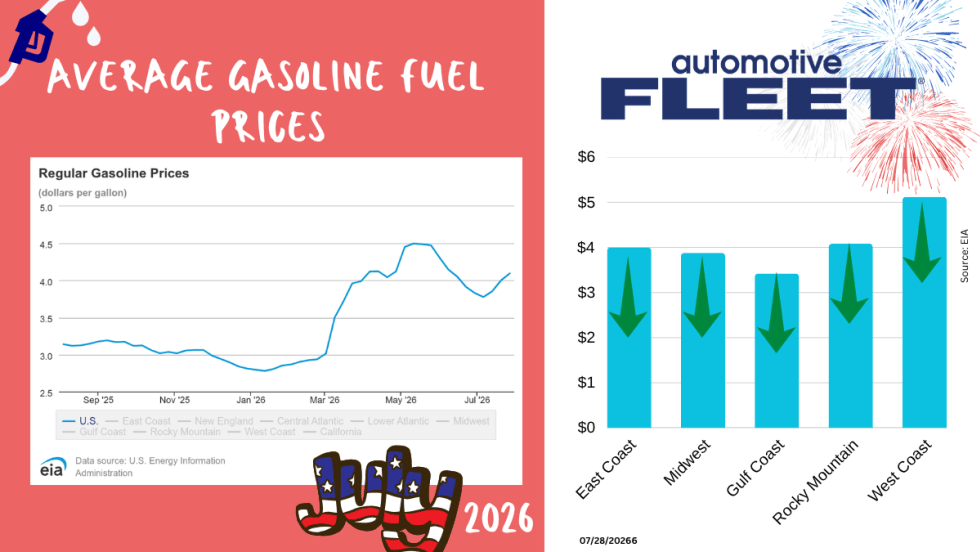
July Fuel Update: Prices Keep Rising in Light of More Conflict
Gas prices continue to rise as more and more conflicts do, too.
Read More →
Bob Adamsky on Fuel Volatility: "Don't Panic, Have a Plan."
When it comes to up and down fuel prices, Adamsky has a message for fleets: “Don’t panic.”
Read More →
How Fleets Can Gain Control of Non-Fuel Spend
Fuel often gets the spotlight, but non-fuel expenses can have a major impact on fleet costs. Ramel Lindsay of U.S. Bank Voyager discusses how fleets can gain better visibility and control over these often-overlooked expenditures.
Read More →
Fuel is Just the Start: How Middle East Tensions are Driving Up Fleet Maintenance Costs
The Middle East conflict is doing more than pushing up fuel prices. It’s also raising the cost of key maintenance products your fleet depends on, from motor oil to tires to windshield wipers. Here’s what you need to know about this budget-busting situation.
Read More →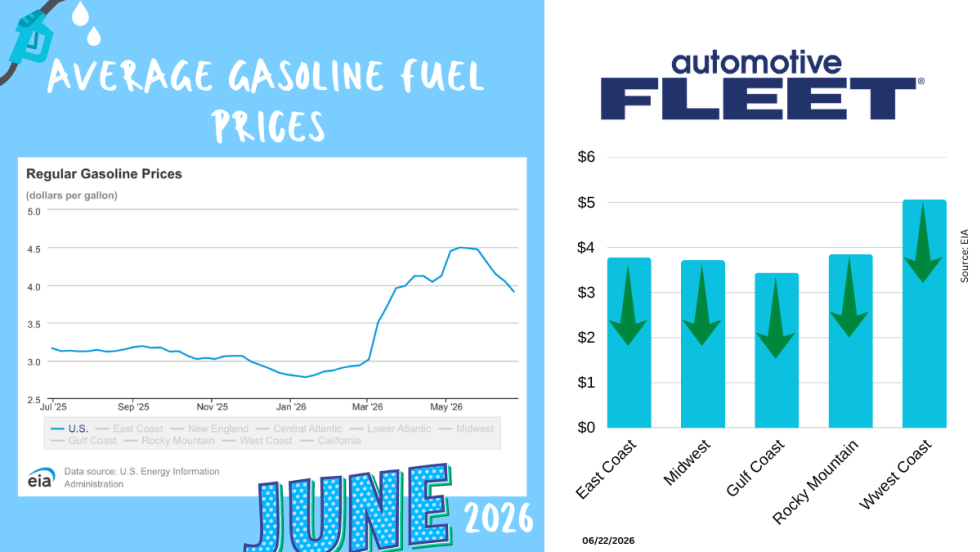
June Fuel Update: Prices Fall Below $4
Drivers are finally getting some relief at the pump. The national average gas price has dropped below $4 a gallon for the first time in months, with prices falling in 47 states as oil markets react to developments in U.S.-Iran negotiations.
Read More →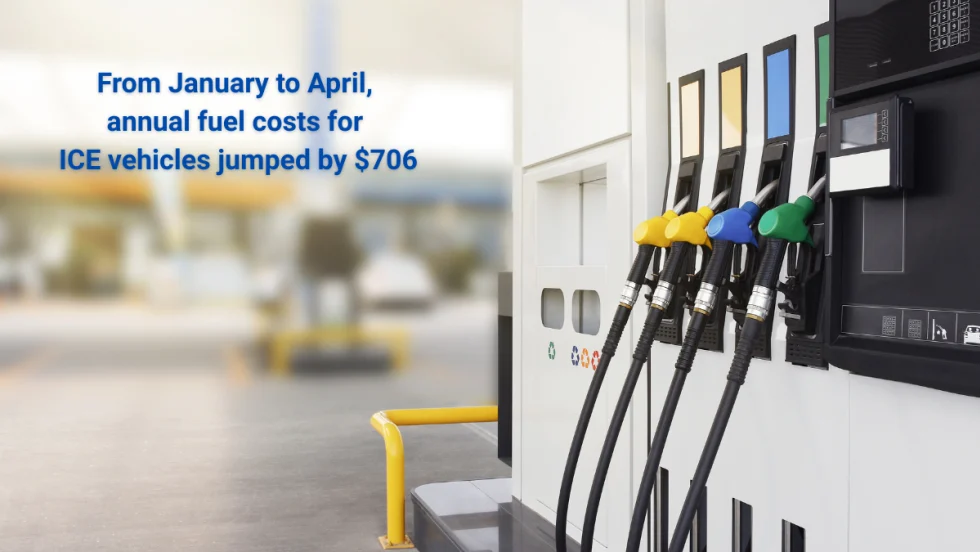
Study: How 2026's Gas Price Hikes Affect Different Vehicle Types
New data from iSeeCars reveals how rising fuel costs have affected different vehicle segments as gasoline prices climbed nearly 46% over the past four months.
Read More →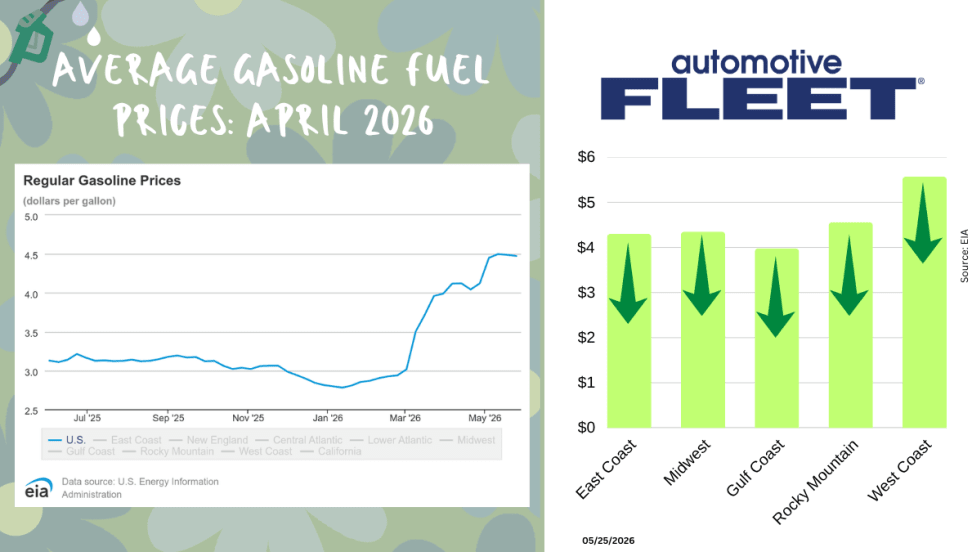
May Fuel Update: All Regions Experience Declines
Gas prices are finally easing in much of the country, but experts warn global tensions could quickly reverse the trend as the national average remains well above last month’s levels.
Read More →