




Toyota Prius Prime, Chevrolet Volt Win Top Safety Honors
The two plug-in hybrids qualify for the Top Safety Pick+ award, while two all-electric vehicles come up short in recent safety evaluations from IIHS.

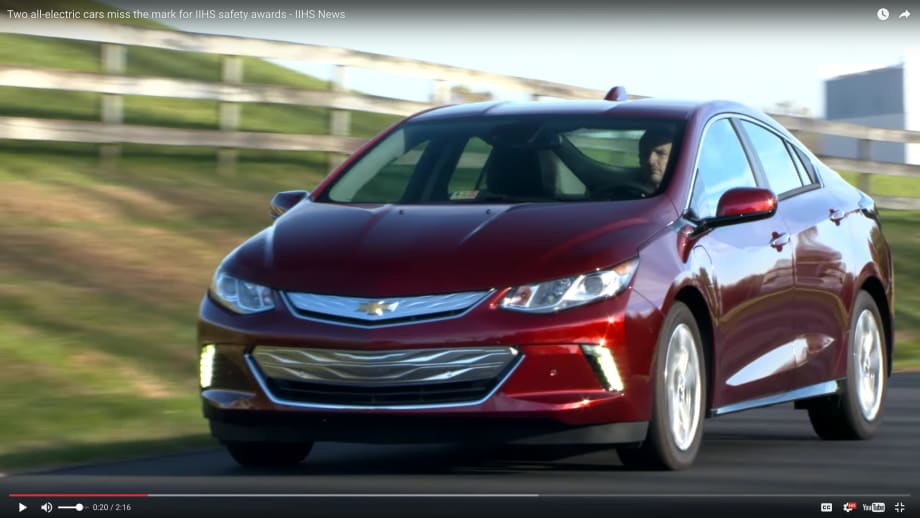
Photo: IIHS
The Chevrolet Volt and Toyota Prius Prime plug-in hybrids have both earned Top Safety Pick+ awards from the Insurance Institute for Highway Safety. But two all-electric vehicles, the Tesla Model S and the BMW i3, fell short of meeting IIHS awards criteria in recent evaluations, according to the institute.
To earn a Top Safety Pick award, a vehicle must earn the highest rating of “good” in all five crashworthiness evaluations — small overlap front, moderate overlap front, side, roof strength and head restraints — and have an available front crash prevention system that draws an “advanced” or “superior” rating. The “plus” distinction is awarded to vehicles that meet all those criteria and also come with headlights that draw a “good” or “acceptable” rating.
“There's no reason the most efficient vehicles can’t also be among the safest,” said David Zuby, IIHS executive vice president and chief research officer. “We hope Tesla and BMW will continue to refine the designs of their electric models to maximize driver protection and, especially in the case of Tesla, improve their headlights.”
The Model S, a large luxury sedan, earned “good” ratings in all IIHS crashworthiness evaluations except the challenging small overlap front crash test, in which it drew a rating of “acceptable.” Despite lengthening the side curtain air bags to improve small overlap protection in the Model S, Tesla ran into problems in the test when the safety belt allowed the dummy’s torso to move too far forward, according to IIHS.
This allowed the dummy’s head to hit the steering wheel hard through the air bag. Measurements from the dummy indicated that injuries to the head and lower right leg would be possible in a real-world crash of the same severity, IIHS said.
The ratings for the Model S apply to 2016 and 2017 cars built after October 2016. Tesla said it made a production change on Jan. 23 to address the head-contact problem, and IIHS will test the updated vehicle for small overlap protection as soon as the car can be delivered.
Although the i3, Volt and Prius all did better in the small overlap evaluation than the Model S, the results can’t be compared because the Model S is larger than the others. Since the kinetic energy involved in a front crash depends on the speed and weight of the vehicle, the Tesla’s “acceptable” rating is based on a more severe crash than the “good” ratings of the lighter cars, IIHS pointed out.
One version of the Model S, the P100D, also fell short on roof strength, which is important for protecting people in a rollover crash, IIHS said. The rating is based on a strength-to-weight ratio. The P100D has the same roof structure as other Model S versions but is heavier, because of a larger battery, so it earned an “acceptable” rating.
The current version of the Model S hasn’t yet been rated for front crash prevention. While automatic braking equipment comes standard, Tesla hasn’t yet activated the software for all vehicles.
The 2017 Model S isn’t available with anything other than “poor”-rated headlights, IIHS said. Tesla, however, pointed out that it’s working with its supplier to improve the headlights. IIHS will evaluate the new ones when they’re available.
The i3, a small car, failed to reach the winner’s circle because it rated only “acceptable” in the head restraint and seat evaluation, which measures a vehicle’s ability to protect against neck injuries in a rear crash. While such injuries are rarely fatal, they are the most common type of crash injury and can cause debilitating pain, IIHS said.
The i3 earned “good” ratings in the other crashworthiness tests, however, and is available with an optional front crash prevention system that drew an “advanced” rating. The system reduced the impact speed by an average of 9 mph in the 12 mph track test and by 7 mph in the 25 mph test, according to IIHS. Moreover, the system’s warning component meets National Highway Traffic Safety Administration criteria.
The i3’s only available headlight system drew an “acceptable” rating from IIHS.
“BMW clearly thought a lot about safety when designing the i3,” Zuby said. “It’s a shame that it missed the mark on head restraints, which is something most of today’s vehicles get right. Among small cars, the i3 is the only 2017 model that doesn’t earn a good rating.”
The 2017 Volt can be optionally equipped with either an “advanced”- or “superior”-rated front crash prevention system. The car earned a “good” rating for headlights when equipped with optional high-beam assist, which automatically switches between high beams and low beams based on the presence of other vehicles. Without high-beam assist, the Volt’s headlights are rated “acceptable.”
The Prius Prime is the plug-in version of the Prius hybrid, also a Top Safety Pick+ winner. The car’s standard front crash prevention system earned a “superior” rating, and its only available headlights drew an “acceptable” rating.
While the Volt and Prius Prime can both run on gas, the Volt has an edge in electric-only driving. It can travel 53 miles in electric-only mode, while the Prius Prime can go 25 miles without using gas, according to EPA estimates. When it hasn't been plugged in, the Prius Prime gets 54 miles per gallon, while the Volt gets 42 mpg.
IIHS plans to test another green car, the all-electric Chevrolet Bolt, once it becomes widely available later this year.
More Safety

Nexar-Nauto Merger Aims to Give Fleets Better Safety Intelligence Through Larger Driving Dataset
Stefan Heck tells Automotive Fleet that combining more than 10 billion miles of driving history with Nexar's AI models will give fleets deeper insights into driver risk and roadway conditions than either company could provide independently.
Read More →
Don't Wait for a Crisis: 5 Ways to Build Mental Health Into Your Fleet Safety Program
For Suicide Prevention Month, fleet and safety leaders have an opportunity to put mental health where it belongs: at the center of workplace safety.
Read More →
How Camera Data Can Strengthen a Fleet’s Insurance Renewal
Insights from a commercial insurance carrier and a broker show how fleets can turn video telematic data, driver coaching, and improved claims results into a stronger case at insurance renewal.
Read More →
The Safest Fleets Aren’t the Ones with the Most Technology
You’ve made the telematics investment. Here’s how to capture the other half of its value and build the safest fleet on the road.
Read More →
Hidden in Plain Sight: Fleet Compliance Risks
Fleet compliance isn't just about having policies — it's about consistently enforcing them. This practical guide reveals six hidden compliance risks common in public sector and shared fleet operations and outlines proven strategies to improve visibility, accountability, and audit readiness
Read More →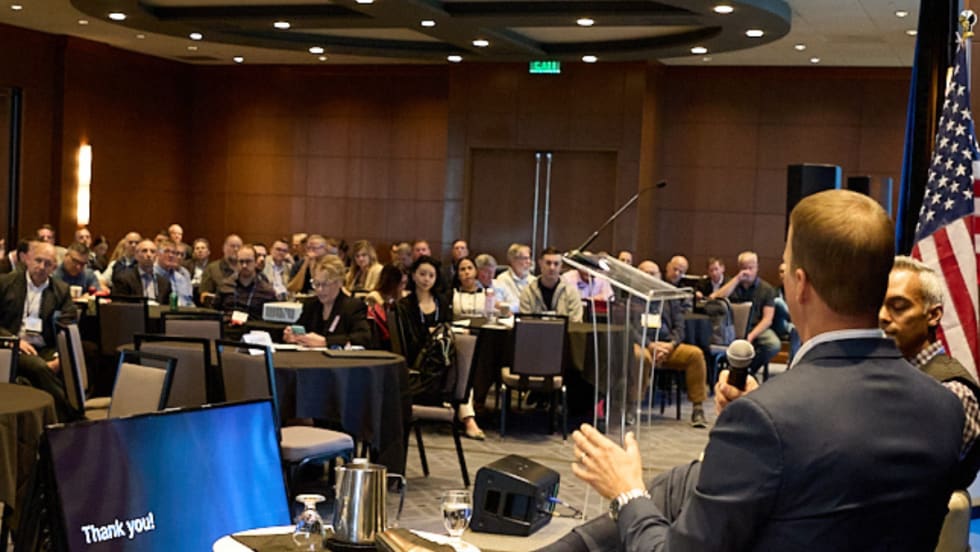
NETS Sets 2026 Fleet Safety Benchmark Conference for Indianapolis
The Sept. 15–17 program will feature fleet benchmarking data, case studies, emerging technologies, and implementation strategies while running alongside the NSC Safety Congress & Expo.
Read More →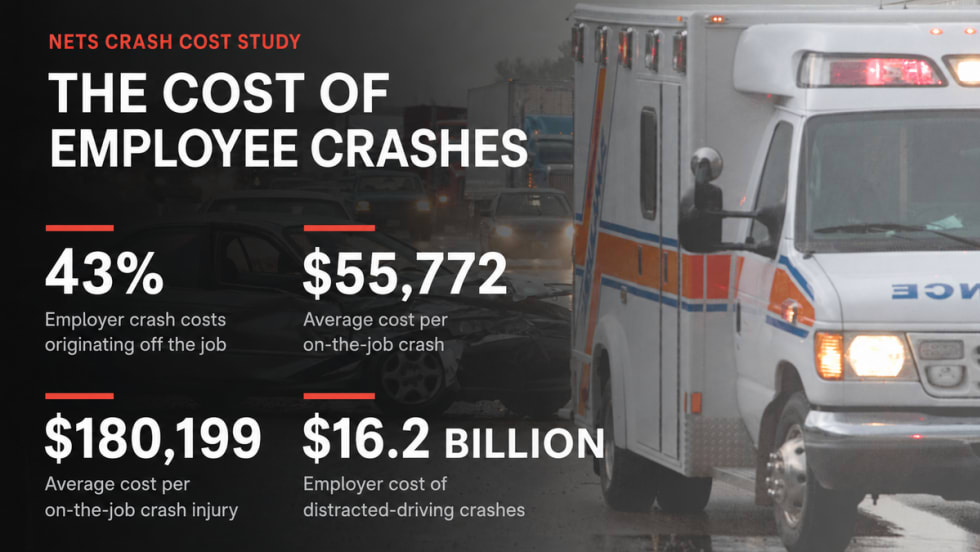
Off-the-Job Crashes Account for 43% of Employers’ $61.7 Billion Crash Burden
NETS quantifies costs dispersed across fleet, risk, HR, and other departments while providing new per-crash benchmarks for employers.
Read More →
Ram Recalls More Than 1.27 Million 1500 Pickups for Seat Belt Anchor Issue
The recall affects certain 2019-2026 Ram 1500 pickups that may have improperly attached second-row seat belt buckle anchors.
Read More →
How Better Visibility Cut Speeding Violations by 48%
Fleet leaders don't need more data, they need clearer visibility into what the data is saying. This case study explores how one utility replaced speeding-event counts with a single metric — miles driven in violation — to strengthen safety and significantly reduce speeding violations.
Read More →
Operation Safe Driver Week: Why the Industry's Oldest Safety Campaign Still Matters to Fleets
A look at how a 2007 enforcement initiative became one of the most consequential weeks on the fleet safety calendar, and what it means for your drivers in 2026.
Read More →