




Toyota, Feds Settle Unintended Acceleration Case for $1.2B
The U.S. Department of Justice agrees to defer prosecution and dismiss its case as long as Toyota complies with all agreement terms, which include submitting to an independent monitor.
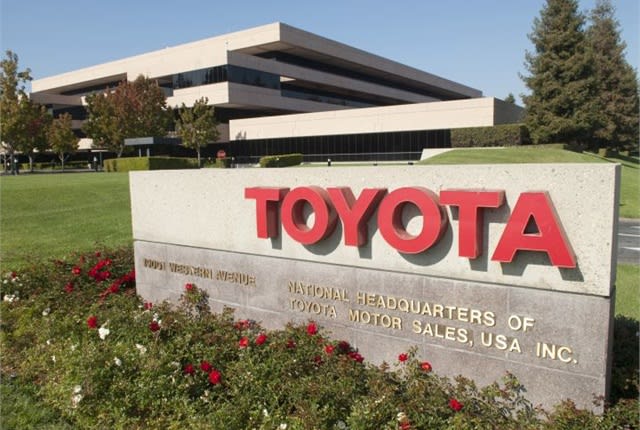
Photo courtesy of Toyota.
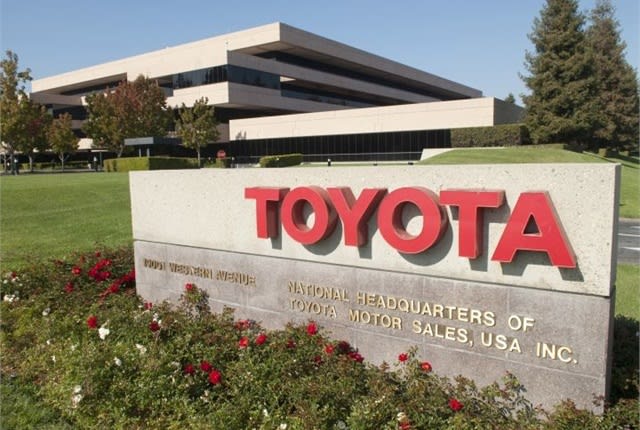
Photo courtesy of Toyota.
As part of a legal settlement with the U.S. Department of Justice, Toyota has agreed to pay a $1.2 billion penalty and acknowledge that in 2009 and 2010 the company misled the public and federal regulators about vehicles susceptible to "sticky pedal" — a problem in which accelerators get stuck in partially depressed levels — and floor mat entrapment.
In turn, the Department of Justice agreed to defer prosecution and dismiss its case against the automaker, as long as Toyota complies with terms of the agreement that include submitting to an independent monitor who will review the company's policies and procedures for safety communications, internal sharing of vehicle accident information, and preparation and sharing of certain technical reports.
"Rather than promptly disclosing and correcting safety issues about which they were aware, Toyota made misleading public statements to consumers and gave inaccurate facts to members of Congress," said Attorney General Eric Holder.
In 2009 and 2010, Toyota recalled millions of Toyota and Lexus vehicles to address claims of unintended acceleration. The federal probe focused on the company’s communications and decisions associated with those recalls.
"Under the terms of the criminal information filed today, Toyota will also be charged with wire fraud," Holder said in a press conference Wednesday morning. "The department will defer prosecution of Toyota for three years — provided that Toyota complies with the agreement in every respect and continues to fully cooperate with federal authorities."
The $1.2 billion penalty represents the largest fine imposed on an automaker.
"This is appropriate given the extent of the deception carried out by Toyota in this case," Holder said of the fine. "Put simply, Toyota's conduct was shameful. It showed a blatant disregard for systems and laws designed to look after the safety of consumers."
In a statement released by Toyota, Christopher P. Reynolds, chief legal officer for Toyota Motor North America, said the recalls and resultant investigation have led to fundamental changes within the company.
"We have made fundamental changes across our global operations to become a more responsive company – listening better to our customers' needs and proactively taking action to serve them," Reynolds said. "Specifically, we have taken a number of steps that have enabled us to enhance quality control, respond more quickly to customer concerns, strengthen regional autonomy and speed decision-making."
Toyota cited the following measures the company has taken since the recalls:
Launching rapid-response teams to investigate customer concerns quickly.
Committing $50 million in 2011 to launch Toyota's Collaborative Safety Research Center in Ann Arbor, Mich., to partner with more than 16 universities and institutions across North America on safety advances that will be shared to benefit the auto industry and society.
Expanding its network of field quality offices to improve customer responsiveness.
Enhancing regional autonomy, including naming the first American CEO of Toyota’s North American Region as well as chief quality officers for North America and other principal regions — all of whom have direct lines to President Akio Toyoda.
Improving its quality control process.
Extending the new vehicle development cycle by four weeks to help ensure reliability and safety.
With the settlement, Toyota hopes to take "a major step toward putting this unfortunate chapter behind us," Reynolds said.
More Safety
IIHS Crash Avoidance Tests Reveal Safety Gaps in Cargo Vans and Work Trucks
New crash-avoidance ratings from the Insurance Institute for Highway Safety reveal inconsistent performance among commercial vehicles, with several popular cargo vans and heavy-duty pickups struggling to avoid collisions with other vehicles and pedestrians.
Read More →
What’s Next for Fleet? Safety, AI & Industry Recognition | AF News Recap
Could your company's culture be encouraging distracted driving? This week, we're exploring how workplace expectations affect driver safety, what AI, EVs, and autonomous vehicles could mean for the future of fleet management, and how fleet professionals can strengthen their award nominations.
Read More →
Does Your Fleet's Culture Encourage Distracted Driving?
What happens when the people responsible for enforcing safety rules are the ones setting the wrong example? The answer may reveal why some of the biggest risks to fleet drivers have little to do with what's written in the employee handbook.
Read More →
Fleet Manager’s Ultimate Playbook: Navigating the New Standard in OEM Connectivity
Rising operating costs, driver safety concerns, and unplanned downtime are putting unprecedented pressure on modern fleets. Discover how fleet managers use embedded OEM connectivity and real-time vehicle data to cut TCO, prevent downtime, and protect drivers without aftermarket telematics hardware.
Read More →
From Driver Well-Being to EV Charging | AF News Recap
Mental health belongs in the fleet safety conversation. This week, we’re looking at five ways fleets can support employee well-being before a crisis, plus Holman’s expansion in Mexico, new one-day Fleet Forward passes, and why EV charging demand is outpacing infrastructure growth.
Read More →
Nexar-Nauto Merger Aims to Give Fleets Better Safety Intelligence Through Larger Driving Dataset
Stefan Heck tells Automotive Fleet that combining more than 10 billion miles of driving history with Nexar's AI models will give fleets deeper insights into driver risk and roadway conditions than either company could provide independently.
Read More →
Don't Wait for a Crisis: 5 Ways to Build Mental Health Into Your Fleet Safety Program
For Suicide Prevention Month, fleet and safety leaders have an opportunity to put mental health where it belongs: at the center of workplace safety.
Read More →
How Camera Data Can Strengthen a Fleet’s Insurance Renewal
Insights from a commercial insurance carrier and a broker show how fleets can turn video telematic data, driver coaching, and improved claims results into a stronger case at insurance renewal.
Read More →
The Safest Fleets Aren’t the Ones with the Most Technology
You’ve made the telematics investment. Here’s how to capture the other half of its value and build the safest fleet on the road.
Read More →
Hidden in Plain Sight: Fleet Compliance Risks
Fleet compliance isn't just about having policies — it's about consistently enforcing them. This practical guide reveals six hidden compliance risks common in public sector and shared fleet operations and outlines proven strategies to improve visibility, accountability, and audit readiness
Read More →