





More Safety Concerns: NHTSA Open Investigation of 580,000 Tesla Vehicles Outfitted with Video Games
Touchscreens Contribute to Distracted Driving
A recent study shows that driver reaction time increased by up to 57% when interacting with today’s sophisticated dashboard mounted touchscreens.
April 21, 2022
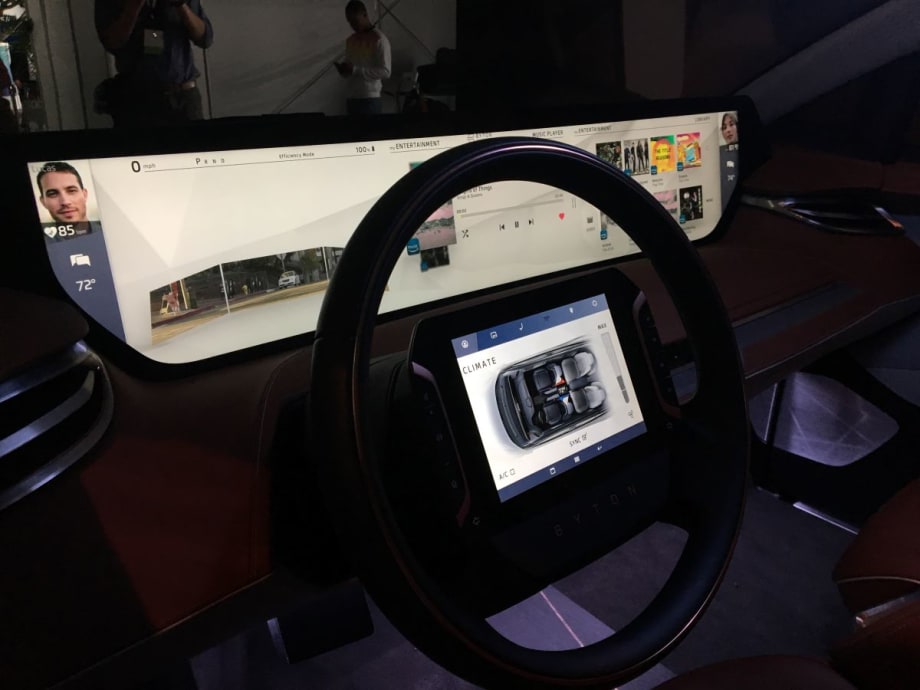
More and more automakers are equipping vehicles with large touchscreens, which force drivers to take their eyes off the road.
Photo: Chris Brown from the 2018 Los Angeles Auto Show
2 min to read
Drivers took their eyes off the road for as long as 20 seconds when asked to play a track from Spotify using a touchscreen interface — long enough to travel more than a third of a mile, according to a recent study by the U.K.’s Transport Research Laboratory and road safety charity IAM Roadsmart.
In a recent article, VNC Automotive, a company with its connectivity technology installed in more than 35 million vehicles worldwide, questions whether today’s touch-based interfaces are compromising safety.
More and more automakers are equipping vehicles with a giant touchscreen in the middle of the dashboard. That means drivers must control everything — from changing the radio station to turning on the headlights — by delving into a digital menu. This, in turn, means the driver’s hands are off the wheel and their eyes are off the road.
The VNC report notes that even Volvo, “bastions of safety,” launched a new Sensus infotainment system based around a central 9-inch portrait display that incorporated almost everything into its touchscreen interface.
Yet studies show that manual distractions can set the stage for a collision. According to the aforementioned U.K. Transport Research Laboratory study, during the 20 seconds drivers took their eyes off the road to interact with the touchscreen, many drivers struggled to maintain their lane position, while some failed to respond to a simulated emergency event.
Perhaps most significantly, reaction times increased by up to an alarming 57% when interacting with these devices. By comparison, driving while over the alcohol limit only increases reaction times by 12%, notes the VNC Automotive report.
The proliferation of touchscreens as command central for drivers but also an entertainment system for all vehicle occupants may change in the future.
As the VNC report notes, the design of the interface itself is critical to reducing the demands for a driver’s focus so there is less time spent diverting attention from the road. For example, frequently used controls should be styled to stand out from their surroundings; icons should be easily discernible; the status of a function should be readily apparent at a glance; and colors should be chosen to avoid wash-out in sunlight.
More Safety

What’s Next for Fleet? Safety, AI & Industry Recognition | AF News Recap
Could your company's culture be encouraging distracted driving? This week, we're exploring how workplace expectations affect driver safety, what AI, EVs, and autonomous vehicles could mean for the future of fleet management, and how fleet professionals can strengthen their award nominations.
Read More →
Does Your Fleet's Culture Encourage Distracted Driving?
What happens when the people responsible for enforcing safety rules are the ones setting the wrong example? The answer may reveal why some of the biggest risks to fleet drivers have little to do with what's written in the employee handbook.
Read More →
Sponsored•October 1, 2026
Fleet Manager’s Ultimate Playbook: Navigating the New Standard in OEM Connectivity
Rising operating costs, driver safety concerns, and unplanned downtime are putting unprecedented pressure on modern fleets. Discover how fleet managers use embedded OEM connectivity and real-time vehicle data to cut TCO, prevent downtime, and protect drivers without aftermarket telematics hardware.
Read More →
From Driver Well-Being to EV Charging | AF News Recap
Mental health belongs in the fleet safety conversation. This week, we’re looking at five ways fleets can support employee well-being before a crisis, plus Holman’s expansion in Mexico, new one-day Fleet Forward passes, and why EV charging demand is outpacing infrastructure growth.
Read More →
Nexar-Nauto Merger Aims to Give Fleets Better Safety Intelligence Through Larger Driving Dataset
Stefan Heck tells Automotive Fleet that combining more than 10 billion miles of driving history with Nexar's AI models will give fleets deeper insights into driver risk and roadway conditions than either company could provide independently.
Read More →
Don't Wait for a Crisis: 5 Ways to Build Mental Health Into Your Fleet Safety Program
For Suicide Prevention Month, fleet and safety leaders have an opportunity to put mental health where it belongs: at the center of workplace safety.
Read More →
How Camera Data Can Strengthen a Fleet’s Insurance Renewal
Insights from a commercial insurance carrier and a broker show how fleets can turn video telematic data, driver coaching, and improved claims results into a stronger case at insurance renewal.
Read More →
The Safest Fleets Aren’t the Ones with the Most Technology
You’ve made the telematics investment. Here’s how to capture the other half of its value and build the safest fleet on the road.
Read More →
Sponsored•August 7, 2026
Hidden in Plain Sight: Fleet Compliance Risks
Fleet compliance isn't just about having policies — it's about consistently enforcing them. This practical guide reveals six hidden compliance risks common in public sector and shared fleet operations and outlines proven strategies to improve visibility, accountability, and audit readiness
Read More →
NETS Sets 2026 Fleet Safety Benchmark Conference for Indianapolis
The Sept. 15–17 program will feature fleet benchmarking data, case studies, emerging technologies, and implementation strategies while running alongside the NSC Safety Congress & Expo.
Read More →