





Research: State of the Commercial Truck Tire Industry in 2022
Top Commercial Truck Tire Sizes Identified
The leading commercial truck tire sizes of 2018, as reported by the U.S. Tire Manufacturers Association, includes the perennially popular 295/75R22.5.
February 22, 2019
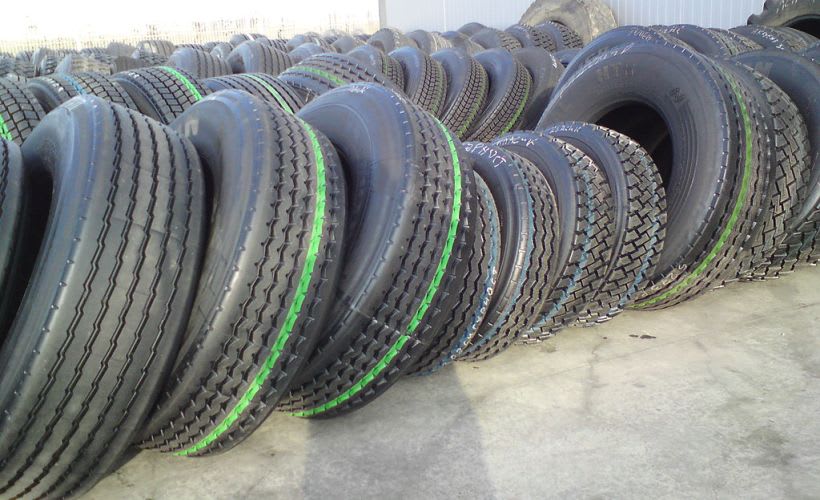
The U.S. Tire Manufacturers Association has identified the most popular sizes of commercial truck tires.
Photo: Biso/Wikimedia.
3 min to read
The U.S. Tire Manufacturers Association has identified the top original-equipment manufacturer and aftermarket tire sizes in its latest fact book that covers the 2018 calendar year, according to a report on ModernTireDealer.com.
The top sizes of truck tires added to new trucks include 295/75R22.5 (28.4%), 11R22.5 (24.9%), 275/80R22.5 (13.1%), 225/70R19.5 (8.6%), and 11R24.5 (5.8%). These tire sizes have been the top five for the past four years.
The top replacement sizes include 295/75R22.5 (24.3%), 11R22.5 (22.3%), 11R24.5 (9.7%), 225/70R19.5 (7.4%), and 275/80R22.5 (6.9%). These sizes have also been the top five for the past four years.
Prior to 2015, size 275/80R22.5 was grouped with size 295/75R22.5 in the USTMA system because they had identical applications, said an association spokesperson. From 2015-2017, they were reported as two different sizes. In 2019 (USTMA Factbook 2020), the association will return to its pre-2015 reporting "to more fairly represent the full market for this application."
How to Read Commercial Truck Tire Specifications
It goes without saying that tires used on commercial trucks need to comply with high standards of durability and performance in order to withstand the rigors of road wear. Commercial truck tires should be evaluated according to multiple criteria, including traction, maximum speed, load capacity, heat and wear resistance, and tread design. In general, commercial trucks require greater tire width, compared with average truck tire sizes, to ensure optimal traction and vehicular stability.
Using the wrong type of tire on a commercial truck can have catastrophic consequences, as it increases the likelihood of a road accident. Even if that never happens, tires that aren’t suited for applicable truck loads and performance needs will probably wear down faster and rack up maintenance bills. That’s why it’s extremely important to fully understand truck tire specifications customarily used in the commercial trucking industry. To do that, you need to be able to interpret all those letters and numbers printed on the sidewall of the tire.
A typical truck tire size code reads as follows:
LT295/75R22.5
This code actually consists of five distinct components:
Tire type: The letter(s) at the beginning of the code denote the type of tire. “LT” stands for light-duty trucks, while “P” stands for passenger—and neither of these tire options are generally suitable for commercial trucks. Tires for commercial trucks often have a “C” at the end of the code. Not all tire codes begin with a letter, however.
Width: The first number you encounter on the code—“295” in our example—refers to the section width of the tire (in millimeters).
Aspect ratio: The number after the slash—“75” here—is the ratio of sidewall height to tire width, expressed as a percentage. In our example, the sidewall height is 75% of the tire width.
Tire construction type: This refers to the tire's internal construction. “R” is for radial tires, “B” is for bias belt tires, and “D” or a dash is for bias ply tires (or diagonal tires). Tires that have no letter here are frequently cross ply tires.
Diameter: This is the rim diameter (in inches).
Immediately to the right of this alphanumeric code you often see a number and a letter. These are the load index (a two- or three-digit number) and the speed rating (usually a single letter).
Knowing how these codes relate to tire size and construction is vital for keeping your fleet of trucks on the road in good operating condition. Tire positions are also worth touching on briefly as a matter relevant to selecting commercial truck tires. Steer tires, drive tires, and trailer tires have differing performance needs, although many trucking fleet managers prefer all-position tires for their versatility and cost-effectiveness.
Did you like this article? Be sure to sign up for our newsletter.
More Maintenance

Sponsored•October 1, 2026
Fleet Manager’s Ultimate Playbook: Navigating the New Standard in OEM Connectivity
Rising operating costs, driver safety concerns, and unplanned downtime are putting unprecedented pressure on modern fleets. Discover how fleet managers use embedded OEM connectivity and real-time vehicle data to cut TCO, prevent downtime, and protect drivers without aftermarket telematics hardware.
Read More →
How Can Fleet Managers Tell Which Repairs Require Closer Review?
Fleetio’s Brianna Perry demonstrates how Service Advisor evaluates maintenance requests, identifies pricing anomalies, and provides the context fleet managers need to focus their attention on potential problems.
Read More →
Why Roadside Assistance Belongs in a Fleet Risk Strategy
Roadside assistance is more than a tow. See how the right partner can protect drivers, uncover fleet trends, and strengthen your risk strategy.
Read More →
Sponsored•August 7, 2026
Hidden in Plain Sight: Fleet Compliance Risks
Fleet compliance isn't just about having policies — it's about consistently enforcing them. This practical guide reveals six hidden compliance risks common in public sector and shared fleet operations and outlines proven strategies to improve visibility, accountability, and audit readiness
Read More →
How Maintenance Costs Compare Across 27 Fleet Vehicles
Vincentric’s three-year, 60,000-mile projections reveal wide differences for both scheduled and unscheduled maintenance among selected vehicle categories. Projected maintenance visits also play a factor.
Read More →
The EV Breakdown Nobody's Talking About: Why Most Electric Vehicle Roadside Calls Aren't Mechanical Failures
Here's why EV breakdowns are widely misunderstood.
Read More →
How Stellantis Plans to Get Ahead of Fleet Downtime
Keeping fleet vehicles on the road has become as important as buying them. Darren Bradshaw of Mopar North America explains how connected vehicle data, AI, and proactive service strategies are helping Stellantis reduce downtime and move closer to predictive maintenance.
Read More →
Merchants Fleet Expands Maintenance Network with Pep Boys
Merchants Fleet has expanded its relationship with Pep Boys, increasing the service provider's role within its national maintenance network. The move is intended to enhance maintenance coordination and support commercial fleets through Pep Boys' nationwide footprint.
Read More →
The Two Biggest Summer Downtime Threats for Fleets
A conversation with a maintenance expert reveals the two most common summer maintenance pains and how to prevent them.
Read More →
From Marine Corps Motor Pool to Managing 460 Fleet Vehicles
Cesar Ayala of O’Connell Landscape Maintenance shares how he transitioned from the Marine Corps to managing a 460-vehicle fleet—and the real-world challenges of maintenance, compliance, and driver management in California.
Read More →