




The Malibu Turns 50
In 1964, a gallon of gas cost 30 cents and a movie ticket cost $1.25. The Dow Jones Industrial Average closed the year at 874 and The Beatles made their historic appearance on the Ed Sullivan show. It was also the year Chevrolet introduced the Malibu.
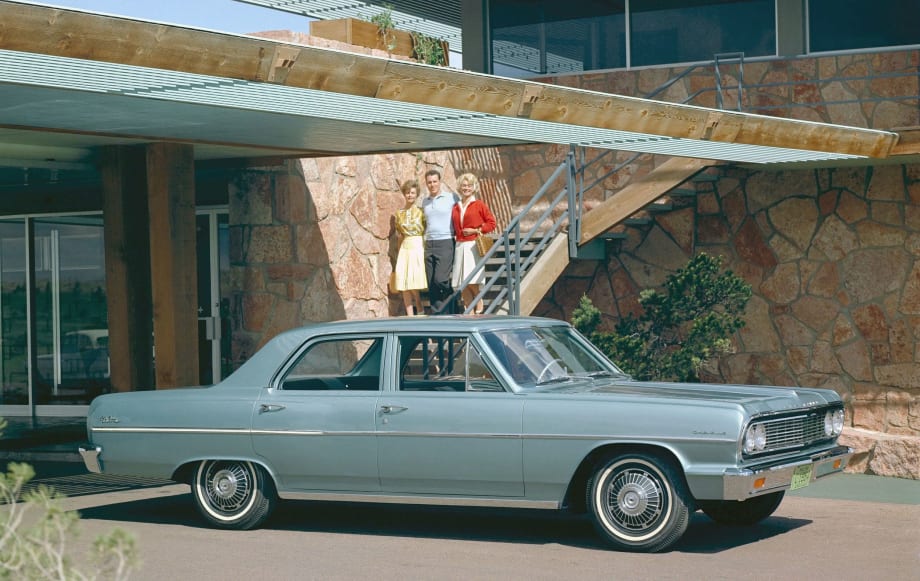
The Chevrolet Malibu debuted 50 years ago.
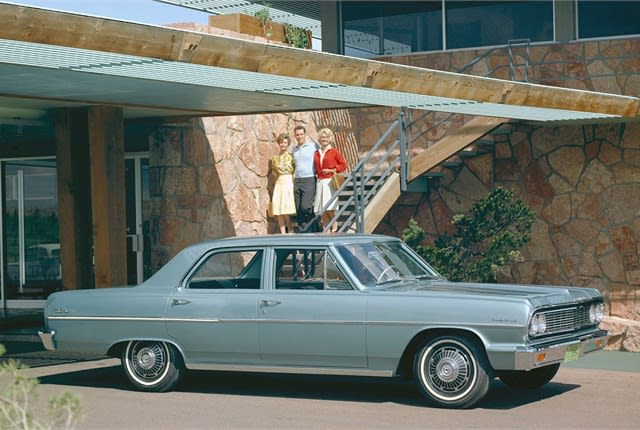
The Chevrolet Malibu debuted 50 years ago.
In 1964, a gallon of gas cost 30 cents and a movie ticket cost $1.25. The Dow Jones Industrial Average closed the year at 874 and The Beatles made their historic appearance on the Ed Sullivan show. It was also the year Chevrolet introduced the Malibu.
Stylish for its day, Malibu made its mid-1960s debut as Chevrolet’s first “intermediate” car – and one of the first midsize cars in America, according to the automaker. Before then, Chevrolet’s passenger car lineup consisted of a range of full-size models, headlined by Impala, along with the compact Chevy II (Nova), Corvair and Corvette.
Named for the Los Angeles-area enclave that was center of the beach culture in the 1960s, the Malibu was the top trim line for the intermediate platform, which also included the Chevelle as an entry-level model, and the El Camino truck. It was lauded for its robust, body-on-frame construction and responsive coil-spring front suspension.
The 2014 Malibu is the eighth generation of the nameplate and its standard 2.5L four-cylinder engine delivers 65 percent more horsepower than the original Malibu’s standard 3.2L six-cylinder.
Generation 1 – 1964-1967
Although originally launched as premium sedan for families, the first Malibu was quickly caught up in the muscle car wars of the 1960s and soon after its introduction, the sporty Malibu SS was born. The Chevelle SS took the lead for Chevrolet’s muscle cars in 1966 and the Malibu continued as the premium model, tailored for the growing number of suburban customers who sought roominess yet efficiency for their long commutes every day.
Generation 2 – 1968-1972
Based on the original intermediate platform, the 1968-72 models’ dimensions shifted with a slightly shorter 112-inch wheelbase for coupes and convertibles and a longer, 116-inch wheelbase for sedans and wagons. Like the 1964-67 models, each model year in the second generation had distinctive year-over-year styling differences.
Generation 3 – 1973-1977
The 1973 introduction of the third-generation Malibu brought a new frame that retained the previous 112-/116-inch wheelbases, but to accommodate new federal crash standards, the bodies grew about five inches in length and one inch in width. A European-inspired Laguna model briefly dethroned the Malibu from its perch atop the midsize hierarchy.
Generation 4 – 1978-1983
Chevrolet discontinued the Chevelle line after 1977 and the next generation of downsized midsize cars would stick strictly with the Malibu name from 1978 onward. They were a foot shorter and more than 500 pounds lighter, offering V-6 and V-8 engines. There was even a dedicated police car package.
Generation 5 – 1997-2003
After a five-year run with the fourth generation, the sun set on Malibu from 1984 until 1997, when it was reborn as an all-new, front-wheel-drive sedan, offering four- and six-cylinder engines. It was named Motor Trend Car of the Year for 1997.
Generation 6 – 2004-2007
Malibu moved to GM’s global architecture for 2004, offering greater technology, efficiency and performance – including the return of the Malibu SS, which featured a 240-horsepower 3.9L V-6. The Malibu range also included the Malibu Maxx five-door extended sedan, which offered greater cargo room and innovations such as the ability of the rear seat to slide seven inches fore and after and reclining rear seat.
Generation 7 – 2008-2012
Riding on an enhanced, longer version of the architecture introduced on the 2004 Malibu, the seventh-generation models introduced greater levels of refinement, performance and efficiency – along with enhanced safety features, including standard head curtain side air bags. It was voted the 2008 North American Car of the Year at the North American International Auto Show in Detroit.
Generation 8 – 2013-2014
Redesigned for 2013, Chevrolet further enhanced Malibu for 2014 with greater efficiency, new connectivity features, comfort enhancements and a new front-end appearance. It offers the segment’s first engine with standard stop/start technology and an available 2.0L turbo engine with 259 hp that continues a performance legacy established 50 years ago.
More Operations

Avis Budget Group Deploys Neology Toll Management Technology Across Major Brands
Neology’s neoFleet platform will manage toll transactions and toll-authority operations for vehicles across Avis, Budget, Payless, Budget Truck and Zipcar.
Read More →
Fleet Personal-Use Charges Edge Higher in 2026
Nearly eight in 10 surveyed fleets allow personal use of company vehicles, while just over half of respondents report charging employees for the privilege.
Read More →
The Future of Fleet + What’s Changing Right Now | AF News Recap
Could developments overseas offer a preview of what’s coming for U.S. fleets? This week, we’re looking at the future of AI, autonomy, and electrification, plus Ford Pro’s new certified pre-owned program, smarter vehicle offboarding, and a new way for fleets to manage toll expenses.
Read More →
How to Handle Vehicle Offboarding
What do fleet managers need to do when a driver leaves?
Read More →
Fleet Manager’s Ultimate Playbook: Navigating the New Standard in OEM Connectivity
Rising operating costs, driver safety concerns, and unplanned downtime are putting unprecedented pressure on modern fleets. Discover how fleet managers use embedded OEM connectivity and real-time vehicle data to cut TCO, prevent downtime, and protect drivers without aftermarket telematics hardware.
Read More →
U.S. Bank Adds Verra Mobility Toll Management to Voyager Fleet Platform
The integration allows U.S. Bank Voyager fleet customers to manage toll payments and violations alongside fuel, EV charging and maintenance expenses.
Read More →
ADAS Prevents Crashes. But Repairs Cost More | AF News Recap
ADAS-equipped vehicles may crash less often, but they can cost more when they do. This week, we’re breaking down what that tradeoff means for fleets, plus Subaru’s first Forester Wilderness Hybrid, Nissan’s new e-POWER Rogue, and why Calstart has become Catalyst Mobility.
Read More →
Moventum Fleet Management Names Mark Iorillo Head of Sales
Iorillo brings nearly 20 years of fleet management and sales experience to the role, including previous positions at Element Fleet Management, CEI, Donlen and Ryder.
Read More →
Fleet Has a Talent Pipeline Problem. What Comes Next? | AF News Recap
Where will fleet’s next generation of leaders come from? This week, we’re looking at the industry’s talent pipeline, what certification can add to a fleet career, how to build an award-worthy track record, and the return of Automotive Fleet’s Personal Use Survey.
Read More →
Smith System Launches Driver Risk Management Program
Fleets have more driver data than ever, but identifying risky behavior doesn't necessarily correct it. Smith System's new Driver Risk Management program combines monitoring, training, and follow-up coaching to help fleets connect risk signals with driver intervention.
Read More →