




SUVs Not Standing Up to IIHS’ New Stringent Side Crash Test
Studies show that side impacts still accounted for 23% of passenger vehicle occupant deaths in 2019.

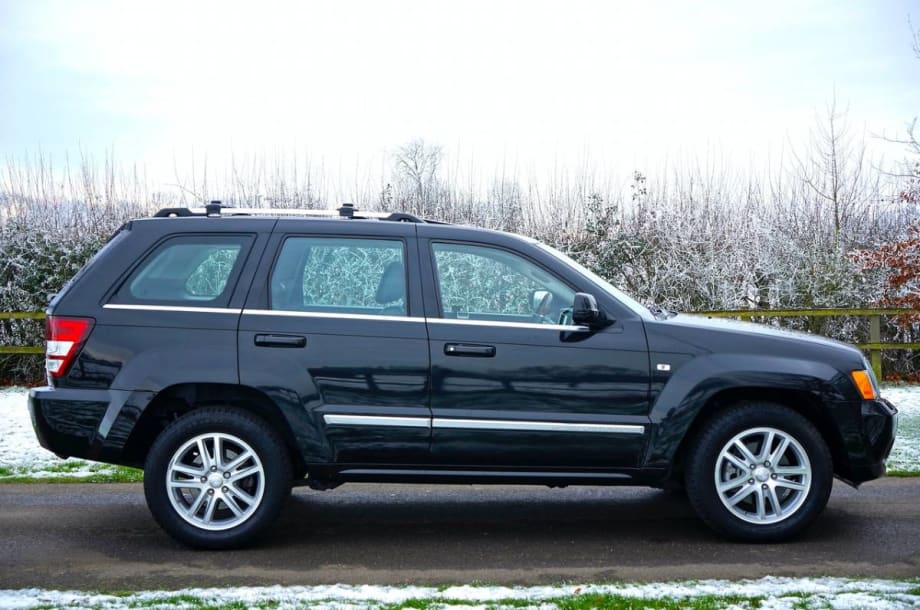
Twenty small SUVs recently underwent a new side crash evaluation from the Insurance Institute for Highway Safety and the results are not great, revealing wide discrepancies in the degree of protection these small SUVs provide for the pelvis and the chest, for example.
Photo via Pexels.com/Mike
Only one of 20 small SUVs — the 2021 Mazda CX-5 — scored a good rating after undergoing a new, tougher side crash test developed by the Insurance Institute for Highway Safety. Nine SUVs earned acceptable ratings, eight garnered marginal ratings, and two got poor ratings.
IIHS introduced the rigorous test to help evaluate vehicles for their safety in higher speed collisions that continue to cause fatalities. While the results are somewhat underwhelming, the IIHS says they are in line with what engineers expected when they rolled out the more stringent test.
The fact is, side stability and strength matter because it is already saving lives. A 2011 study of 10 years' worth of crash data found that a driver of a vehicle with a good side rating is 70% less likely to die in a left-side crash than a driver of a vehicle with a poor rating. However, side impacts still accounted for 23% of passenger vehicle occupant deaths in 2019.
To address those collisions, IIHS engineers developed this new side crash test, which uses a heavier barrier traveling at a higher speed to simulate the striking vehicle. The new barrier weighs 4,180 pounds — close to the weight of today’s midsize SUVs — and strikes the test vehicle at 37 MPH, compared with a 3,300-pound barrier traveling at 31 MPH in the original evaluation.
Together, those two changes mean the collision or impact involves 82% more energy.
The nine SUVs that received acceptable ratings include the Audi Q3, Buick Encore, Chevrolet Trax, Honda CR-V, Nissan Rogue, Subaru Forester, Toyota RAV4, Toyota Venza, and Volvo XC40.
Why each one fell short of a good rating was due to a plethora of reasons. For example, the Encore sustained a marginal driver chest injury, the Rogue is equipped with inadequate head-protecting airbags, and there were heightened injury measures for the driver’s pelvis for the RAV4.
Meanwhile, the vehicles that earned marginal or poor overall ratings in the new test generally struggled with both structural issues and high chest and pelvis injury measurements from both crash dummies.
The eight SUVs that were rated marginal include the Chevrolet Equinox, Ford Escape, GMC Terrain, Hyundai Tucson, Jeep Compass, Jeep Renegade, Kia Sportage, and Lincoln Corsair. Finally, the Honda HR-V and Mitsubishi Eclipse Cross received poor ratings.
All but one of the tested vehicles was a 2021 model. Mitsubishi skipped the 2021 model year for the Eclipse Cross, so the 2020 model was tested. The IIHS also notes that with the exception of the Compass and the Tucson, the ratings carry over to 2022 models.
More Safety

Fleet Manager’s Ultimate Playbook: Navigating the New Standard in OEM Connectivity
Rising operating costs, driver safety concerns, and unplanned downtime are putting unprecedented pressure on modern fleets. Discover how fleet managers use embedded OEM connectivity and real-time vehicle data to cut TCO, prevent downtime, and protect drivers without aftermarket telematics hardware.
Read More →
From Driver Well-Being to EV Charging | AF News Recap
Mental health belongs in the fleet safety conversation. This week, we’re looking at five ways fleets can support employee well-being before a crisis, plus Holman’s expansion in Mexico, new one-day Fleet Forward passes, and why EV charging demand is outpacing infrastructure growth.
Read More →
Nexar-Nauto Merger Aims to Give Fleets Better Safety Intelligence Through Larger Driving Dataset
Stefan Heck tells Automotive Fleet that combining more than 10 billion miles of driving history with Nexar's AI models will give fleets deeper insights into driver risk and roadway conditions than either company could provide independently.
Read More →
Don't Wait for a Crisis: 5 Ways to Build Mental Health Into Your Fleet Safety Program
For Suicide Prevention Month, fleet and safety leaders have an opportunity to put mental health where it belongs: at the center of workplace safety.
Read More →
How Camera Data Can Strengthen a Fleet’s Insurance Renewal
Insights from a commercial insurance carrier and a broker show how fleets can turn video telematic data, driver coaching, and improved claims results into a stronger case at insurance renewal.
Read More →
The Safest Fleets Aren’t the Ones with the Most Technology
You’ve made the telematics investment. Here’s how to capture the other half of its value and build the safest fleet on the road.
Read More →
Hidden in Plain Sight: Fleet Compliance Risks
Fleet compliance isn't just about having policies — it's about consistently enforcing them. This practical guide reveals six hidden compliance risks common in public sector and shared fleet operations and outlines proven strategies to improve visibility, accountability, and audit readiness
Read More →
NETS Sets 2026 Fleet Safety Benchmark Conference for Indianapolis
The Sept. 15–17 program will feature fleet benchmarking data, case studies, emerging technologies, and implementation strategies while running alongside the NSC Safety Congress & Expo.
Read More →
Off-the-Job Crashes Account for 43% of Employers’ $61.7 Billion Crash Burden
NETS quantifies costs dispersed across fleet, risk, HR, and other departments while providing new per-crash benchmarks for employers.
Read More →
Ram Recalls More Than 1.27 Million 1500 Pickups for Seat Belt Anchor Issue
The recall affects certain 2019-2026 Ram 1500 pickups that may have improperly attached second-row seat belt buckle anchors.
Read More →