





Related: Drowsy Driving on the Rise
Surveys Spotlight Sleep-Deprived Americans
At a time of heightened concern about drowsy driving, new surveys from Consumer Reports and the CDC underscore the prevalence of sleep problems.
January 22, 2016

Drivers often underestimate the impact of drowsiness on driving performance.
3 min to read
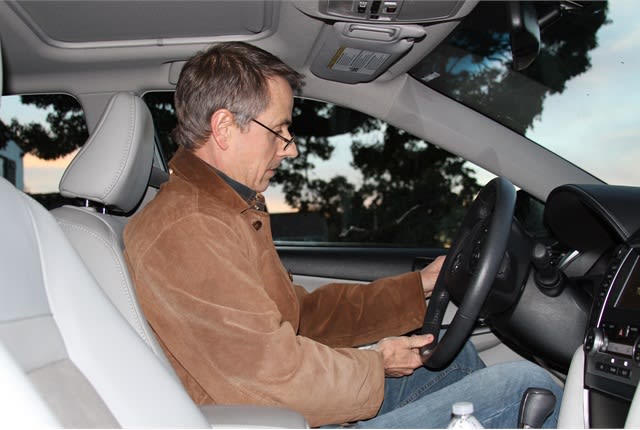
Drivers often underestimate the impact of drowsiness on driving performance.
No wonder drowsy driving is seen as a growing problem among fleet drivers.
In a new Consumer Reports survey, 27 percent of U.S. adults said they have trouble falling asleep or staying asleep most nights. Additionally, 68 percent said they struggle with sleep at least once a week.
A total of 4,023 U.S. adults participated in the survey.
About one-third of the adults surveyed reported having tried either a sleep drug or a dietary supplement — especially melatonin— at least once in the previous year. Of those who use over-the-counter sleep aids, 41 percent reported taking them for a year or longer and 48 percent said they use the drugs several times each week.
Survey results also indicated that Americans often misuse sleep drugs.
The magazine’s researchers cited longer work hours, longer commutes, and habitual use of electronic devices as a few of the factors contributing to the nation’s collective sleep debt.
Another new survey, released by the Centers for Disease Control and Prevention (CDC), examined the impact of parental status on sleep. Researchers asked participants: “In the past week, on how many days did you wake up feeling well rested?”
The CDC survey found that 48 percent of adults living with a child three years old or younger reported waking up feeling not well-rested at least four days in the previous week. Of adults with children three years old or older, 41 percent said they had awakened feeling not well rested at least four days in the previous week. A total of 36 percent of adults with no children reported having awakened feeling not well rested at least four days in the previous week.
The adults surveyed were ages 18-64. For each category of parents, according to the CDC, women were more likely than men to wake up feeling unrested.
These two surveys come at a time when the National Highway Traffic Safety Administration is formulating ways to raise public awareness of drowsy driving and to combat the problem more effectively. According to NHTSA’s Fatal Analysis Reporting System data, drowsy driving accounted for 2.6 percent of all crash fatalities in 2014 (at least 846 deaths).
But NHTSA Administrator Mark Rosekind has admitted that the federal agency’s statistics on drowsy driving fail to paint an accurate picture of the problem’s scope and impact. That’s because fatigue is often a contributing factor to crashes in combination with other causes, such as distraction. What’s more, there’s no reliable means for measuring fatigue or circadian disruption after a crash.
“With drunk driving, we have a breathalyzer. We don’t have a fatigue-alizer,” Rosekind said during a special conference on drowsy driving held in November. “We’re looking for biomarkers. They don’t exist now in this realm. Many police accident reports don’t list fatigue or falling asleep as a cause that can be checked off. How can you measure that if you’re not even collecting the data, right? Everyone agrees that the numbers are grossly underestimating how big the problem is.”
NHTSA is in the process of developing ways to improve drowsy driving data collection to more accurately estimate prevalence, Rosekind said. Moreover, the agency hopes to increase public understanding of the problem and dispel commonly held misconceptions.
“Most people think they can lose sleep and then they’re off their game maybe 2 or 3 percent,” Rosekind said during a conference presentation. “The reality is that it’s much more significant than that. Fatigue can degrade reaction time, memory, communication, situational awareness, judgment, attention and mood 20-50 percent or more before the driver ever truly falls asleep. At the same time, there will be an increase in irritability, attention lapses, micro-sleeps and apathy. Even a slight decrease in reaction time can mean the difference between getting in a crash and averting one.”
More Safety

Nexar-Nauto Merger Aims to Give Fleets Better Safety Intelligence Through Larger Driving Dataset
Stefan Heck tells Automotive Fleet that combining more than 10 billion miles of driving history with Nexar's AI models will give fleets deeper insights into driver risk and roadway conditions than either company could provide independently.
Read More →
Don't Wait for a Crisis: 5 Ways to Build Mental Health Into Your Fleet Safety Program
For Suicide Prevention Month, fleet and safety leaders have an opportunity to put mental health where it belongs: at the center of workplace safety.
Read More →
How Camera Data Can Strengthen a Fleet’s Insurance Renewal
Insights from a commercial insurance carrier and a broker show how fleets can turn video telematic data, driver coaching, and improved claims results into a stronger case at insurance renewal.
Read More →
The Safest Fleets Aren’t the Ones with the Most Technology
You’ve made the telematics investment. Here’s how to capture the other half of its value and build the safest fleet on the road.
Read More →
Sponsored•August 7, 2026
Hidden in Plain Sight: Fleet Compliance Risks
Fleet compliance isn't just about having policies — it's about consistently enforcing them. This practical guide reveals six hidden compliance risks common in public sector and shared fleet operations and outlines proven strategies to improve visibility, accountability, and audit readiness
Read More →
NETS Sets 2026 Fleet Safety Benchmark Conference for Indianapolis
The Sept. 15–17 program will feature fleet benchmarking data, case studies, emerging technologies, and implementation strategies while running alongside the NSC Safety Congress & Expo.
Read More →
Off-the-Job Crashes Account for 43% of Employers’ $61.7 Billion Crash Burden
NETS quantifies costs dispersed across fleet, risk, HR, and other departments while providing new per-crash benchmarks for employers.
Read More →
Ram Recalls More Than 1.27 Million 1500 Pickups for Seat Belt Anchor Issue
The recall affects certain 2019-2026 Ram 1500 pickups that may have improperly attached second-row seat belt buckle anchors.
Read More →
Sponsored•July 17, 2026
How Better Visibility Cut Speeding Violations by 48%
Fleet leaders don't need more data, they need clearer visibility into what the data is saying. This case study explores how one utility replaced speeding-event counts with a single metric — miles driven in violation — to strengthen safety and significantly reduce speeding violations.
Read More →
Operation Safe Driver Week: Why the Industry's Oldest Safety Campaign Still Matters to Fleets
A look at how a 2007 enforcement initiative became one of the most consequential weeks on the fleet safety calendar, and what it means for your drivers in 2026.
Read More →