




Survey Finds Broad Interest in Buying Hybrids
MILWAUKEE --- A new Johnson Controls survey, conducted by Harris Interactive, found that more than four in five U.S. adults believe the United States must become a leader in hybrid vehicles (88 percent), and that the government should support the advancement of battery technology in this country (84 percent).
MILWAUKEE --- A new Johnson Controls survey, conducted by Harris Interactive, found that more than four in five U.S. adults believe the United States must become a leader in hybrid vehicles (88 percent), and that the government should support the advancement of battery technology in this country (84 percent).
Johnson Controls commissioned the survey, "Powering the United States Hybrid Vehicle Industry," to understand consumer sentiment regarding hybrid vehicles and to gain insight into the challenges and opportunities for broad market acceptance in the United States.
Johnson Controls provides batteries for hybrid-electric vehicles.
The online survey of more than 2,000 U.S. adults, conducted in March 2009, found that the biggest reasons why U.S. adults think it is important that America become a leader in hybrid technology are to reduce the nation's reliance on foreign oil (81 percent), create jobs (67 percent), and reduce the U.S. impact on the environment (64 percent).
In fact, 90 percent of U.S. adults are open to choosing a hybrid if they were in the market for a new vehicle. However, they also perceive major obstacles to such a purchase today, most notably cost concerns: Four in five adults (80 percent) think financial barriers such as purchase price and/or insufficient cost savings prevent people from buying a hybrid car. At the same time, most see incentives and tax credits as an effective way to encourage consumers to purchase hybrid cars (84 percent).
Among adults who do not already own a hybrid, more than one in three (35 percent) would buy a comparable hybrid vehicle as long as it was priced the same as the gasoline-powered equivalent, and more than one in five (23 percent) would be willing to pay more. However, one-third would expect to pay less.
"The survey makes one message abundantly clear: despite recognizing the importance of hybrid technology and the role of government support, consumers need costs to come down for the hybrid industry to thrive," said Kim Metcalf-Kupres, vice president of global sales and marketing for Johnson Controls. "The survey also suggests a need for consumer education, because most people admit they don't really grasp how hybrids work or understand the differences between the types of hybrid applications that are available."
In addition to cost barriers, many consumers may also think hybrid vehicle performance should be equivalent or better than that of a comparable gasoline-powered vehicle. When asked what might prevent people from buying a hybrid car, 49 percent of adults cite reluctance to sacrifice features such as size and horsepower, and 42 percent express concerns that hybrids might mean inferior performance, lack of speed, or a poor driving experience. Further, nearly half (47 percent) believe lack of understanding about hybrids in general prevents people from buying them, and an even greater number (59 percent) have no idea what the distinctions are between different types of hybrids.
"That U.S. consumers are open to the idea of purchasing a hybrid bodes well for the development of a U.S. hybrid industry," said Alex Molinaroli, president of power solutions for Johnson Controls. "However, it's evident that success in building the industry will depend on making it easier for consumers to buy hybrids. We're doing good things in the United States to stimulate the industry, but in the long run, it will be broad market acceptance and scale that makes it sustainable."
The Johnson Controls survey, "Powering the U.S. Hybrid Vehicle Industry," was conducted online within the United States by Harris Interactive between March 9 and March 11, 2009 among 2,309 adults ages 18 and older, of whom, 35 (2 percent) already own a hybrid car. Results were weighted as needed to reflect the composition of the U.S. population of adults ages 18+ using targets for region, age within gender, education, household income, race/ethnicity, and propensity to be online.
More Green Fleet

EV Charging Use Is Outpacing Infrastructure Growth
ChargePoint’s 2026 Charging Forward Report points to rising charger use, higher-powered charging, commercial vehicle electrification, and energy-management technology. Here’s what fleets should know.
Read More →
Merchants Fleet Reports 290M EV Miles as Fleets Navigate Changing Electrification Market
From millions in operating savings to hundreds of millions of EV miles, Merchants Fleet’s latest report reveals what’s working and what’s changing in fleet electrification.
Read More →
The EV Breakdown Nobody's Talking About: Why Most Electric Vehicle Roadside Calls Aren't Mechanical Failures
Here's why EV breakdowns are widely misunderstood.
Read More →
ChargePoint Now Available in Energy Pass
ChargePoint and additional planned charging network integrations were added to GM's Energy Pass.
Read More →

First Look: Slate Auto's Electric Fleet Pickup
Could an affordable, modular EV pickup make electrification more practical for fleets?
Read More →
Slate Debuts Colorful, Unique EV Models
A recent media and client event, studded with electric vehicles dressed up on platforms, planted a new position for the manufacturer in the wider EV market. Fleets will find cost-saving advantages.
Read More →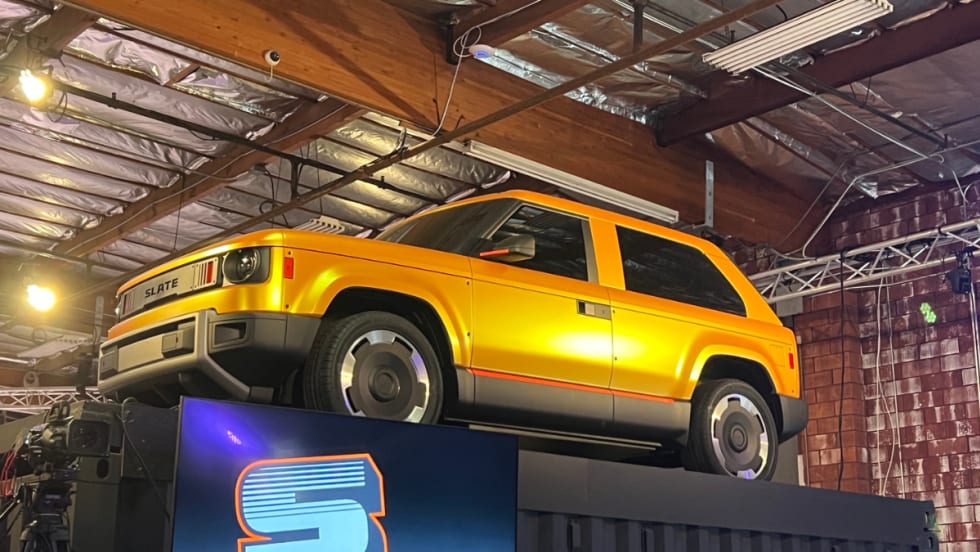
Slate Electric SUV, Pickup Switchable Model Aims For Light-Duty Fleets
Everything about this EV is counterintuitive and understated, making it stand out from the crowd.
Read More →
Inspiration Mobility Acquires Key Electrada Assets
Inspiration Mobility Group has acquired select assets of Electrada, adding the fleet electrification provider's team, technology, and charging infrastructure development capabilities to its energy management business.
Read More →
Turning Connected Vehicle Data Into Decisions That Matter
Fleet leaders have more data than ever, but turning that data into clear, actionable decisions remains a challenge. This white paper shows how leading organizations are using connected vehicle data to improve safety, reduce costs, and optimize fleet performance. Learn how to turn insight into action across your fleet.
Read More →