





Read More: GM, INRIX Launch New Analytics Tool to Support Safer Roads
Survey: 29% of Drivers Admit to Using Cellphones in a School Zone
A 2022 survey from AAA explores behaviors behind the wheel while in school zones and near school buses.
August 12, 2022

As kids head back to school in several areas of the country, a new survey shows drivers need to step up safety habits.
Photo: pixabay.com/EB Pilgrim
2 min to read
Some 41% of drivers admit to speeding in an active school zone, according to a July 2022 survey from AAA. The worst offenders hail from Colorado and Georgia, with a whopping 57% and 47% of drivers from those states, respectively, acknowledging the unsafe behavior.
Approximately 5,000 people in 13 states completed the online survey, which explores driving habits in school zones and near bus stops.
With children now headed back to school in several areas of the country, this time of year can be particularly dangerous. Young inexperienced drivers, pedestrians, and bicyclists all share the road in the early morning and afternoon hours. More traffic means there is a greater likelihood of crashes.
Based on the AAA survey findings, drivers could do a lot better when it comes to safe driving habits in school zones.
For example, 29% of total survey respondents said they have used a handheld cell phone while driving in an active school zone. The worst offenders were Colorado drivers, with 40% admitting to cellphone use. South Carolina drivers followed that with 34% acknowledging the behavior, then Georgia (33%), Florida (32%), and Nebraska (31%).
But speeding and cellphones are just the tip of the iceberg. Some 21% of total survey respondents own up to making an illegal turn during active school zone hours. Once again, Coloradoans were the biggest violators, with 34% owning up to the unsafe behavior. In addition, 25% of drivers in three other states — Florida, Georgia, and Illinois — all acknowledged making an illegal turn in a school zone.
The survey also examined driver behavior in relation to school buses. Some 19% of total respondents say they have driven around a school bus while its flashing red lights are on. Colorado and Florida drivers appear to be the most impatient, with 32% and 23%, respectively, admitting to going around a bus.
Drivers aren’t above cutting off a school bus if they feel it’s traveling too slow, either. In fact, 20% of total respondents admitted they had cut off a school bus.
And when asked how they react when approaching a school bus with overhead red flashing lights, only 82% said they stop and wait for the lights to turn off before proceeding. Another 10% claim they slow down and pass with caution while 8% admit they go around the bus as they would with any other vehicle.
School zone safety needs to be a top priority for all drivers. An average of three children are killed every day in traffic crashes in the U.S., according to the National Highway Traffic Safety Administration.
More Safety
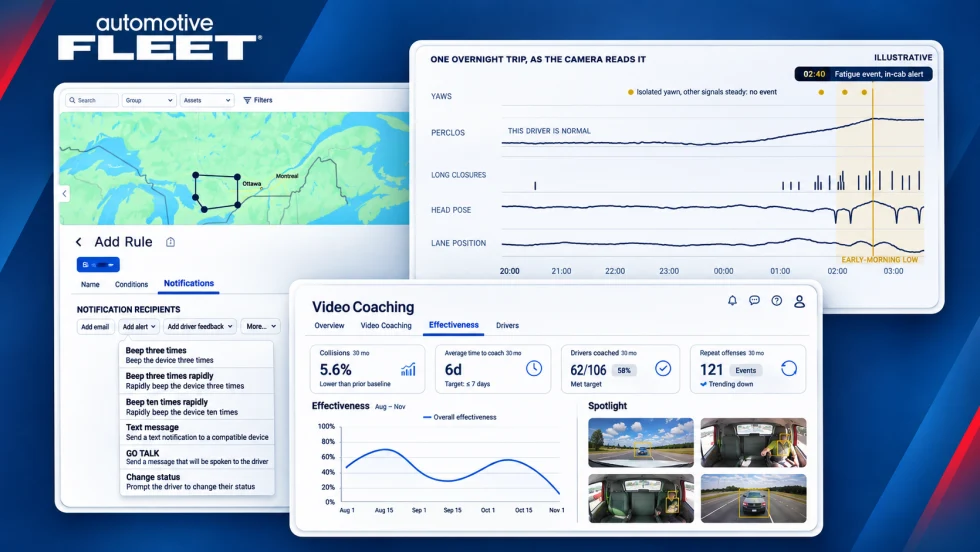
Geotab Adds AI-Powered Driver Coaching and Fatigue Detection Features
New capabilities include fatigue monitoring, two-way audio, coaching effectiveness analytics and location-based privacy controls for fleet safety management.

AAA Testing Finds Gaps in Intersection AEB Crash Prevention
Testing of four 2026 model-year vehicles found that automatic emergency braking prevented collisions in standardized intersection scenarios, but three vehicles failed to avoid crashes when another vehicle turned into their path.

Which Fleet Types Have the Highest Severe Speeding Rates?
New research from SambaSafety finds significant differences in speeding rates across fleet industries, even as nearly 90% of surveyed fleets report using telematics.
When a Cyberattack Hits Your Fleet: What Happens Next?
“You have two opportunities to test your plans: when you choose or when the threat actor chooses.” A cybersecurity expert reveals what fleet managers need to know before a cyberattack puts their operations at risk — and why the decisions made in the first moments can shape the entire recovery.

Tips for Driving Safely on Halloween Night
This video features a reminder from the Connecticut Department of Transportation (DOT) and the Connecticut Police Chiefs Association, urging drivers to prioritize safety this Halloween.
IIHS Crash Avoidance Tests Reveal Safety Gaps in Cargo Vans and Work Trucks
New IIHS crash avoidance ratings show uneven performance among cargo vans and heavy-duty pickups, with most struggling to avoid vehicle-to-vehicle collisions.

What’s Next for Fleet? Safety, AI & Industry Recognition | AF News Recap
Could your company's culture be encouraging distracted driving? This week, we're exploring how workplace expectations affect driver safety, what AI, EVs, and autonomous vehicles could mean for the future of fleet management, and how fleet professionals can strengthen their award nominations.

Does Your Fleet's Culture Encourage Distracted Driving?
What happens when the people responsible for enforcing safety rules are the ones setting the wrong example? The answer may reveal why some of the biggest risks to fleet drivers have little to do with what's written in the employee handbook.

Sponsored•October 1, 2026
Fleet Manager’s Ultimate Playbook: Navigating the New Standard in OEM Connectivity
Rising operating costs, driver safety concerns, and unplanned downtime are putting unprecedented pressure on modern fleets. Discover how fleet managers use embedded OEM connectivity and real-time vehicle data to cut TCO, prevent downtime, and protect drivers without aftermarket telematics hardware.

From Driver Well-Being to EV Charging | AF News Recap
Mental health belongs in the fleet safety conversation. This week, we’re looking at five ways fleets can support employee well-being before a crisis, plus Holman’s expansion in Mexico, new one-day Fleet Forward passes, and why EV charging demand is outpacing infrastructure growth.