




Study Finds TCO Similar for Electric and Diesel Delivery Trucks
A research team from Georgia Tech compared medium-duty electric and diesel, urban delivery trucks, and found that the median total cost of ownership of electric trucks is 22-percent less than that of diesel trucks on the New York City delivery cycle.
A research team from Georgia Tech compared medium-duty electric and diesel, urban delivery trucks for a range of scenarios and discovered the total costs of ownership (TCO) were very similar – but the cost-competitiveness of the electric truck drops in drive cycles with higher average speed.
Researchers tested a 2011 Smith Newton model with a GVW of 7,490 pounds, curb weight of 4,260 pounds, and payload of 3,230 pounds. The truck was powered by a 120 kW electric motor traveling an average of 31 miles per day at an average speed of 32 mph while making an average of 1.7 stops per kilometer (.62 miles).
That was compared with a 2006 Freightliner package delivery truck with a Cummins engine with a GVW of 7,260 pounds, curb weight of 4,400 pounds, and payload of 2,860 pounds. It traveled 41 miles daily at an average speed of 32 mph making 1.9 stops per kilometer.
Overall, researchers found the lifecycle energy use and greenhouse gas emissions of the electric truck are lower than that of the diesel truck, particularly for the frequent stop and low average speed drive cycles such as would be found delivering in New York City (NYC). Over an array of possible conditions, the median total cost of ownership of electric trucks is 22-percent less than that of diesel trucks on the New York City cycle.
On that NYC cycle, electric trucks emit 42-percent to 61-percent less GHGs and consume 32-percent to 54-percent less energy than diesel trucks, depending on vehicle efficiency.
For a drive cycle with less frequent stops and high average speed, such as the City–Suburban Heavy Vehicle Cycle used in the study, electric trucks emit 19-percent to 43-percent less GHGs and consume 5-percent to 34-percent less energy, but cost 1-percent more than the diesel counterparts.
Battery replacement along with electrical generation figures will also greatly affect the relative TCO of the electric truck, researchers said.
To maximize the benefits from electric trucks, the durability and reliability of the automotive lithium-ion (Li-ion) battery are crucial, which might be advanced with technological development, noted the study’s authors. Recycling of the EV Li-ion battery could also improve lifecycle energy consumption and GHG emissions.
The Georgia Tech team consisted of Dong-Yeon Lee, Civil and Environmental Engineering Ph.D. student; Valerie Thomas, Anderson Interface Associate Professor of Natural Systems in the Stewart School of Industrial & Systems Engineering; and Marilyn Brown, professor in the School of Public Policy. The study is published in the ACS journal Environmental Science & Technology.
The full study can be purchased here for $35 for 48-hour access.
More Green Fleet

Merchants Fleet Reports 290M EV Miles as Fleets Navigate Changing Electrification Market
From millions in operating savings to hundreds of millions of EV miles, Merchants Fleet’s latest report reveals what’s working and what’s changing in fleet electrification.
Read More →
The EV Breakdown Nobody's Talking About: Why Most Electric Vehicle Roadside Calls Aren't Mechanical Failures
Here's why EV breakdowns are widely misunderstood.
Read More →
ChargePoint Now Available in Energy Pass
ChargePoint and additional planned charging network integrations were added to GM's Energy Pass.
Read More →

First Look: Slate Auto's Electric Fleet Pickup
Could an affordable, modular EV pickup make electrification more practical for fleets?
Read More →
Slate Debuts Colorful, Unique EV Models
A recent media and client event, studded with electric vehicles dressed up on platforms, planted a new position for the manufacturer in the wider EV market. Fleets will find cost-saving advantages.
Read More →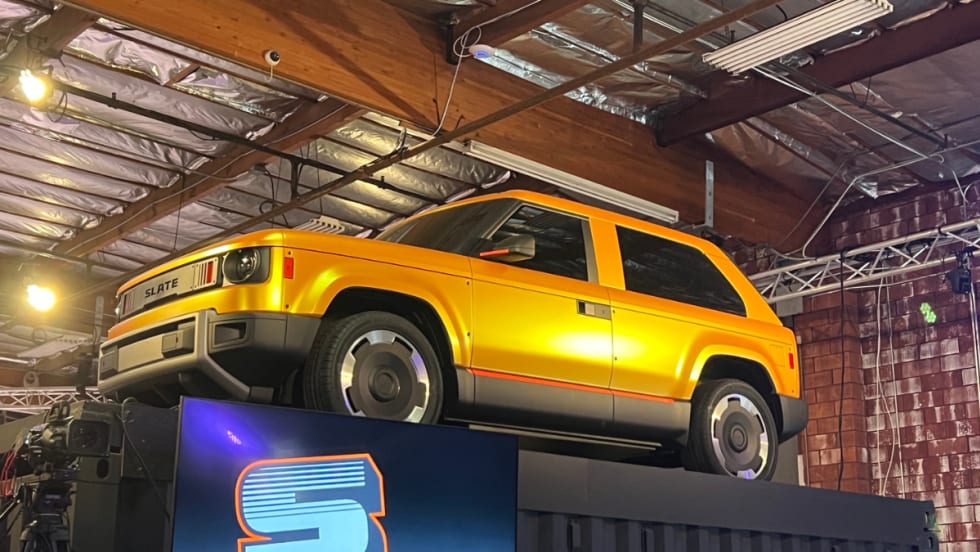
Slate Electric SUV, Pickup Switchable Model Aims For Light-Duty Fleets
Everything about this EV is counterintuitive and understated, making it stand out from the crowd.
Read More →
Inspiration Mobility Acquires Key Electrada Assets
Inspiration Mobility Group has acquired select assets of Electrada, adding the fleet electrification provider's team, technology, and charging infrastructure development capabilities to its energy management business.
Read More →
Turning Connected Vehicle Data Into Decisions That Matter
Fleet leaders have more data than ever, but turning that data into clear, actionable decisions remains a challenge. This white paper shows how leading organizations are using connected vehicle data to improve safety, reduce costs, and optimize fleet performance. Learn how to turn insight into action across your fleet.
Read More →
Are You Tracking Your Fleet's True Total Cost of Ownership?
Bobit Business Media surveyed 190 fleet professionals and found that while most fleets are tracking costs, fragmented systems and data gaps are keeping true TCO visibility out of reach. With rising pressure to control spend in an increasingly volatile environment, the gap between what fleets think they know and what the data actually shows is wider than you might expect. See how your peers are managing costs today and where the industry still has room to improve.
Read More →