




Study Concludes Drivers Underestimate Dangers of Multi-tasking Behind the Wheel
ITASCA, IL --- A new study reported in the National Safety Council's Journal of Safety Research suggests drivers tend to overestimate their driving skills and underestimate their distraction caused by other activities while they drive.
ITASCA, IL --- A new study reported in the National Safety Council's Journal of Safety Research suggests drivers tend to overestimate their driving skills and underestimate their distraction caused by other activities while they drive.
The study suggests that drivers may engage in other distracting activities while they drive because they don't accurately perceive the danger of doing so.
Led by William J. Horrey of the Liberty Mutual Research Institute for Safety, based in Hopkinton, Mass., the study involved 41 drivers willing to test the effects of engaging in other distracting activities while they drive. Participants first demonstrated their driving ability in three key areas: lane keeping, speed control, and quick response to a changing traffic light.
Next, they demonstrated these abilities while also performing a relatively easy distracting activity (recalling, adding and repeating simple numbers presented while driving) and a relatively difficult one (developing and asking yes-or-no questions to identify an object while driving). Researchers expected that the more difficult activity would require more thought and thereby distract drivers more significantly from safe driving.
Indeed, results showed that the more difficult activity reduced driving safety more than the easier one. Yet they also showed that drivers did not recognize one activity as more difficult than the other and estimated no difference between the activities' affect on their driving abilities. According to Horrey and his researchers, these results, combined with previous studies, suggest that drivers are not aware of their own performance loss due to distraction.
"Today it is important to understand how new in-vehicle tasks affect drivers' performance as well as how they affect drivers' perceptions of their own performance," the study concludes.
National Safety Council President & CEO Janet Froetscher identified cell phone use while driving as one of America's most urgent traffic safety issues. In January, the NSC became the first national organization to call for a total ban on that activity, based on scientific estimates that cell phone use while driving contributes to 6 percent of crashes -- or 636,000 crashes, 330,000 injuries, 12,000 serious injuries, and 2,600 deaths each year. The same research put the annual financial toll of cell phone-related crashes at $43 billion.
"Our nation has reached a point where we estimate more than 100 million people are engaging in this dangerous behavior daily," Froetscher said. She added that the issue is not the type of phone a driver uses; rather it is the distraction caused by the conversation.
"Hands-free devices do not make cell phones any safer," Froetscher explained. "Several studies indicate that the principal risk is the cognitive distraction. Studies also show that driving while talking on a cell phone is extremely dangerous and puts drivers at a four-times greater crash risk."
To work toward improving driving safety, the JSR study calls for more research on drivers distracted by activities of different degrees of difficulty, in both laboratory and naturalistic settings.
To access the study, visit Elsevier's Science Direct at www.sciencedirect.com and enter the title Journal of Safety Research, Volume 40, Issue 1.
More Safety
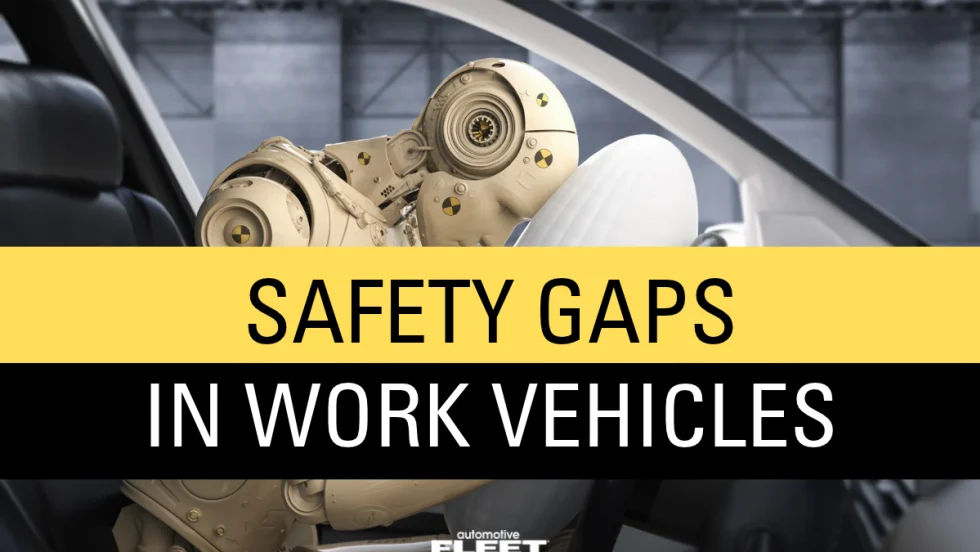
IIHS Crash Avoidance Tests Reveal Safety Gaps in Cargo Vans and Work Trucks
New crash-avoidance ratings from the Insurance Institute for Highway Safety reveal inconsistent performance among commercial vehicles, with several popular cargo vans and heavy-duty pickups struggling to avoid collisions with other vehicles and pedestrians.
Read More →
What’s Next for Fleet? Safety, AI & Industry Recognition | AF News Recap
Could your company's culture be encouraging distracted driving? This week, we're exploring how workplace expectations affect driver safety, what AI, EVs, and autonomous vehicles could mean for the future of fleet management, and how fleet professionals can strengthen their award nominations.
Read More →
Does Your Fleet's Culture Encourage Distracted Driving?
What happens when the people responsible for enforcing safety rules are the ones setting the wrong example? The answer may reveal why some of the biggest risks to fleet drivers have little to do with what's written in the employee handbook.
Read More →
Fleet Manager’s Ultimate Playbook: Navigating the New Standard in OEM Connectivity
Rising operating costs, driver safety concerns, and unplanned downtime are putting unprecedented pressure on modern fleets. Discover how fleet managers use embedded OEM connectivity and real-time vehicle data to cut TCO, prevent downtime, and protect drivers without aftermarket telematics hardware.
Read More →
From Driver Well-Being to EV Charging | AF News Recap
Mental health belongs in the fleet safety conversation. This week, we’re looking at five ways fleets can support employee well-being before a crisis, plus Holman’s expansion in Mexico, new one-day Fleet Forward passes, and why EV charging demand is outpacing infrastructure growth.
Read More →
Nexar-Nauto Merger Aims to Give Fleets Better Safety Intelligence Through Larger Driving Dataset
Stefan Heck tells Automotive Fleet that combining more than 10 billion miles of driving history with Nexar's AI models will give fleets deeper insights into driver risk and roadway conditions than either company could provide independently.
Read More →
Don't Wait for a Crisis: 5 Ways to Build Mental Health Into Your Fleet Safety Program
For Suicide Prevention Month, fleet and safety leaders have an opportunity to put mental health where it belongs: at the center of workplace safety.
Read More →
How Camera Data Can Strengthen a Fleet’s Insurance Renewal
Insights from a commercial insurance carrier and a broker show how fleets can turn video telematic data, driver coaching, and improved claims results into a stronger case at insurance renewal.
Read More →
The Safest Fleets Aren’t the Ones with the Most Technology
You’ve made the telematics investment. Here’s how to capture the other half of its value and build the safest fleet on the road.
Read More →
Hidden in Plain Sight: Fleet Compliance Risks
Fleet compliance isn't just about having policies — it's about consistently enforcing them. This practical guide reveals six hidden compliance risks common in public sector and shared fleet operations and outlines proven strategies to improve visibility, accountability, and audit readiness
Read More →