




Related: NHTSA Suspends Autonomous Vehicles Operation in Texas
Study: Autonomous Vehicles Could Only Prevent a Third of U.S. Crashes
To avoid the other two-thirds, driverless cars will have to be designed for safety rather than rider preference when those two are at odds, according to a study from the Insurance Institute for Highway Safety.
by Staff
June 8, 2020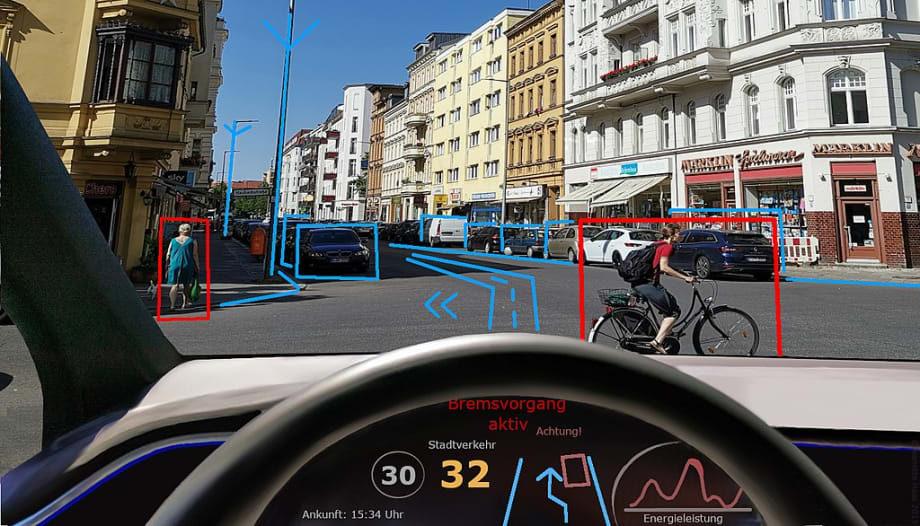
The IIHS study contends that self-driving vehicles will need to account for uncertainty about what other road users will do, such as driving more slowly than a human driver would in areas with high pedestrian traffic or in low-visibility conditions.
Photo via Eschenzweig/Wikimedia.
4 min to read
Autonomous vehicles could only prevent a third of all road crashes in the U.S., according to a study released on Thursday by the Insurance Institute for Highway Safety (IIHS). The study found that the remaining two thirds of crashes were caused by mistakes that self-driving systems are not equipped to handle any better than human drivers.
“It’s likely that fully self-driving cars will eventually identify hazards better than people, but we found that this alone would not prevent the bulk of crashes,” says Jessica Cicchino, IIHS vice president for research and a coauthor of the study.
According to a national survey of police-reported crashes, driver error is the final failure in the chain of events leading to more than 9 out of 10 crashes.
But the IIHS analysis suggests that only about a third of those crashes were the result of mistakes that automated vehicles would be expected to avoid simply because they have more accurate perception than human drivers and aren’t vulnerable to incapacitation. To avoid the other two-thirds, they would need to be specifically programmed to prioritize safety over speed and convenience.
“Building self-driving cars that drive as well as people do is a big challenge in itself,” says IIHS Research Scientist Alexandra Mueller, lead author of the study. “But they’d actually need to be better than that to deliver on the promises we’ve all heard.”
To estimate how many crashes might continue to occur if self-driving cars are designed to make the same decisions about risk that humans do, IIHS researchers examined more than 5,000 police-reported crashes from the National Motor Vehicle Crash Causation Survey.
Five Categories of Crashes
The IIHS team reviewed the case files and separated the driver-related factors that contributed to the crashes into five categories:
“Sensing and perceiving” errors included things like driver distraction, impeded visibility and failing to recognize hazards before it was too late.
“Predicting” errors occurred when drivers misjudged a gap in traffic, incorrectly estimated how fast another vehicle was going or made an incorrect assumption about what another road user was going to do.
“Planning and deciding” errors included driving too fast or too slow for the road conditions, driving aggressively or leaving too little following distance from the vehicle ahead.
“Execution and performance” errors included inadequate or incorrect evasive maneuvers, overcompensation and other mistakes in controlling the vehicle.
“Incapacitation” involved impairment due to alcohol or drug use, medical problems or falling asleep at the wheel.
The researchers also determined that some crashes were unavoidable, such as those caused by a vehicle failure like a blowout or broken axle.
Crashes due to only “sensing and perceiving errors” accounted for 24% of the total, and incapacitation accounted for 10%. Those crashes might be avoided if all vehicles on the road were self-driving — though it would require sensors that worked perfectly and systems that never malfunctioned. The remaining two-thirds might still occur unless autonomous vehicles are also specifically programmed to avoid other types of predicting, decision-making and performance errors.
Consider the crash of an Uber test vehicle that killed a pedestrian in Tempe, Arizona, in March 2018. Its automated driving system initially struggled to correctly identify 49-year-old Elaine Herzberg on the side of the road. But once it did, it still was not able to predict that she would cross in front of the vehicle, and it failed to execute the correct evasive maneuver to avoid striking her when she did so.
“Planning and deciding errors,” such as speeding and illegal maneuvers, were contributing factors in about 40% of crashes in the study sample.
The fact that deliberate decisions made by drivers can lead to crashes indicates that rider preferences might sometimes conflict with the safety priorities of autonomous vehicles. For self-driving vehicles to live up to their promise of eliminating most crashes, they will have to be designed to focus on safety rather than rider preference when those two are at odds.
Accounting for Uncertainty
Self-driving vehicles will need not only to obey traffic laws but also to adapt to road conditions and implement driving strategies that account for uncertainty about what other road users will do, such as driving more slowly than a human driver would in areas with high pedestrian traffic or in low-visibility conditions.
“Our analysis shows that it will be crucial for designers to prioritize safety over rider preferences if autonomous vehicles are to live up to their promise to be safer than human drivers,” Mueller says.
More Fleet Forward
What Fleets Want: FFC Panel to Examine the Future of the Fleet-OEM Relationship
Fleet and OEM leaders will tackle how connected vehicles, embedded telematics, and data are changing the relationship between commercial fleets and automakers.
Read More →
2026 Fleet Manager of the Year Finalists Announced
Who are the 2026 Fleet Manager of the Year finalists?
Read More →
John Rossant to Deliver Opening Keynote at 2026 Fleet Forward Conference
The CoMotion founder will draw on developments across Europe, China, the Middle East, and other international markets to identify trends that could influence how U.S. fleets plan for the coming decade.
Read More →
How to Build Custom Fleet Tools With AI and Vibe Coding [Webinar]
A new Automotive Fleet webinar explores how fleet managers are using AI and vibe coding to automate routine work and create simple operational tools without traditional programming skills.
Read More →
Is Fleet Ready for Its New Disruptors?
Three emerging leaders from a corporate fleet, public fleet, and the automotive supply chain will bring new ideas and a willingness to challenge industry norms to the Fleet Forward Conference stage.
Read More →
NAFA Announces 2026 Fleet Safety Symposium Education Program
Register for NAFA’s Fleet Safety Symposium and save $200 on your Fleet Forward Conference registration.
Read More →
Fleet Managers Take the Lead in Hands-On AI Workshop at FFC
The fleet manager-led session will show how to use “vibe coding” to build practical fleet tools without a traditional programming background.
Read More →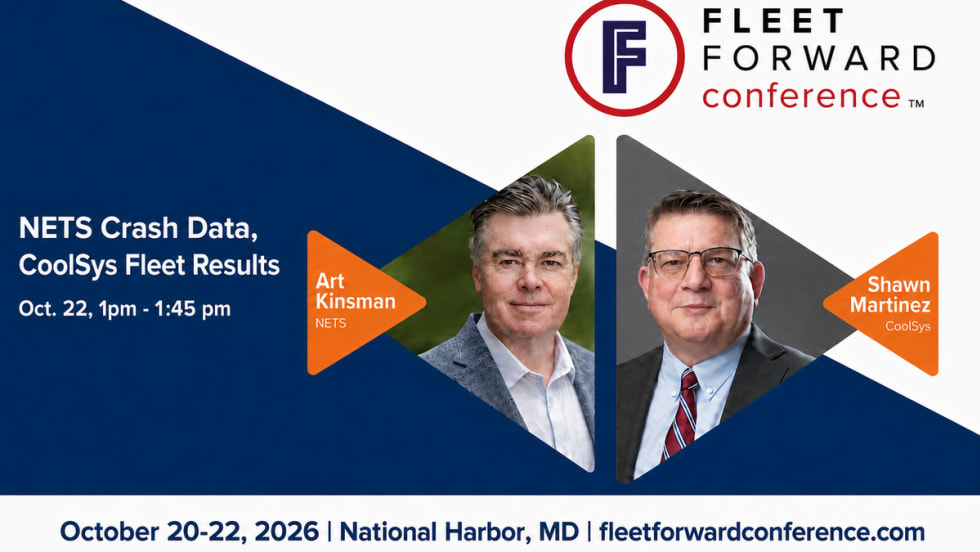
NETS Crash-Cost Data and CoolSys’ 80% Loss Reduction Take Center Stage at FFC
NETS will present findings from its latest Cost of Crashes research, then CoolSys safety leader and author Shawn Martinez will explain how the company built a safer driving culture across 3,500 employees.
Read More →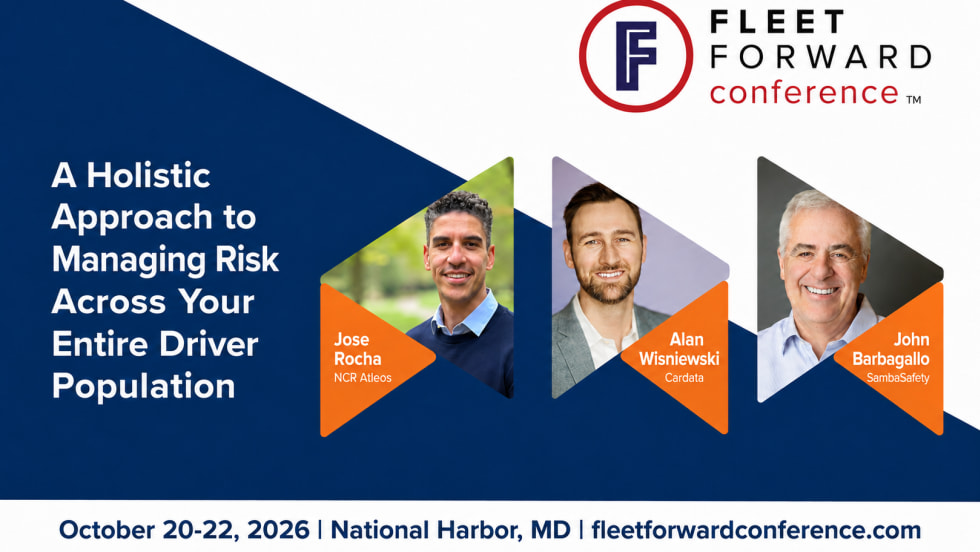
Is Your Grey Fleet Creating an Unmanaged Safety Risk?
NCR Atleos Fleet Manager Jose Rocha will join Cardata and SambaSafety experts at Fleet Forward Conference to examine how fleets can extend safety oversight to every employee who drives for business.
Read More →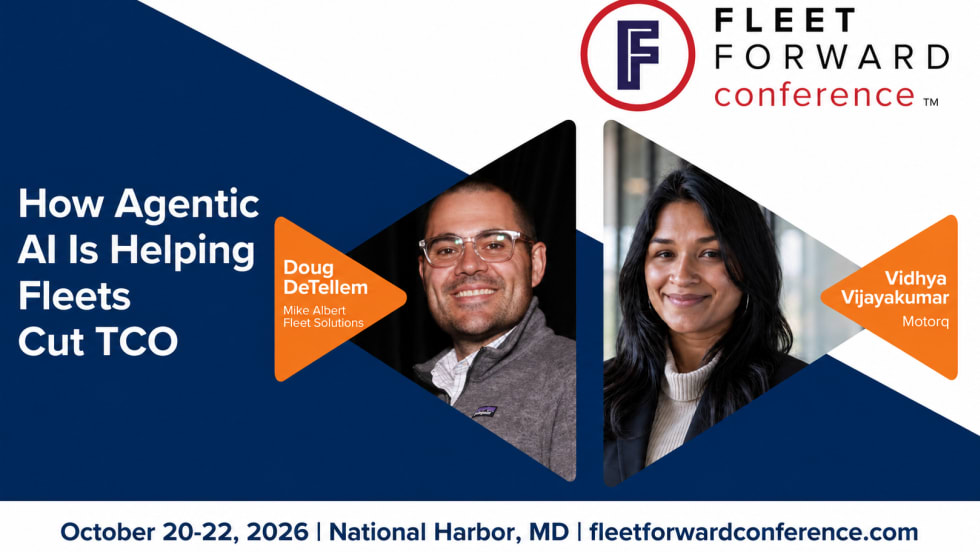
Agentic AI Session at FFC Will Help Fleets Turn Data Into TCO Action
Mike Albert Fleet Solutions and Motorq will show how agentic AI can uncover maintenance, fuel, and utilization savings buried across disconnected fleet data.
Read More →