DETROIT - According to Sen. John McCain, states should be able to determine their own fuel-efficiency standards.
by Staff
July 23, 2008
2 min to read
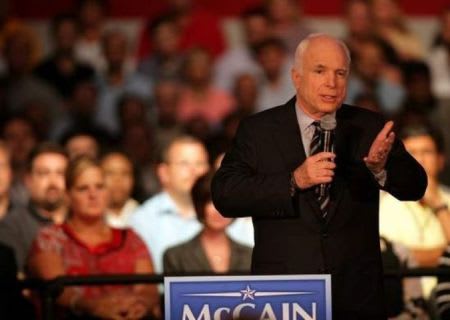
DETROIT - According to Sen. John McCain, states should be able to determine their own fuel-efficiency standards. The policy, which a dozen states are pushing, is strongly opposed by the domestic auto industry as a job-killing proposal that would seriously harm the industry. McCain made his remarks before an audience of about 500 General Motors employees in Warren, according to www.freep.com.
McCain also said he hopes that all future vehicles will be flex-fuel vehicles powered by ethanol products or electricity. McCain laid out his plan to help the auto industry, including a $5,000 tax credit for people buying low-emission vehicles, a $300-million prize for the company that creates the first commercially available battery-powered car, and job retraining programs for displaced workers.
Ad Loading...
Meanwhile, Illinois Sen. Barack Obama, sent a letter addressed to “Dear UAW Brothers and Sisters,” outlining his plans for the economy overall and auto industry specifically. He wants to create a $150 billion fund to invest clean energy technology that can be used by the auto industry, more tax rebates, and middle-class tax cuts to provide immediate relief and worker training programs.
Detroit automakers and their foreign rivals have united in opposition to efforts by California and 16 other states to set greenhouse gas controls on cars and trucks that would effectively set fuel economy limits tougher than federal standards. The proposal would force the industry to hit roughly 35 miles per gallon by 2016 and more than 40 miles per gallon by 2020.
The Bush administration last year denied California's request to put its rules into place. A bill to overturn the decision in the U.S. Senate was backed by both McCain and Obama, who has consistently supported California’s efforts, according to www.freep.com.
McCain also toured the automaker’s facility to see the Chevy Volt, an electric-powered vehicle that is supposed to be commercially available by the end of 2010. He called it “another great leap forward in American history.”
For fleet managers, fuel is one of the biggest line items in the budget — and it's one hybrids can shrink without changing how your people work. Download the eBook to see the numbers, understand the technology, and get a step-by-step guide to making the switch.
Fleet managers are done with the debate—and focused on execution. Learn how to build a practical electrification strategy that aligns infrastructure, operations, and financing while keeping costs controlled and deployment scalable with support from Blink Charging. Discover how smart planning today positions fleets for long-term performance and ROI.
New industry group data revealed that light-duty electric vehicle sales are hitting record market share and volumes, while commercial EV volume dipped. What’s driving the fluctuations?
With the expiration of federal incentives, EV success now hinges less on government policy and more on discounts, battery tech progress, increased range, and broader infrastructure.
Fleet operators shared their challenges during an annual conference that embraced the latest advances across all aspects of running private- and public-sector vehicles.