





Related: GHSA Applauds Four State Initiatives Aimed at Reducing Traffic Deaths
State Initiatives Aim to Reduce Nearly 5% Increase in Pedestrian Fatalities
Three out of four pedestrian fatalities occur after dark.
October 4, 2021
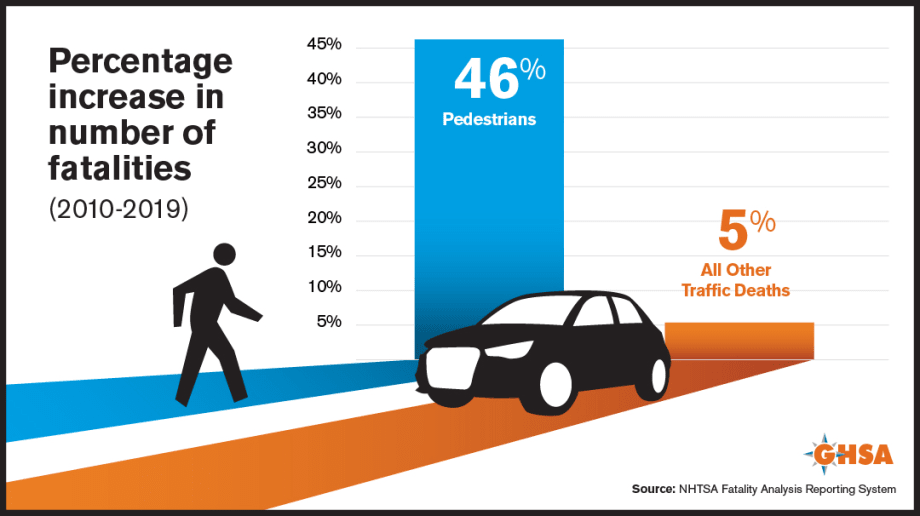
Several states are instituting measures to keep pedestrians safe in light of a 21% projected increase in fatalities.
Infographic courtesy of GHSA
3 min to read
An estimated 6,721 pedestrians were killed on U.S. roads in 2020 — a 4.8% increase from 2019 despite a drastic drop in miles driven, according to the Governors Highway Safety Association (GHSA). To better protect people on foot, the GHSA and its State Highway Safety Office members have or are currently putting a number of safety initiatives into effect.
The plans come at an appropriate time as October marks the second annual National Pedestrian Safety Month. Following are some of the steps states are taking to address the behavioral safety issues that put people on foot at increased risk of injury and death.
California: The California Office of Traffic Safety sponsored a “traffic safety superheroes” event, where children dressed up as their favorite superhero and participated in pedestrian and bicyclist safety activities, including learning about signs and signals while biking and walking. In addition, the Go Human Bicycle/Pedestrian Safety Program is working to reduce collisions involving people walking and biking in Southern California through public outreach, community engagement, and safety infrastructure demonstration projects.
Connecticut: Funded by that state’s Highway Safety Office, the Watch for Me program is an educational initiative highlighting pedestrian safety facts and tips through out the month, including during Halloween, an especially dangerous time for children. This program offers a new campaign called “Pedestrian Rules” to increase driver awareness of new state pedestrian safety laws that will take effect Oct. 1.
New Jersey: Street Smart NJ, a collaborative program that is supported by the New Jersey Division of Highway Traffic Safety, educates drivers about safely sharing the road through equitable enforcement of the state’s stop for pedestrians in the crosswalk law, grassroots public education and outreach, and pop-up and low-cost infrastructure improvements.
New Mexico: The New Mexico Department of Transportation is supporting Safe Routes to School programs that encourage more students to walk and bike to school. To ensure their journey is safe, NM DOT recently adopted its first Pedestrian Safety Action Plan, which details what the department and its partners will do over the next five years to reduce the number of pedestrian-involved serious injuries and fatalities.
North Carolina: Watch for Me NC, funded by a grant from the North Carolina Governor’s Highway Safety Program, is a comprehensive program that uses public education, community engagement, and high visibility enforcement to reduce pedestrian and bicyclist injuries and deaths. A 2020 survey of state residents found the program resulted in increased awareness of the state law requiring drivers to stop for a pedestrian in a crosswalk, which is helping to protect people on foot.
Pedestrian fatalities continue to be a major roadway problem. The GHSA report projects the U.S. pedestrian fatality rate per billion vehicle miles traveled (VMT) jumped to 2.3 deaths in 2020 — an unprecedented 21% increase from 1.9 in 2019. Moreover, in 2019, three out of four pedestrian fatalities occurred after dark.
More Safety
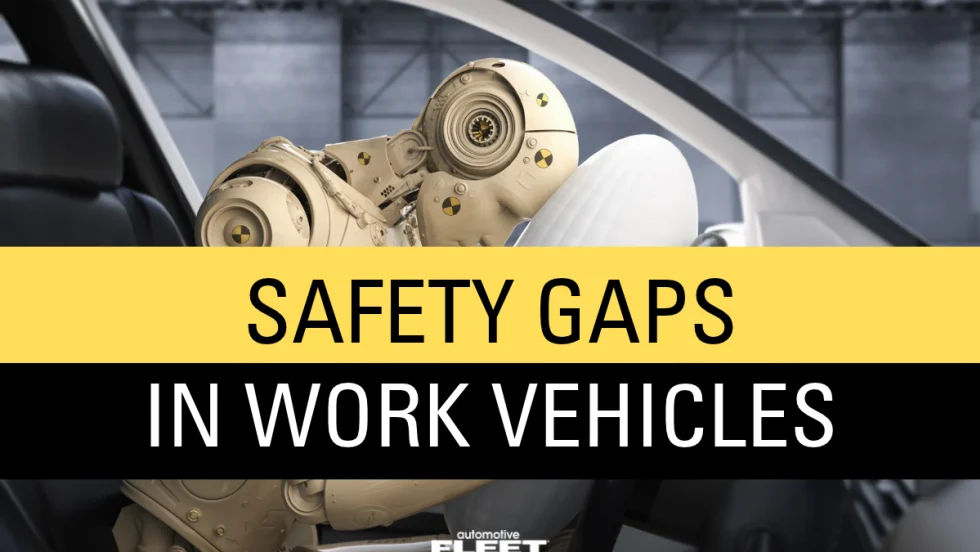
IIHS Crash Avoidance Tests Reveal Safety Gaps in Cargo Vans and Work Trucks
New crash-avoidance ratings from the Insurance Institute for Highway Safety reveal inconsistent performance among commercial vehicles, with several popular cargo vans and heavy-duty pickups struggling to avoid collisions with other vehicles and pedestrians.
Read More →
What’s Next for Fleet? Safety, AI & Industry Recognition | AF News Recap
Could your company's culture be encouraging distracted driving? This week, we're exploring how workplace expectations affect driver safety, what AI, EVs, and autonomous vehicles could mean for the future of fleet management, and how fleet professionals can strengthen their award nominations.
Read More →
Does Your Fleet's Culture Encourage Distracted Driving?
What happens when the people responsible for enforcing safety rules are the ones setting the wrong example? The answer may reveal why some of the biggest risks to fleet drivers have little to do with what's written in the employee handbook.
Read More →
Sponsored•October 1, 2026
Fleet Manager’s Ultimate Playbook: Navigating the New Standard in OEM Connectivity
Rising operating costs, driver safety concerns, and unplanned downtime are putting unprecedented pressure on modern fleets. Discover how fleet managers use embedded OEM connectivity and real-time vehicle data to cut TCO, prevent downtime, and protect drivers without aftermarket telematics hardware.
Read More →
From Driver Well-Being to EV Charging | AF News Recap
Mental health belongs in the fleet safety conversation. This week, we’re looking at five ways fleets can support employee well-being before a crisis, plus Holman’s expansion in Mexico, new one-day Fleet Forward passes, and why EV charging demand is outpacing infrastructure growth.
Read More →
Nexar-Nauto Merger Aims to Give Fleets Better Safety Intelligence Through Larger Driving Dataset
Stefan Heck tells Automotive Fleet that combining more than 10 billion miles of driving history with Nexar's AI models will give fleets deeper insights into driver risk and roadway conditions than either company could provide independently.
Read More →
Don't Wait for a Crisis: 5 Ways to Build Mental Health Into Your Fleet Safety Program
For Suicide Prevention Month, fleet and safety leaders have an opportunity to put mental health where it belongs: at the center of workplace safety.
Read More →
How Camera Data Can Strengthen a Fleet’s Insurance Renewal
Insights from a commercial insurance carrier and a broker show how fleets can turn video telematic data, driver coaching, and improved claims results into a stronger case at insurance renewal.
Read More →
The Safest Fleets Aren’t the Ones with the Most Technology
You’ve made the telematics investment. Here’s how to capture the other half of its value and build the safest fleet on the road.
Read More →
Sponsored•August 7, 2026
Hidden in Plain Sight: Fleet Compliance Risks
Fleet compliance isn't just about having policies — it's about consistently enforcing them. This practical guide reveals six hidden compliance risks common in public sector and shared fleet operations and outlines proven strategies to improve visibility, accountability, and audit readiness
Read More →