




Ship.Cars Introduces AI-Powered SmartHaul Transportation Management System
The system allows access to a full suite of new technology features and tools for Ship.Cars and drivers.

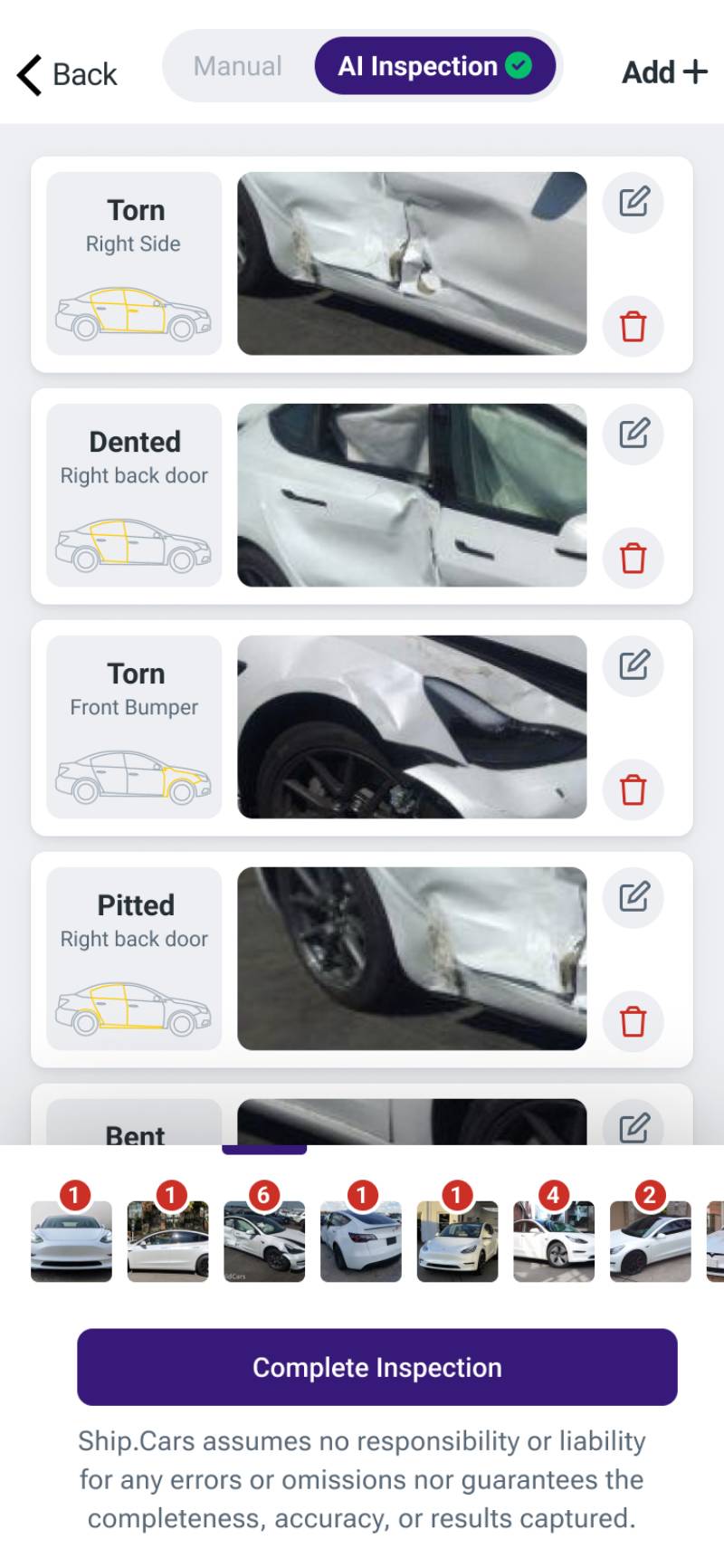
Ship.Cars is among the first in the industry to integrate AI damage inspection software into a driver delivery application. While eliminating human error and producing more accurate reporting, the AI damage inspection tool reduces vehicle inspection times by up to 60%, with full condition reports sent within 30 seconds.
Photo: Ship.Cars
Ship.Cars, an auto logistics technology provider, officially launched the AI-powered SmartHaul transportation management system (TMS) on June 13.
This smart technology platform incorporates a full suite of features using data-driven insights, machine learning and artificial intelligence tools to save time, increase efficiency, meet consumer demand, and drive carrier profitability.
Auto transport remains a critical linchpin for the automotive industry, serving as the backbone of the inventory supply chain.
Taking a tech-first approach that speeds dispatch and delivery processes is essential for carriers to be competitive and to keep automotive sales moving.
SmartHaul TMS includes intuitive features to help company owners, dispatchers and drivers work smarter and haul faster, helping them improve their operations.
This digital platform optimizes finding a load, booking it, and processing it. That helps carriers efficiently meet the needs of their shippers, including dealerships, auctions, and retail individuals.
“We are dedicated to helping carriers maximize their profits,” said Eftim Eftimov, president of Ship.Cars, in a news release. “With new AI-powered tools that strengthen search, dispatch and inspection, SmartHaul TMS prepares carriers for a more profitable future.”
Leveraging real-time data and analytics, carriers can gain a competitive advantage. SmartHaul TMS uses sophisticated algorithms and predictive modeling to provide carriers with the right loads at the right time.
By harnessing these intelligent capabilities, carriers can quickly make informed decisions that boost their bottom lines.
Key Features of SmartHaul TMS:
Trip Builder: This feature for car haulers helps carriers and drivers work more efficiently and increases revenue. Drivers can reduce deadhead miles by seeing all potential loads on their route, swapping between load opportunities, and configuring a trip with the best dollar-per-mile value possible. It also optimizes trips to reduce a truck’s carbon footprint.
AI Damage Inspection: Performing manual inspections is one of the most time-consuming tasks for drivers, making AI inspection a necessity, not a convenience. Ship.Cars is among the first in the industry to integrate AI damage inspection software into a driver delivery application. While eliminating human error and producing more accurate reporting, the AI damage inspection tool reduces vehicle inspection times by up to 60%, with full condition reports sent within 30 seconds.
Mobile Load Board: This gives drivers full access to available loads within the SmartHaul APP. With immediate access to the tools needed to effectively search, negotiate, and book loads right from a phone, it instantly elevates load bookings. A customizable search tool informs drivers of all postings and gives them access to exclusive loads available for instant booking through partnerships with shippers of all sizes, ensuring the best possible prices. In addition, the mobile load board includes an easy-to-use negotiation tool that keeps all interactions in one place and is updated in real-time.
Current TMS platforms primarily provide tools to aid carriers in their work. The SmartHaul TMS platform introduces a comprehensive suite of smart features that enhance carrier efficiency and reduce reliance on manual labor, automating tasks within the transportation management process.
By minimizing manual work, SmartHaul TMS enables carriers to allocate their resources more strategically, leading to improved performance throughout the organization.
“Ship.Cars users are already completing nearly 50,000 monthly inspections; the Trip Builder feature has enabled nearly a 100% increase in trips created; and the mobile load board is already being used by half of all current Market Load Board users,” said Vladimir Kadurin, product and operations lead at Ship.Cars in a news release.
Ship.Cars serves more than 30,000 carriers and 90,000 drivers, operating over 110,000 trucks. Based on current TMS usage, the company anticipates increasing its volume to over 20,000 users per month. Since 2017, Ship.Cars has been a provider of software solutions for the car-hauling industry.
Originally posted on Vehicle Remarketing
More Operations

What's Best Handled by an FMC, and What's Better Done Directly?
Fleet managers continue to rely on FMCs for essential services but are taking a closer look at where working directly with suppliers can improve efficiency and responsiveness.
Read More →
Fleet Meets: Erin Gilchrist
Meet Erin Gilchrist, the inaugural Mike Antich Spirit of Fleet Award winner, as she shares insights on leadership, mentorship, the power of industry connections, and why people remain at the heart of fleet's future.
Read More →
How 2026 Fleet Visionary Jamie McKay Manages 2,400 Vehicles Across 37 States
How do you keep 2,400 vehicles running across 37 states? Fleet Visionary Award winner Jamie McKay shares how collaboration, flexibility, and a few simple strategies help her tackle fleet management challenges at Aptive Pest Control.
Read More →

Managing Fleet Costs in an Era of Permanent Volatility
Fleet operating costs have risen more than 20% since 2020, raising a key question: When does extending a vehicle's service life stop making financial sense?
Read More →
The Next Evolution of Fleet Management: Autonomous Operations
This opening keynote session at the Fleet Forward Conference highlights the future of autonomous driving for fleets.
Read More →
How to Reduce the Total Cost of Risk From Catalytic Converter Theft
A stolen catalytic converter can cost fleets far more in downtime and lost productivity than in repairs. A total-cost-of-risk approach can help fleet managers quantify their exposure and prioritize theft prevention.
Read More →
Personal-Use Charges Rise as Vehicle Values Fall | AF News Recap
Personal-use charges are climbing, wholesale used-vehicle values are declining, and commercial fleet sales growth is slowing. This week, we're breaking down the latest fleet data, plus how Element Fleet Management is helping Waymo prepare for its first Canadian robotaxi market.
Read More →
Here's When You Should Make an Exception to Fleet Policy
Fleet policies are designed to create consistency, but not every driver or situation fits neatly within standard rules.
Read More →
AI-Native or AI-Acquired: What Should Fleet Managers Look for in an AI Platform?
Six questions can help fleet managers look beyond AI marketing claims to evaluate integration, data access, and real-world operational performance.
Read More →
A buyer's guide to fleet management software in 2027
Buying fleet management software in 2027 means looking beyond features and price. As fleet operations, technology and expectations evolve, this guide explores what today’s fleet professionals should consider when choosing a system that can deliver value now and adapt to what comes next.
Read More →