





Read More: GHSA, GM Release Report to Combat Distracted Driving
Seven States Combat Distracted Driving with $210,000 in Grants
The Governors Highway Safety Association and General Motors have awarded $30,000 to each of seven State Highway Safety Offices that have submitted innovative initiatives to change the public mindset and make distracted driving unacceptable.
October 24, 2022
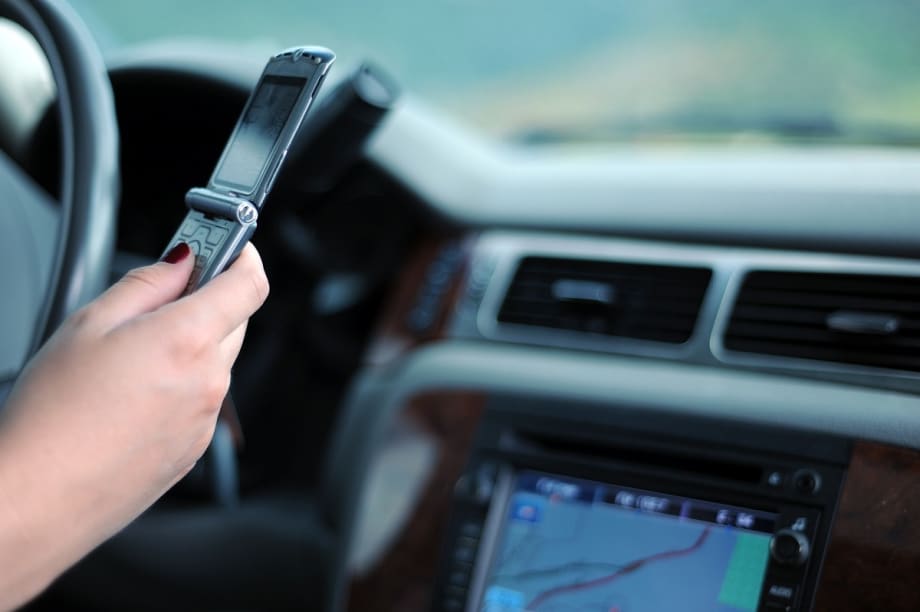
In 2020, some 3,142 people lost their lives in distraction-related collisions in the U.S.
Photo: pixabay.com
3 min to read
The Governors Highway Safety Association (GHSA) has teamed up with General Motors (GM) to award a total of $210,000 to seven State Highway Safety Offices (SHSOs) to combat distracted driving on the nation’s highways and byways.
In June, the non-profit association and the automaker released a report targeted to SHSOs. It outlined 29 recommendations for SHSOs to consider launching. Now, each of seven states will receive $30,000 to implement programs aligned with those recommendations.
Some of the original GHSA/GM recommendations revolve around communications, advocacy, and a cultural shift regarding the risky driving behavior.
For example, the report suggests SHSOs invest more heavily in efforts to change the traffic safety culture around distracted driving, including public education, community programs, and youth engagement. It also calls for more leadership to prioritize distracted driving as a safety challenge, frame it within the Safe System approach, and provide more resources to combat the problem. And, it suggests SHSOs collaborate to create a new national distracted driving advocacy organization to give voice to survivors and focus anti-distracted driving efforts.
The grants are going to various prevention programs that will serve as a model for other states and their partners seeking to change the cultural norm, so that distracted driving is completely unacceptable. The following SHSOs have been awarded funds for their initiatives:
The Colorado Department of Transportation Highway Safety Office is partnering with distracted driving crash survivors to launch a video contest among high school students. Teens will create videos to associate a negative stigma with distracted driving to help spark a change in driver behavior.
The Kentucky Office of Highway Safety will evaluate its current distracted driving public outreach program by holding a series of focus groups to learn which distracted driving messages resonate the most with various demographic and age groups as well as how and where the messages should be delivered.
The Maryland Highway Safety Office is bringing the fast-paced and engaging ThinkFast Interactive (TFI) program to young drivers in nine high schools in communities with the largest distracted driving problem. TFI uses a trivia-based game show format, developed based on active learning theories, to connect young people with relevant distracted driving information.
The Massachusetts Highway Safety Division will partner with Safe Roads Alliance to make its “Kids Speaking Up for Road Safety” program available to elementary school students throughout the state. The program seeks to create a generation of safer drivers by teaching students at an early age about distracted driving and what they can do about it.
The Missouri Department of Transportation is broadening its “Buckle Up Phone Down” program by working with three distinct groups: elementary school-age children, high school students, and employers. Understanding that distracted driving occurs across all ages and is subconsciously modeled for young children, the campaign will reach a broad range of Missourians and encourage changing the culture to one of “phones down while driving” through a non-punitive, social norming approach.
The Montana Department of Transportation will enhance its partnership with the career and technical student organization Family, Career and Community Leaders of America (FCCLA) by inviting students across the state to develop and launch local distracted driving campaigns in their communities.
The Nebraska Department of Transportation is teaming up with a technology company to use digital imaging to collect accurate distracted driving information for a broad sample of Nebraska drivers. The team will analyze this robust data source to determine the most prevalent distracted driving factors and prioritize how to decrease the occurrence of this deadly driving behavior. Results will be shared with state legislators to influence stronger statewide distracted driving policies.
Distracted driving is one of the leading killers on the nation’s roadways. In 2020 alone, some 3,142 people lost their lives in distraction-related collisions in the U.S., according to the National Highway Traffic Safety Administration.
More Safety

What’s Next for Fleet? Safety, AI & Industry Recognition | AF News Recap
Could your company's culture be encouraging distracted driving? This week, we're exploring how workplace expectations affect driver safety, what AI, EVs, and autonomous vehicles could mean for the future of fleet management, and how fleet professionals can strengthen their award nominations.
Read More →
Does Your Fleet's Culture Encourage Distracted Driving?
What happens when the people responsible for enforcing safety rules are the ones setting the wrong example? The answer may reveal why some of the biggest risks to fleet drivers have little to do with what's written in the employee handbook.
Read More →
Sponsored•October 1, 2026
Fleet Manager’s Ultimate Playbook: Navigating the New Standard in OEM Connectivity
Rising operating costs, driver safety concerns, and unplanned downtime are putting unprecedented pressure on modern fleets. Discover how fleet managers use embedded OEM connectivity and real-time vehicle data to cut TCO, prevent downtime, and protect drivers without aftermarket telematics hardware.
Read More →
From Driver Well-Being to EV Charging | AF News Recap
Mental health belongs in the fleet safety conversation. This week, we’re looking at five ways fleets can support employee well-being before a crisis, plus Holman’s expansion in Mexico, new one-day Fleet Forward passes, and why EV charging demand is outpacing infrastructure growth.
Read More →
Nexar-Nauto Merger Aims to Give Fleets Better Safety Intelligence Through Larger Driving Dataset
Stefan Heck tells Automotive Fleet that combining more than 10 billion miles of driving history with Nexar's AI models will give fleets deeper insights into driver risk and roadway conditions than either company could provide independently.
Read More →
Don't Wait for a Crisis: 5 Ways to Build Mental Health Into Your Fleet Safety Program
For Suicide Prevention Month, fleet and safety leaders have an opportunity to put mental health where it belongs: at the center of workplace safety.
Read More →
How Camera Data Can Strengthen a Fleet’s Insurance Renewal
Insights from a commercial insurance carrier and a broker show how fleets can turn video telematic data, driver coaching, and improved claims results into a stronger case at insurance renewal.
Read More →
The Safest Fleets Aren’t the Ones with the Most Technology
You’ve made the telematics investment. Here’s how to capture the other half of its value and build the safest fleet on the road.
Read More →
Sponsored•August 7, 2026
Hidden in Plain Sight: Fleet Compliance Risks
Fleet compliance isn't just about having policies — it's about consistently enforcing them. This practical guide reveals six hidden compliance risks common in public sector and shared fleet operations and outlines proven strategies to improve visibility, accountability, and audit readiness
Read More →
NETS Sets 2026 Fleet Safety Benchmark Conference for Indianapolis
The Sept. 15–17 program will feature fleet benchmarking data, case studies, emerging technologies, and implementation strategies while running alongside the NSC Safety Congress & Expo.
Read More →