




Senate Highway Bill Dodges Potholes
As of late Sunday evening, Senate Majority Leader Mitch McConnell had managed to steer the multi-year highway bill introduced last week beyond some legislative potholes that had threatened to slow the process of getting the measure to the House for consideration.

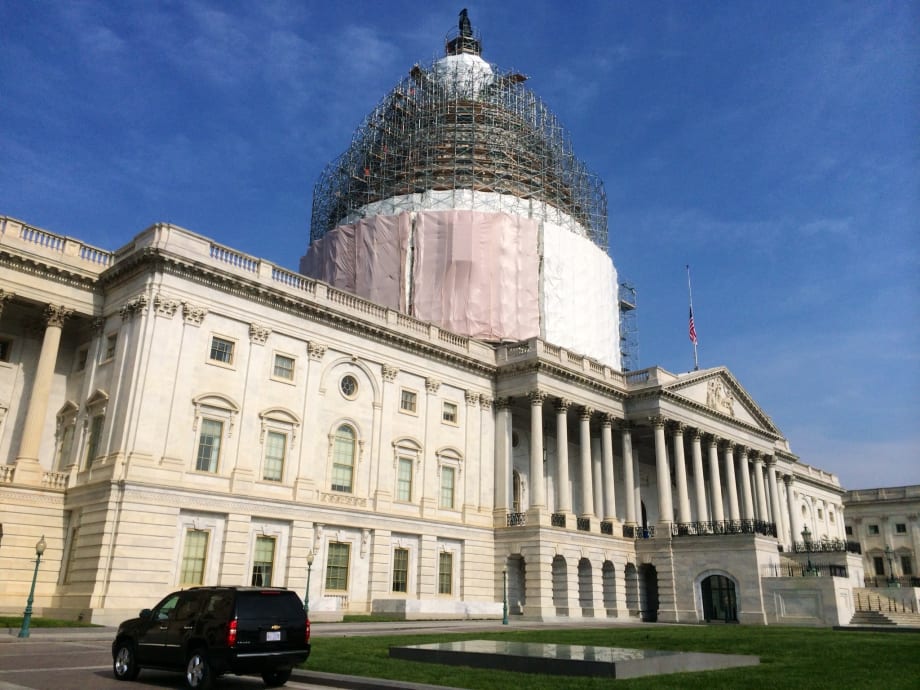
Long weekend leads into a long week for highway bill on Capitol Hill Photo: David Cullen
Long weekend leads into a long week for highway bill on Capitol HillPhoto: David Cullen
As of late Sunday evening, Senate Majority Leader Mitch McConnell had managed to steer the multi-year highway bill introduced in the chamber just last week beyond some legislative potholes that had threatened to seriously slow the process of getting the measure over to the House for quick consideration.
Attempts by Sen. Ted Cruz (R-TX) and Sen. Mike Lee (R-UT) to amend the highway bill to address highly divisive— and completely unrelated— issues, including repealing Obamacare, placing conditions on removing sanctions against Iran and defunding Planned Parenthood, went down in flames on Sunday.
The most headline-grabbing of these, the largely symbolic attack on the Affordable Care Act, fell short of the 60 votes needed to move the measure forward.
On the other hand, an amendment calling for the somewhat controversial re-chartering of the Export-Import Bank was easily approved, preventing another monkey wrench from coming into play. The Senate voted 67-26 to end debate on a measure to add language reauthorizing the bank.
However, once the Senate does pass the bipartisan DRIVE Act (S.1647), co-sponsored by Sen. Jim Inhofe (R-OK) and Sen. Barbara Boxer (D-CA) – and championed by Sen. McConnell – it will still have to bridge the biggest roadblock in its path.
That’s acceptance of its multi-year design by the House, which remains committed to seeing the five-month patch it passed on July 15 become law.
The contention of House transportation leaders is that a short-term extension of surface-transportation authorization will afford Congress the time required to put together a more comprehensive multi-year bill.
For example, as reported by Politico.com, Rep. Peter DeFazio (D-OR), Ranking Member of the House Transportation & Infrastructure Committee, told reporters on Thursday that the Senate bill was far less than it may seem, especially in the eyes of House members: "It’s not really a long-term bill,” DeFazio said. “This is essentially a status quo bill with two or three years of funding. That’s no huge improvement.”
To be sure, there will be furious politicking on Capitol Hill this week to get some kind of highway legislation passed— be it a multi-year highway bill or a multi-month extension— by Friday, when the funding authority for federal highway projects runs out... yet again.
More Operations

Fleet Has a Talent Pipeline Problem. What Comes Next? | AF News Recap
Where will fleet’s next generation of leaders come from? This week, we’re looking at the industry’s talent pipeline, what certification can add to a fleet career, how to build an award-worthy track record, and the return of Automotive Fleet’s Personal Use Survey.
Read More →
Smith System Launches Driver Risk Management Program
Fleets have more driver data than ever, but identifying risky behavior doesn't necessarily correct it. Smith System's new Driver Risk Management program combines monitoring, training, and follow-up coaching to help fleets connect risk signals with driver intervention.
Read More →
Automotive Fleet Opens 2026 Personal Use Survey for Commercial Fleet Managers
Less than two weeks left! Commercial and corporate fleet managers are invited to share how their organizations handle company vehicle personal-use policies, charges, and driver eligibility.
Read More →
From AI Prompts to AI-Generated Safety Songs | AF News Recap
Can better prompts make AI more useful for fleet managers? This week, we’re breaking down smarter fleet analysis, an AI-assisted experiment that turned safety training into music, and what happened to fuel prices in August.
Read More →
How to Write Better AI Prompts for Fleet Analysis
Include these six elements in your fleet prompts to generate more relevant analysis and accurate answers.
Read More →
Fleet Meets: Eric Kilgore
This edition of the Fleet Meets series features one of the industry's best leaders driving multi-market and national operations.
Read More →
Why Reactive Fleet Management Is Becoming Too Expensive to Sustain
Research highlights a growing need for proactive management strategies to address rising costs in fleet operations effectively.
Read More →
What Your Fleet KPIs Aren’t Telling You
Tracking fleet metrics is only useful when the data leads to better decisions. This guide helps fleet leaders assess cost, utilization, and downtime more accurately, identify performance gaps, and prioritize the actions that can improve operational results.
Read More →
Hidden in Plain Sight: Fleet Compliance Risks
Fleet compliance isn't just about having policies — it's about consistently enforcing them. This practical guide reveals six hidden compliance risks common in public sector and shared fleet operations and outlines proven strategies to improve visibility, accountability, and audit readiness
Read More →
Turning Fleet Payment Data into Executive Insights
Does data alone drive results in operations?
Read More →