




SCAQMD Officials Say Ruling Does Not Prevent Them From Imposing Standards on Publicly Owned Vehicles
Despite this week's U.S. Supreme Court ruling, Southern California air pollution officials say they will still attempt to require most large-vehicle fleets to buy low-polluting trucks and cars — a move that is certain to spark more court battles with industry groups, according to an article in the Los Angeles Times on April 29.
Despite this week's U.S. Supreme Court ruling, Southern California air pollution officials say they will still attempt to require most large-vehicle fleets to buy low-polluting trucks and cars — a move that is certain to spark more court battles with industry groups, according to an article in the Los Angeles Times on April 29. On April 28, the U.S. Supreme Court invalidated rules that had allowed the South Coast Air Quality Management District (SCAQMD) to require private trash haulers, bus lines, and other covered fleets to buy low-pollution vehicles. But SCAQMD officials maintain the ruling does not bar them from imposing the same requirement on publicly owned fleets or on private firms that provide city services — a contention hotly disputed by the engine manufacturers that prevailed in the lawsuit decided Wednesday. Manufacturers of diesel engines, along with an oil industry group, sued the SCAQMD because it had barred the owners of the private fleets from buying their products in the greater Los Angeles area, despite advances in clean diesel technology. The U.S. Supreme Court concluded on April 28 that the air quality management district had overstepped its authority under the Clean Air Act. Industry groups now say the decision should clear the way for street sweepers, bus lines and others bound by the rule to buy new diesel engines that emit far less pollution than older models. But South Coast Air Quality Management District officials firmly maintain that the new diesel engines, although improved, are still far from clean compared with alternatives such as engines that burn natural gas, according to the L.A. Times article. "The fact is that diesel remains a much higher source of NOx emissions than natural gas, even with the new technology," said AQMD spokesman Sam Atwood in the article referring to nitrogen oxide gases, one of the main ingredients of smog. Atwood contends that the fleet rules allow companies to make a case for diesel trucks or any other technology if they can show it is as clean as natural gas. The 8-1 decision by the court also noted that local officials could still impose fleet rules by receiving the approval of the California Air Resources Board as well as the U.S. Environmental Protection Agency. Air district officials said they would seek such approvals if necessary to save the rules. Traditional diesel engines are among the worst pollution sources in Southern California, contributing heavily to smog-forming gases and particulate matter, tiny particles that can become lodged in the lungs, causing respiratory problems. Heavy-duty diesel vehicles and stationary diesel engines are responsible for 70 percent of the air pollution cancer risks in Southern California, according to a study by the air quality management officials.
More Operations

Turn Fleet Data Into Smarter Decisions
Fleet leaders have access to more operational data than ever, but disconnected systems and unclear metrics often slow decision-making instead of improving it. This article outlines five practical steps fleets can take to transform fragmented data into actionable insights that improve planning, safety, utilization, and long-term performance.
Read More →
Hybrids: Electrification Without the Challenges
For fleet managers, fuel is one of the biggest line items in the budget — and it's one hybrids can shrink without changing how your people work. Download the eBook to see the numbers, understand the technology, and get a step-by-step guide to making the switch.
Read More →
How NOV Uses Telematics to Improve Fleet Safety Across 160 Locations
James Victory of NOV discusses how the company manages fleet safety, maintenance, and telematics across more than 150 locations supporting oilfield operations throughout the U.S.
Read More →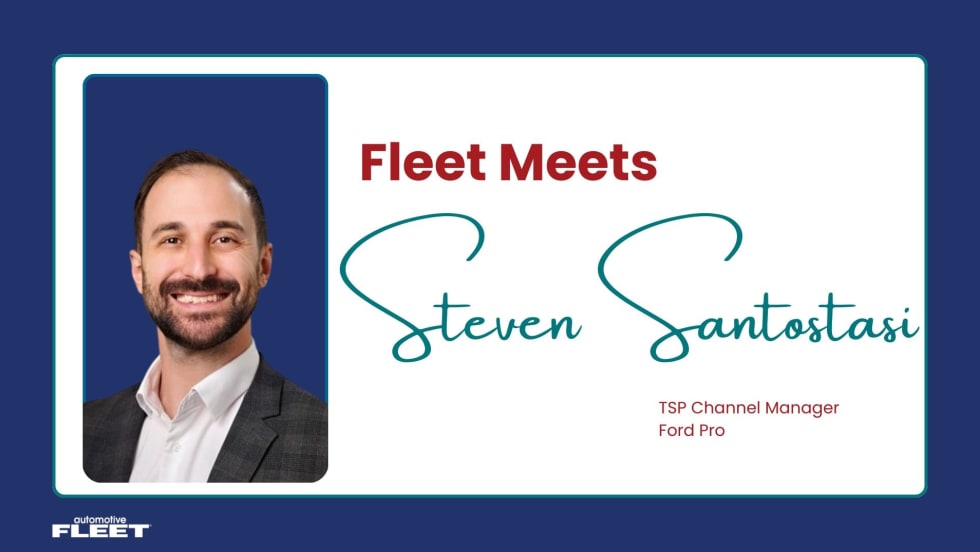
Fleet Meets: Steven Santostasi
This edition of the Fleet Meets series features Steven Santostasi, the current TSP channel manager for Ford Pro.
Read More →
Why Fleet Managers Are Replacing Departmental Vehicles with Shared Motor Pools
Departmentally assigned vehicles often create hidden costs through underutilization, poor visibility, and increased administrative burden. This white paper explores how shared motor pool strategies help fleets reduce costs, improve accountability, and optimize vehicle utilization.
Read More →
Soap Box Derby Challenge: Assembling the Crew
Meet Gabriel, Matthew, and Angel — the team helping bring this soap box derby build to life.
Read More →
BBL Fleet Acquires Velcor Leasing Corporation
BBL Fleet expanded its footprint in the fleet management industry with the acquisition of Velcor Leasing Corporation of Madison through a stock purchase agreement finalized Feb. 27, 2026.
Read More →
Lytx Introduces New AI Fleet Technologies at Protect 2026
The company introduced new AI-driven fleet safety and operations technologies during its annual user conference.
Read More →
Fleet Costs Are Rising: Here’s How Leaders Are Responding
Fleet leaders are under pressure to reduce costs, adapt to economic uncertainty, and make smarter decisions. See how peers across North America are responding with real data, proven strategies, and forward-looking insights. Download the 2026 Market Pulse Report to benchmark your strategy and uncover where you can gain an edge.
Read More →
From Waffle House to AI: Fleet Trends You Need to Know
In this AF news recap, host Faith Howell covers how Waffle House stepped up during disaster response and new AI tech on the market.
Read More →