




Salt Lake Police Fight Crime and Fuel Costs with Hybrid Cars
SALT LAKE CITY - In an effort to cut fuel costs — thereby possibly saving jobs, as well as reducing its impact on the environment — the Salt Lake Police Department recently unveiled the latest additions to its fleet: a hybrid patrol car and an electric three-wheeled vehicle.
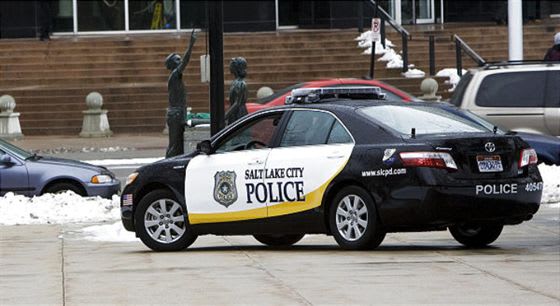
SALT LAKE CITY - In an effort to cut fuel costs — thereby possibly saving jobs, as well as reducing its impact on the environment — the Salt Lake Police Department recently unveiled the latest additions to its fleet: a hybrid patrol car and an electric three-wheeled vehicle, according to Deseret News.
Salt Lake police have added five 2009 Toyota Camry four-door sedan hybrids to its fleet. The department believes it is among the first law enforcement agencies in the nation to include a hybrid in its patrol fleet.
The department spends $1.5 million a year in fuel to keep its fleet running, said Salt Lake Police Chief Chris Burbank. It hopes to reduce that number, possibly by as much as $4,000 per vehicle per year, by adding more fuel-efficient cars.
Burbank called the addition of the hybrid vehicles a "necessary" purchase.
"Anywhere I can reduce fuel cost is a saving on personnel cost," he said.
Burbank is driving one of the department's new hybrid vehicles, which he said his office had been investigating for almost two years. His new car gets 25 miles per gallon, compared to his old police cruiser that was getting a little more than 10 mpg, he said.
However, Burbank admitted the vehicles will take some getting used to. The hybrids the department purchased are not custom police cars. They were built as passenger vehicles.
Salt Lake added lights, sirens and other features normally found in a custom police car.
The department will use the hybrids on a trial run to find out how the vehicles will hold up in everyday police work. The car's suspension, for example, was an area that concerned the chief. The department's hybrids were expected to be heavier than normal hybrids because of the extra police equipment and batteries added.
The hybrids will be tested on the state's Emergency Vehicle Operation training range as well as during the grind of their daily use. If they prove successful, Burbank said more hybrids could be ordered next year.
Each year, the department routinely adds new vehicles to its fleet and takes out ones that have run their limit. The department switched out about 50 vehicles this year; five of them were hybrids.
In addition to getting a new type of car, Salt Lake police are also changing their image with a new logo and paint job to go on their vehicles. Rather than the traditional blue and white paint, all new vehicles will be black and white with a gold stripe along the bottom, and "Salt Lake Police" in big letters on the doors.
"We want everyone to know it's a police car, and it's a Salt Lake City police car," Burbank said.
Salt Lake police also want to be more visible around the city, letting both the public and criminals know they're watching, he said. As part of that, the department is reducing the number of unmarked patrol cars in its fleet, Burbank said.
More Green Fleet

Merchants Fleet Reports 290M EV Miles as Fleets Navigate Changing Electrification Market
From millions in operating savings to hundreds of millions of EV miles, Merchants Fleet’s latest report reveals what’s working and what’s changing in fleet electrification.
Read More →
The EV Breakdown Nobody's Talking About: Why Most Electric Vehicle Roadside Calls Aren't Mechanical Failures
Here's why EV breakdowns are widely misunderstood.
Read More →
ChargePoint Now Available in Energy Pass
ChargePoint and additional planned charging network integrations were added to GM's Energy Pass.
Read More →

First Look: Slate Auto's Electric Fleet Pickup
Could an affordable, modular EV pickup make electrification more practical for fleets?
Read More →
Slate Debuts Colorful, Unique EV Models
A recent media and client event, studded with electric vehicles dressed up on platforms, planted a new position for the manufacturer in the wider EV market. Fleets will find cost-saving advantages.
Read More →
Slate Electric SUV, Pickup Switchable Model Aims For Light-Duty Fleets
Everything about this EV is counterintuitive and understated, making it stand out from the crowd.
Read More →
Inspiration Mobility Acquires Key Electrada Assets
Inspiration Mobility Group has acquired select assets of Electrada, adding the fleet electrification provider's team, technology, and charging infrastructure development capabilities to its energy management business.
Read More →
Turning Connected Vehicle Data Into Decisions That Matter
Fleet leaders have more data than ever, but turning that data into clear, actionable decisions remains a challenge. This white paper shows how leading organizations are using connected vehicle data to improve safety, reduce costs, and optimize fleet performance. Learn how to turn insight into action across your fleet.
Read More →
Are You Tracking Your Fleet's True Total Cost of Ownership?
Bobit Business Media surveyed 190 fleet professionals and found that while most fleets are tracking costs, fragmented systems and data gaps are keeping true TCO visibility out of reach. With rising pressure to control spend in an increasingly volatile environment, the gap between what fleets think they know and what the data actually shows is wider than you might expect. See how your peers are managing costs today and where the industry still has room to improve.
Read More →