




Safety Gap Grows Wider Between SUVs and Cars
The gap in safety between sport/utility vehicles and passenger cars last year was the widest yet recorded, according to new federal traffic data, reported in the New York Times on August 16.
The gap in safety between sport/utility vehicles and passenger cars last year was the widest yet recorded, according to new federal traffic data, reported in the New York Times on August 16. People driving or riding in a sport/utility vehicle in 2003 were nearly 11 percent more likely to die in an accident than people in cars, the figures show. The government began keeping detailed statistics on the safety of vehicle categories in 1994. SUVs continue to gain in popularity, despite safety concerns and the vehicles' lagging fuel economy. For the first seven months of 2004, SUVs accounted for 27.2 percent of all light-duty vehicle sales, up from 26 percent in the period a year earlier, according to Ward's AutoInfoBank. However, sales growth for the largest sport/utility vehicles has stalled, while small and medium-size SUVs, engineered more like cars than pickup trucks, continue to make gains. New figures from the National Highway Traffic Safety Administration shed light on how wide the differences in safety can be from one vehicle to another in the SUV category, which now encompasses scores of models. For example, a few newer SUV models appear to have a sharply lower risk of rolling over in an accident than other models. Overall, crash fatalities declined across the board in 2003 to the lowest levels in six years, government figures show, with 42,643 people killed in traffic accidents in the United States. Much of the decline appeared to come from fewer people driving drunk and more people buckling up. But the U.S. has not made as much progress as some other developed nations, because rates of seat-belt use remain lower here and because of the growing numbers of SUVs and pickup trucks, which tend to pose greater hazards than cars, both to their occupants and to others on the road. Industry groups have insisted for years that SUVs are at least as safe as passenger cars, if not safer. One group run by industry lobbyists, called the Sport/Utility Vehicle Owners of America, says on its Web site that it is a myth that SUVs guzzle gas or that their higher rollover rate makes them more dangerous for their occupants. Ron DeFore, a spokesman for the group, cited statistics from the insurance industry, which found last year that fatality rates for newer sport/utility vehicles were markedly improved from older models. But the main reason for the safety gap in SUV and car fatalities, according to federal regulators, is that SUVs are more likely to roll over, a particularly deadly accident event that is a symptom of their higher ground clearance. The traffic safety agency reported last week that there were 16.42 deaths of SUV occupants in accidents last year for every 100,000 registered SUVs. The figure for passenger cars was 14.85 deaths for each 100,000 registered; pickups were slightly higher than cars at 15.17 deaths per 100,000, while vans were lowest at 11.2 occupant deaths for every 100,000 registered. Rollover risk, though, is only one part of the safety picture. In crashes between vehicles, heavier vehicles tend to perform better than lighter ones, which is one reason that the smallest cars tend to have the highest occupant-fatality rates. The ways that people who own different types of vehicles tend to drive them is also a factor. But weight is not a simple proxy for safety. In a federal crash study this year, large passenger cars and station wagons, averaging about 3,600 pounds unloaded, were found to have a death rate of 3.3 for each billion miles traveled; they were second in safety only to minivans, which had a rate of 2.76. Ranked third safest after the large-car category were the largest, tank-like sport/utility vehicles, which weigh in at an average of 5,100 pounds unloaded; their death rate was 3.79 for every billion miles. Mid-size cars, averaging just over 3,000 pounds unloaded, had a 5.26 fatality rate; mid-size SUVs, by far the most popular type, with an average weight over 4,000 pounds, had a death rate of 6.73 in the study. Even within categories, there was considerable variation in performance from model to model. Detailed results for federal front- and side-impact tests and rollover tests can be found online at www.safercar.gov/.
Complicating the safety question is what happens to people in the other vehicle in a collision. Because of the higher ground clearance of sport/utilities and large pickup trucks, their bumpers often skip over the crash structures of passenger cars, raising the likelihood that an occupant of the car will be killed or seriously injured. Automakers have agreed to work together on structural changes, and the traffic safety agency has proposed new rules that would require automakers to install side air bags as a way to mitigate the problem.
More Operations
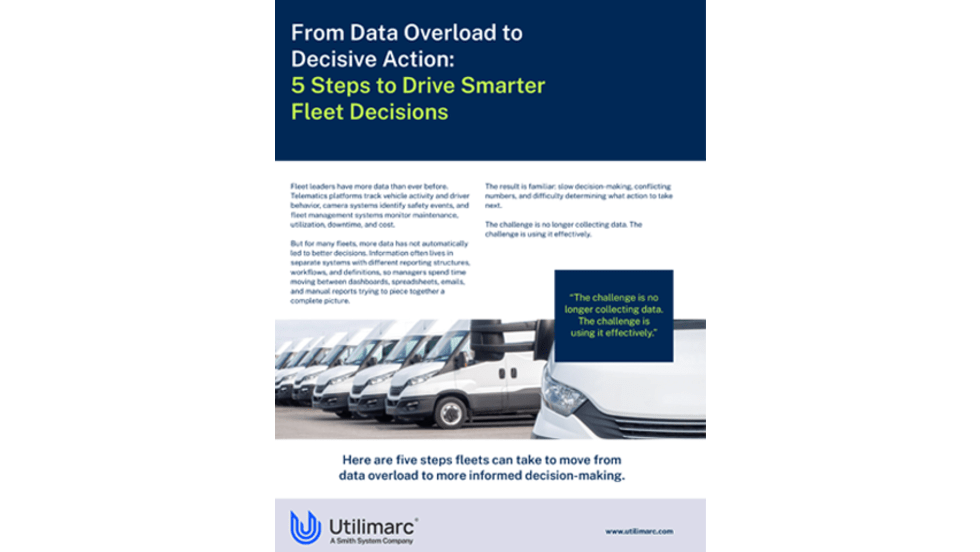
Turn Fleet Data Into Smarter Decisions
Fleet leaders have access to more operational data than ever, but disconnected systems and unclear metrics often slow decision-making instead of improving it. This article outlines five practical steps fleets can take to transform fragmented data into actionable insights that improve planning, safety, utilization, and long-term performance.
Read More →
Hybrids: Electrification Without the Challenges
For fleet managers, fuel is one of the biggest line items in the budget — and it's one hybrids can shrink without changing how your people work. Download the eBook to see the numbers, understand the technology, and get a step-by-step guide to making the switch.
Read More →
How NOV Uses Telematics to Improve Fleet Safety Across 160 Locations
James Victory of NOV discusses how the company manages fleet safety, maintenance, and telematics across more than 150 locations supporting oilfield operations throughout the U.S.
Read More →
Fleet Meets: Steven Santostasi
This edition of the Fleet Meets series features Steven Santostasi, the current TSP channel manager for Ford Pro.
Read More →
Why Fleet Managers Are Replacing Departmental Vehicles with Shared Motor Pools
Departmentally assigned vehicles often create hidden costs through underutilization, poor visibility, and increased administrative burden. This white paper explores how shared motor pool strategies help fleets reduce costs, improve accountability, and optimize vehicle utilization.
Read More →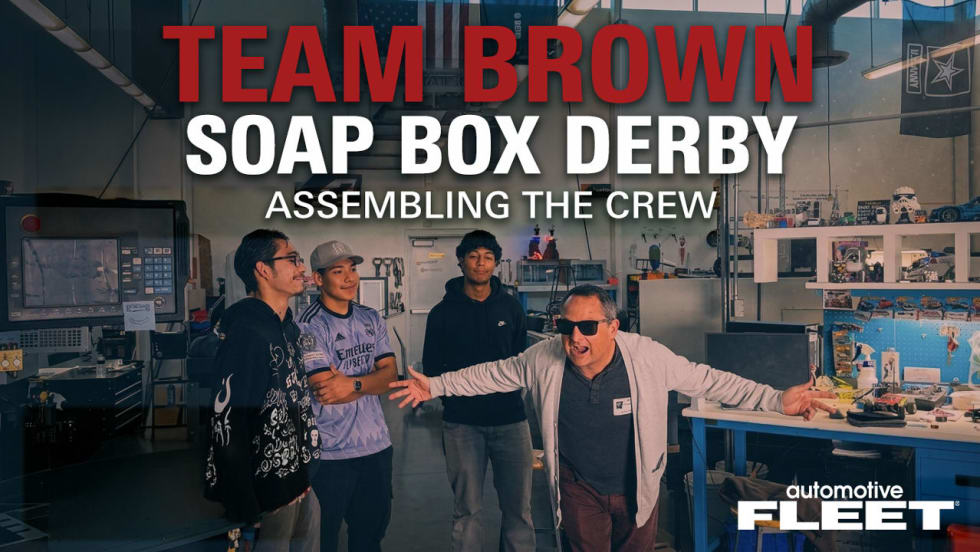
Soap Box Derby Challenge: Assembling the Crew
Meet Gabriel, Matthew, and Angel — the team helping bring this soap box derby build to life.
Read More →
BBL Fleet Acquires Velcor Leasing Corporation
BBL Fleet expanded its footprint in the fleet management industry with the acquisition of Velcor Leasing Corporation of Madison through a stock purchase agreement finalized Feb. 27, 2026.
Read More →
Lytx Introduces New AI Fleet Technologies at Protect 2026
The company introduced new AI-driven fleet safety and operations technologies during its annual user conference.
Read More →
Fleet Costs Are Rising: Here’s How Leaders Are Responding
Fleet leaders are under pressure to reduce costs, adapt to economic uncertainty, and make smarter decisions. See how peers across North America are responding with real data, proven strategies, and forward-looking insights. Download the 2026 Market Pulse Report to benchmark your strategy and uncover where you can gain an edge.
Read More →
From Waffle House to AI: Fleet Trends You Need to Know
In this AF news recap, host Faith Howell covers how Waffle House stepped up during disaster response and new AI tech on the market.
Read More →