




Retail Vehicle Prices Boosted by Trucks, SUVs
Retail new-car prices increased $1,363 (up 4.3 percent) in May from a year ago, but fell $130 (down 0.4 percent) from April, according to Kelley Blue Book.
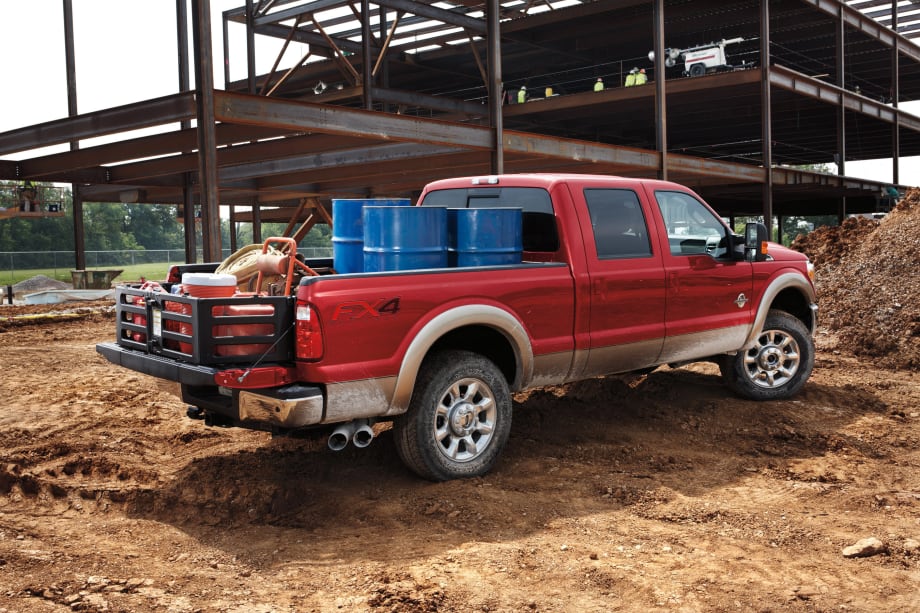
Photo of 2014 F-Series Super Duty courtesy of Ford.
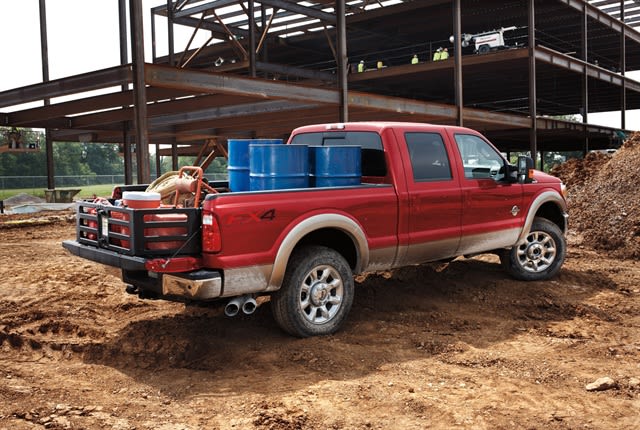
Photo of 2014 F-Series Super Duty courtesy of Ford.
Retail new-car prices increased $1,363 (up 4.3 percent) to $33,363 in May from a year ago, but fell $130 (down 0.4 percent) from April, according to Kelley Blue Book.
Major truck and utility manufacturers are profiting most from this trend, as cars make up only one-in-three units sold for General Motors, Ford, and FCA US.
"With the national average price of gasoline down nearly a dollar per gallon on average from one year ago, truck and SUV demand remains strong, elevating average transaction prices, especially for domestic automakers, in May," said Karl Brauer, senior analyst for Kelley Blue Book. "We also saw incentives spending remain nearly flat in May, which shows the strength of the overall new-car market."
Manufacturer | May 2015 Transaction Price (Avg.* | April 2015 Transaction Price (Avg.* | May 2014 Transaction Price (Avg.* | Percent Change April 2015 to May 2015* | Percent Change May 2014 to May 2015* |
American Honda (Acura, Honda) | $27,323 | $27,405 | $26,555 | -0.3% | 2.9% |
Fiat Chrysler (Alfa Romeo, Chrysler, Dodge, Fiat, Jeep, RAM) | $34,164 | $33,875 | $32,924 | 0.9% | 3.8% |
Ford Motor Company (Ford, Lincoln) | $35,517 | $35,351 | $34,059 | 0.5% | 4.3% |
General Motors (Buick, Cadillac, Chevrolet, GMC) | $37,131 | $37,127 | $35,621 | 0.0% | 4.2% |
Hyundai-Kia | $25,099 | $25,169 | $24,125 | -0.3% | 4.0% |
Nissan North America (Nissan, Infiniti) | $27,802 | $27,906 | $26,806 | -0.4% | 3.7% |
Toyota Motor Company (Lexus, Scion, Toyota) | $30,187 | $30,529 | $29,511 | -1.1% | 2.3% |
Volkswagen Group (Audi, Volkswagen, Porsche) | $40,288 | $40,796 | $39,071 | -1.2% | 3.1% |
Industry | $33,363 | $33,493 | $32,000 | -0.4% | 4.3% |
*Kelley Blue Book Average Transaction Prices do not include applied consumer incentives
More Operations

Fleet Meets: Eric Kilgore
This edition of the Fleet Meets series features one of the industry's best leaders driving multi-market and national operations.
Read More →
Why Reactive Fleet Management Is Becoming Too Expensive to Sustain
Research highlights a growing need for proactive management strategies to address rising costs in fleet operations effectively.
Read More →
What Your Fleet KPIs Aren’t Telling You
Tracking fleet metrics is only useful when the data leads to better decisions. This guide helps fleet leaders assess cost, utilization, and downtime more accurately, identify performance gaps, and prioritize the actions that can improve operational results.
Read More →


Hidden in Plain Sight: Fleet Compliance Risks
Fleet compliance isn't just about having policies — it's about consistently enforcing them. This practical guide reveals six hidden compliance risks common in public sector and shared fleet operations and outlines proven strategies to improve visibility, accountability, and audit readiness
Read More →
Turning Fleet Payment Data into Executive Insights
Does data alone drive results in operations?
Read More →
Automotive Fleet Opens 2026 Personal Use Survey for Commercial Fleet Managers
Commercial and corporate fleet managers are invited to share how their organizations handle company vehicle personal-use policies, charges, and driver eligibility.
Read More →
Gary Van Orden Retires After Nearly Four Decades in Commercial Fleet
From answering customer calls at Ford Motor Company to leading fleet sales across multiple OEMs and a fleet management company, Gary Van Orden's career reflects nearly four decades of leadership in commercial fleet.
Read More →
How Stellantis Plans to Get Ahead of Fleet Downtime
Vehicle acquisition may grab the headlines, but fleet uptime increasingly determines operating success. Darren Bradshaw of Mopar North America gives the details.
Read More →
Hyundai Releases 2027 Commercial Program Incentives
The 2027 Model Year "Fleet Street Incentives" are available to commercial and government fleets.
Read More →
It's All Downhill from Here! Fleet Industry Raises $22,000 for Skilled Trades Scholarships
Work Truck’s Lauren Fletcher and Automotive Fleet’s Chris Brown turned a friendly racing rivalry into $22,000 for automotive technology and skilled trades scholarships.
Read More →